
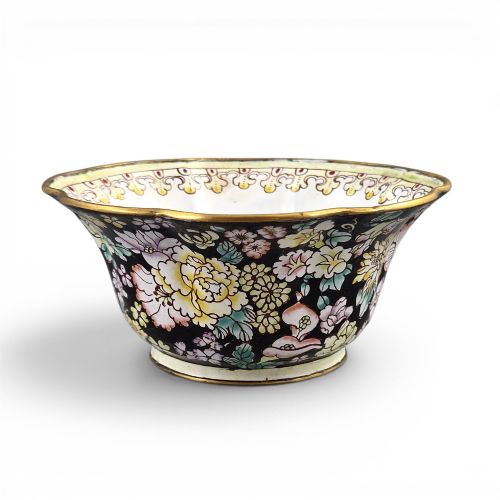


Enamelled Copper Dish
These pieces unite metal and glass in vibrant colour, bringing centuries of skilled craftsmanship directly to your table or wall.
Enamelled Copper Dish
An enamelled copper dish combines metalwork and vitreous coating to create durable decorative items. When you search for an enamelled copper dish, you encounter forms ranging from small salt cellars and patch boxes to large chargers and decorative bowls.
The selection on this page draws heavily from Japanese Meiji period cloisonne, Chinese Canton painted enamel, and 18th century European pieces such as Bilston and Limoges items. Japanese chargers dominate the inventory with detailed depictions of dragons, birds, and flora.
European examples tend toward smaller Georgian and 18th century decorative boxes or salt bowls, while Arts and Crafts pieces offer distinct pedestal bowls and hammered copper vessels set with cabochons.
Materials and technique
The foundation of every piece is formed from beaten or cast copper, sometimes supported by brass wire or detailed with gold leaf and wood. Artisans applied powdered glass mixtures to the metal surface before firing the object in a kiln to fuse the vitreous enamel permanently.
In cloisonne work, thin brass wires create compartmentalised cells that hold different coloured enamels in place during firing. Painted enamel methods instead apply pigments directly onto the prepared copper ground, allowing for fine pictorial scenes and portraits.
Materials represented on this page combine copper and brass with traditional vitreous enamel, gold leaf, and wooden elements.
Assessing quality and execution
Quality rests in the precision of the metalwork and the clarity of the fired glass. Tighter wirework in cloisonne and smoother colour gradients in painted pieces signal superior workshop output.
Complexity of subject matter also separates standard domestic items from exhibition pieces. Chargers depicting intricate dragons, phoenixes, or historical figures demonstrate greater technical ambition than simpler floral motifs.
The Enamelled Copper Dish Glossary
- Cloisonne enamel
- A technique where thin metal wires form raised barriers on a copper base to create cells filled with coloured glass paste. These compartments keep distinct enamels separated during high-temperature firing.
- Vitreous enamel
- A material made by fusing powdered glass to a metallic substrate through intense heat. This process produces a smooth, glossy, and chemically resistant coloured coating.
- Cabochon
- A gemstone or piece of glass shaped and polished into a smooth convex dome rather than faceted. These elements frequently accent Arts and Crafts metalwork.
- Bonbonniere
- A small ornamental box traditionally used to hold sweets or confections. 18th century examples often feature hinged lids and detailed painted enamel decoration.
Enamelled Copper Dish: Frequently Asked Questions
How do I clean an enamelled copper dish?
Wipe the surface gently with a soft, damp cloth to remove accumulated dust. Avoid harsh chemical cleaners or abrasive pads that can scratch the glass coating or damage the exposed copper.
Keep these items out of direct sunlight and high humidity environments to protect the integrity of both the metal and the fired enamel over time.
Can I use these dishes for food?
Historic decorative dishes are generally intended for display rather than modern culinary service. Older enamels may contain historical compounds that are unsuitable for acidic foods or everyday dining.
Enjoy them as centrepieces, wall chargers, or desk accessories to preserve their decorative surfaces from wear and potential chemical breakdown.
How do I distinguish Japanese Meiji period work?
Japanese pieces from this era often display exceptionally fine brass wirework and naturalistic subjects such as dragons, koi, and bamboo. The scale of production during the late 19th century allowed for remarkable technical precision.
Look closely at the background fields for uniform stippling and check the base for signatures or workshop marks where applicable.
What is the difference between Canton and European enamels?
Chinese Canton wares typically employ bright Famille Rose colour palettes and traditional motifs on beaten copper bodies. European 18th century pieces from Bilston or Limoges lean toward smaller patch boxes and pastoral or Jesuit design scenes.
Examining the weight of the metal and the style of the painted brushwork helps clarify the geographic origin of each vessel.