


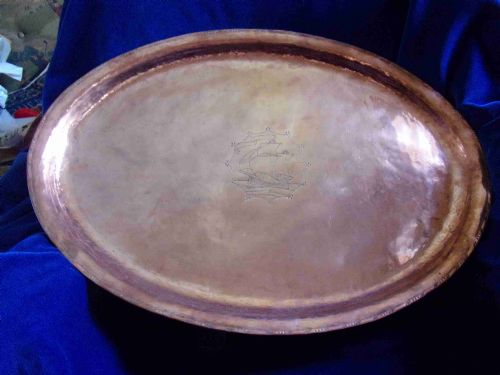


Copper Display Charger
These copper display charger pieces bring striking metallic warmth and intricate historical detail to any interior.
Copper Display Charger
A copper display charger is a large decorative plate or tray intended primarily for visual exhibition rather than dining use. When you search for a copper display charger, you encounter substantial metal vessels spanning the late nineteenth century and the early Meiji and late Edo periods. These items range from plain hammered British Arts and Crafts pieces to elaborate Japanese cloisonne enamel works.
The Japanese examples frequently incorporate brass wire to delineate complex motifs such as dragons, phoenixes, koi, and samurai figures. Meanwhile, British interpretations focus on the tactile qualities of beaten metal surface textures without enamel decoration. Both traditions produce substantial circular forms designed to draw the eye when mounted on walls or displayed on stands.
Materials and construction
The construction relies heavily upon sheet copper shaped into broad plates, often supplemented by brass wire or applied enox work. Japanese pieces utilise vitreous and cloisonne enamel fused to the copper base in intricate cellular patterns, creating vibrant pictorial surfaces. British Arts and Crafts examples typically employ hand-beaten copper techniques that display the deliberate hammer marks of the maker.
Support materials such as wood occasionally appear in associated display mounts, whilst brass wire acts as the structural boundary for individual enamel compartments. The combination of vitreous paste, metal wire, and copper plates requires precise kiln firing to achieve the durable polychrome finishes seen in the Japanese examples.
Owning a charger featuring a leaping koi or an attentive owl brings a small piece of nineteenth-century menagerie directly onto the dining room wall.
Factors of quality
Quality in these pieces rests upon the precision of the metalwork and the complexity of the imagery. In enameled examples, the fineness of the wirework and the evenness of the vitreous paste separate standard decorative items from superior works. Clean lines in the cloisonne cells and clarity in the depiction of subjects such as dragons or birds indicate higher skill.
British Arts and Crafts metalwork varies according to the depth and regularity of the hand-beaten surface texture. Pieces that demonstrate considered form and balanced proportions without excessive distortion show greater design integrity. The presence of signatures or well-documented studio origins also distinguishes exceptional examples from anonymous production.
Hugh Wallis
The Copper Display Charger Glossary
- Cloisonne Enamel
- A technique where metal wire is soldered to a metal base to create compartments filled with vitreous enamel paste before firing. This method produces intricate cellular patterns filled with coloured glass.
- Charger
- A large decorative plate or platter traditionally used for ceremonial display or service. These items exceed standard dining dimensions to serve as focal points.
- Meiji Period
- A historical Japanese era spanning from 1868 to 1912 characterised by rapid modernisation and exceptional metalwork artistry. Items from this time frequently reach Western collectors through historical trade routes.
- Arts and Crafts
- A design movement originating in Britain during the late nineteenth century that prioritised hand craftsmanship and traditional materials. Objects from this tradition celebrate visible artisanal labour.
- Vitreous Enamel
- A material made by fusing powdered glass to a substrate by firing, resulting in a smooth, durable coating. It provides the brilliant colour found across many decorative metal surfaces.
Copper Display Charger: Frequently Asked Questions
How were copper display chargers used historically?
These large vessels served primarily as decorative centerpieces or wall-hung items to showcase wealth and artistic taste. They occupied prominent positions in reception rooms rather than serving food at the table.
Their substantial diameters and detailed imagery made them natural focal points for interior decoration during the late nineteenth century in both Britain and Japan.
How do I distinguish Japanese cloisonne from British Arts and Crafts pieces?
Japanese cloisonne items feature colourful glass enamel cells divided by thin metal wires, often depicting mythological creatures or nature scenes. They rely on smooth, glossy surfaces and intricate polychrome designs.
British Arts and Crafts pieces instead present unpainted, beaten copper surfaces that highlight the raw metallic texture and hammer marks of the artisan without enamel inlay.
Can I hang a copper display charger on the wall?
Many of these plates were manufactured with display in mind and feature suitable weight and proportions for vertical presentation. Appropriate mounting hardware that supports the full rim without damaging the metal is essential.
Careful consideration of wall placement protects the delicate enamel surfaces of Japanese pieces from accidental impacts or direct sunlight.
What subjects typically appear on Japanese enamel chargers?
Common motifs include mythical animals such as dragons, phoenixes, and ho-o birds alongside natural subjects like koi, owls, and Mount Fuji. Human figures such as samurai or Buddhist figures also appear in finely executed works.
These subjects carry deep cultural significance in Japanese art and demonstrate the high technical skill required to bend wire into complex pictorial shapes.