


Decorative Copper Wall Plate
A decorative copper wall plate brings metallic warmth and intricate surface pattern to an interior, drawing the eye with hand-worked relief or enamel colour.
Decorative Copper Wall Plate
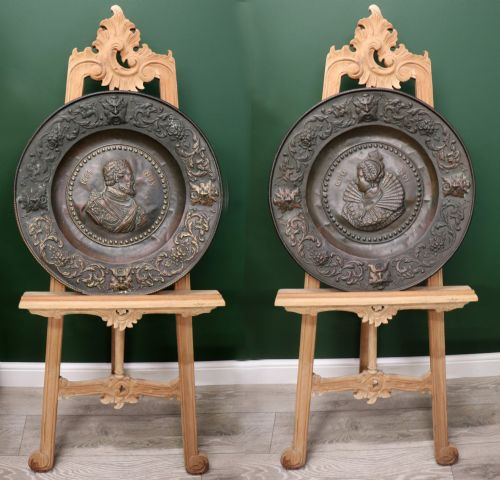
A decorative copper wall plate encompasses large chargers, platters and trays designed primarily for display rather than domestic service. When searching for a decorative copper wall plate, buyers encounter objects spanning the Victorian era through the late nineteenth century, with strong representation from Japanese Meiji period workshops and British Arts and Crafts circles.
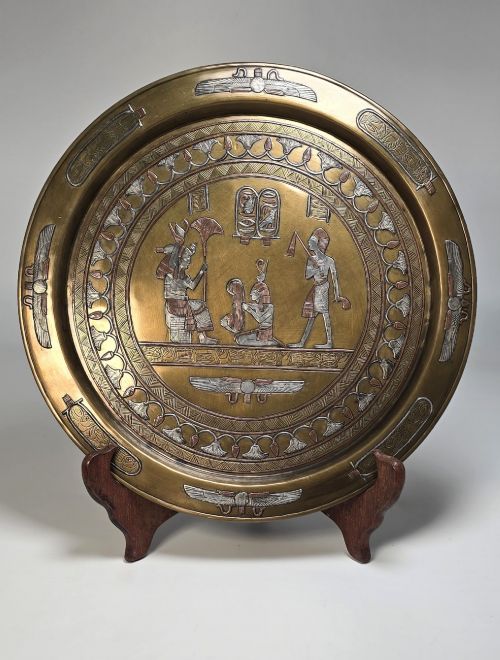
The forms range from wide, flat dishes intended for wall mounting to deep-rimmed chargers displaying regional metalwork traditions such as Egyptian Cairo Ware, Persian engraving and Indian repoussé work. Pieces often incorporate mixed metals, brass wire framing, or silver inlay to define the motifs against the dark copper ground.
Makers drew on diverse historical revivals, producing Gothic style portraits, Islamic metalwork patterns, and Egyptian motifs alongside naturalistic Japanese depictions of birds, koi and dragons. The typical survivor serves as a focal point, whether hammered by hand in a local guild workshop or imported from distant craft centres.
Materials and construction methods
Artisans formed these objects from sheet copper, brass, and bronze, often applying chemical patination to darken the base metal and accentuate brighter inlay work. Techniques such as repoussé and chasing pushed the metal from behind to create raised relief portraits, foliage, and animal motifs.
Japanese pieces utilise cloisonné enamel, binding thin brass or copper wire to the plate surface to create cellular compartments filled with coloured vitreous pastes. Other regional traditions relied on silver and copper wire inlay, piercing, and hand engraving to ornament the metal surface.
An owl contemplates Mount Fuji from the edge of a nineteenth-century Japanese enamel tray, keeping watch over centuries of distant craftsmanship.
Assessing quality in metalwork
Quality rests in the crispness of the hand-hammered relief, the complexity of the inlaid wirework, and the depth of the patination. Masterpieces display precise control over chased details and smooth, polished enamel surfaces free from distortion.
Simpler production shows broader tool marks and standard stamped decoration rather than individual hand-tooling. The integration of mixed metals and the density of the decorative programme distinguish exceptional workshop output from everyday decorative wares.
The Decorative Copper Wall Plate Glossary
- Repoussé
- A metalworking technique where the artisan hammers the design from the reverse side to create raised relief on the front. This method gives depth to plant motifs and animal figures.
- Cloisonné
- An enamelling technique utilising thin metal wires soldered to a base plate to form compartments that hold coloured glass paste. Firing fuses the enamel to the metal ground.
- Cairo Ware
- Nineteenth-century metalwork produced in Egypt featuring heavy silver and copper inlay on brass or bronze substrates. These pieces often incorporate Islamic geometric patterns and calligraphy.
- Patination
- The natural or chemically induced oxidation layer on the surface of copper and bronze. A deep patina provides contrast and protects the underlying metal.
- Komai Style
- Japanese metalwork characterised by dense gold and silver inlay on a darkened iron or copper ground, often depicting deities and dragons.
Decorative Copper Wall Plate: Frequently Asked Questions
How do I hang a heavy charger?
Displaying large metal plates safely requires a specialised wall bracket or a spring-loaded plate hanger designed to distribute the weight evenly around the rim. Ensure the fixing secures firmly into wall masonry or timber studs.
Avoid using adhesives or relying on the central decorative field to bear the load, as this can strain the metal structure over time.
How do I clean antique copper?
Preserving the original dark patination means avoiding aggressive chemical polishes that strip away age and character. Dusting with a soft, dry cloth is usually sufficient for regular maintenance.
If cleaning is necessary, use a gentle museum-approved wax to protect the metal surface from atmospheric moisture without removing historic oxidation.
What is Cairo Ware?
Cairo Ware refers to nineteenth-century Egyptian metalwork created for the European Grand Tour market, combining traditional Islamic designs with contemporary production methods. These items feature distinctive silver and copper inlay across dark bronze and brass surfaces.
They reflect a Victorian fascination with Middle Eastern craftsmanship and decorative arts.
How do I distinguish Japanese Meiji pieces?
Meiji period metalwork often displays exceptional technical precision through detailed cloisonné enamel, mixed-metal alloys, and signed artist reserves. Common motifs include phoenixes, koi, dragons, and Mount Fuji.
These pieces show the opening of Japanese workshops to Western export markets during the late nineteenth century.