




Enamel Dial Table Clock
An enamel dial table clock brings a crisp, bright face and dependable mechanical movement to a desk or mantelpiece.
Enamel Dial Table Clock
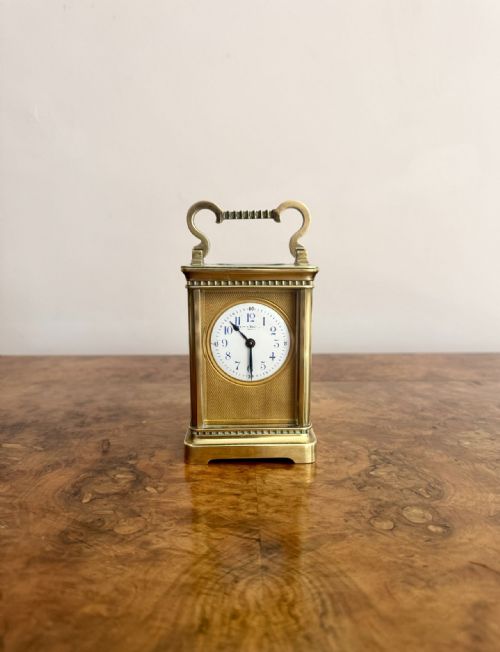
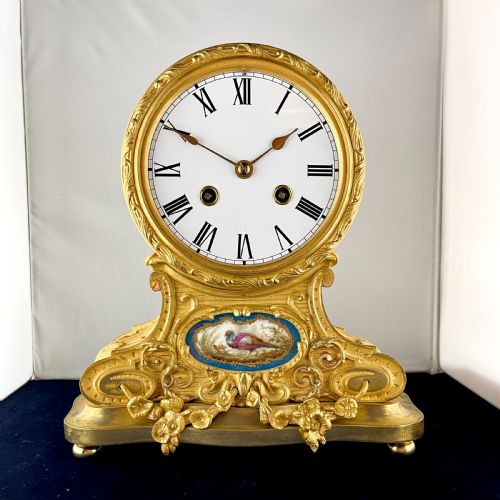
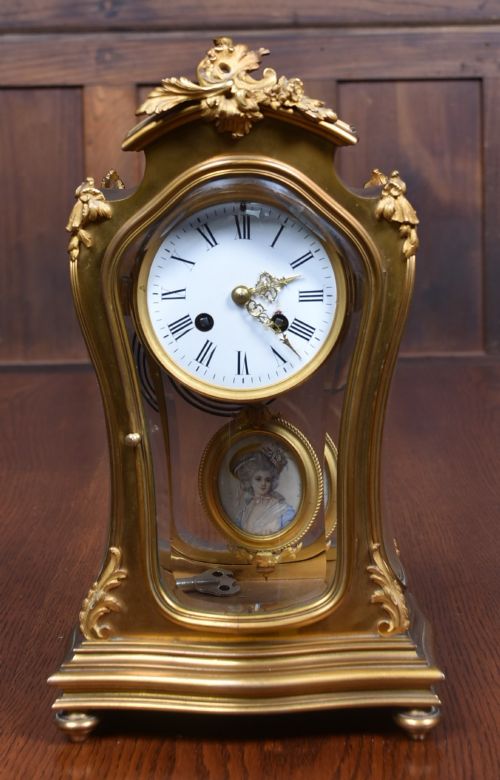
When you search for an enamel dial table clock, you find an array of timepieces designed for domestic desks, shelves, and mantelpieces. These objects combine functional timekeeping with decorative metal and glass cases, originating primarily from the nineteenth and early twentieth centuries.
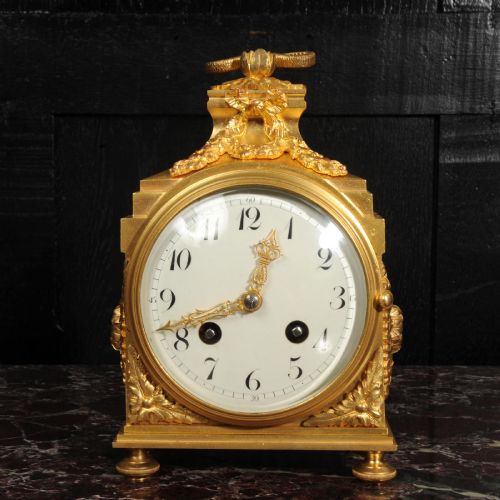
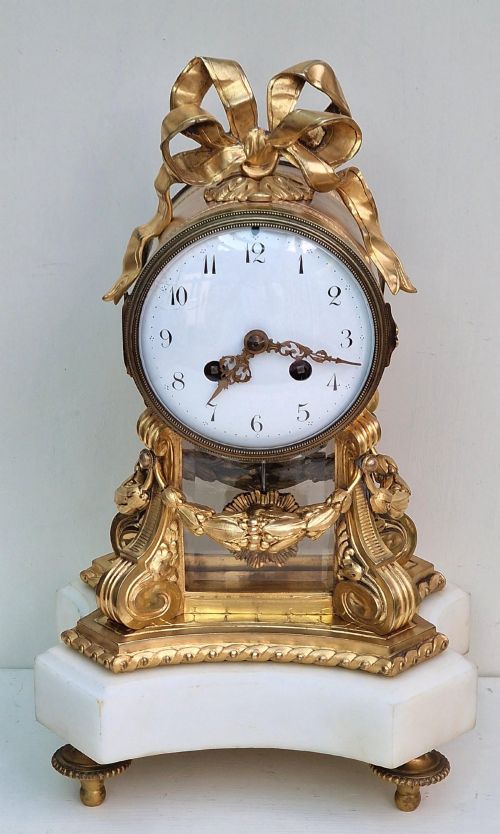
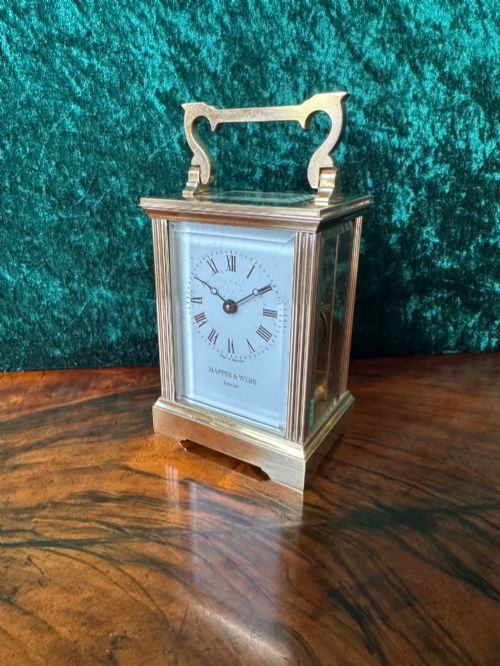
The versions you meet most frequently on this page are French carriage clocks and mantel clocks styled in Victorian, Louis XVI, and Rococo Revival tastes. These pieces rely on brass, gilt bronze, ormolu, and white marble for their heavy, architectural or glazed housings.
Materials and construction
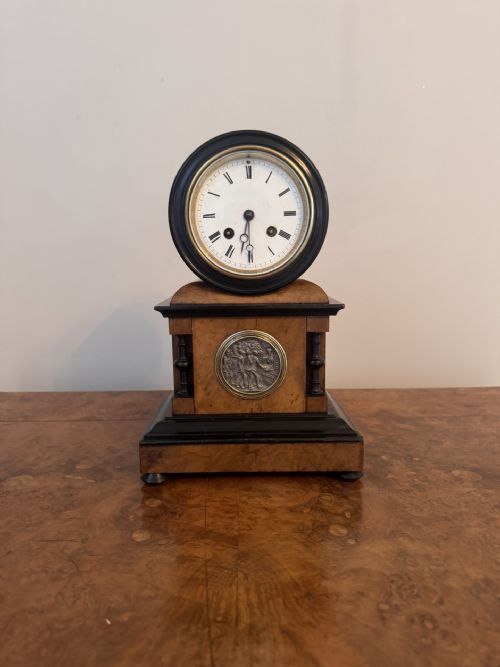
Makers built the structural cases of these clocks using cast brass, gilt bronze, and ormolu, frequently pairing them with white marble bases or mahogany and faux tortoiseshell surrounds. Glass panels in four-glass mantel clocks and carriage clocks allowed an unobstructed view of the mechanical gear trains inside.
The defining element - the enamel dial - was created by fusing powdered glass to a metal substrate at high heat, producing a smooth, glossy white surface that resisted tarnishing. Artisans then hand-painted numerals and minute tracks onto this vitreous layer, sometimes adding miniature painted scenes.
One persistent brass carriage clock somehow retained its original travelling key, sparing future owners from frantic hunts down the back of the sofa.
Standards of craftsmanship
The distinction between ordinary and superior pieces rests on the crispness of the case chasing and the complexity of the movement. Heavily engraved brass work, fire-gilded ormolu surfaces, and refined casting separate exceptional examples from standard mass-produced alternatives.
Dial execution also marks quality, as finely painted numerals, undamaged vitreous enamel free of hairline cracks, and signed movements by known clockmakers elevate a piece. The presence of complications such as repeat striking or champlevé enamel detailing further distinguishes the upper tier of the range.
Mappin and Web·Rodier·Latshea and Sons Edinburgh·Tiffany·Sacre·Leon Message·Jollet et Cie·Samuel Marti et Cie·John Ellicott
The Enamel Dial Table Clock Glossary
- Ormolu
- A technique of applying finely ground high-carat gold to a bronze object using mercury amalgam. This treatment creates a rich, lasting metallic lustre on the decorative mounts of nineteenth-century clock cases.
- Carriage clock
- A small, portable spring-driven timepiece equipped with a carrying handle and its own travelling case. They were originally made for travellers during the nineteenth century.
- Champlevé
- An enamelling technique where troughs or cells are hollowed out of a metal surface and filled with vitreous enamel powder before firing. The metal borders remain visible between the coloured enamel areas.
- Four-glass clock
- A mantel clock housed in a brass-framed glass case that reveals the pendulum and gear train from all sides. These pieces gained popularity during the late nineteenth century.
- Pendule d'Officier
- A distinctively styled French officer's clock featuring a robust brass case, a swinging handle, and a visible escapement. They represent an early form of portable timekeeper.
Enamel Dial Table Clock: Frequently Asked Questions
How do I wind a carriage clock?
Most carriage clocks are wound using a dedicated double-ended key inserted into arbors located through the base or backplate. Turn the key gently until you feel firm resistance, taking care not to overwind the mainspring.
Ensure the clock is standing on a level surface before setting the time by moving the minute hand forward. Avoid turning hands backward on striking models to prevent jamming the internal mechanism.
What is a French four glass clock?
A four glass clock is a mantel timepiece featuring heavy bevelled glass panels on the front, back, and both sides. This construction allows ambient light to pass entirely through the case and exposes the delicate pendulum and gear train.
These pieces typically sit on a decorative brass or marble plinth and were produced in large numbers by French workshops during the late nineteenth century.
Why does my clock have a platform escapement?
A platform escapement mounts the balance wheel and escapement assembly on a small brass plate directly above the movement train. This innovation allowed portable clocks like carriage pieces to keep accurate time while moving.
Unlike traditional pendulum clocks that require a strictly vertical and stationary environment, platform escapement clocks tolerate minor motion and position changes.