

Enamel Brass Mantel Clock
These enamel brass mantel clocks combine heavy metal cases with delicate dial work, offering functional timekeeping rooted in the nineteenth and early twentieth centuries.
Enamel Brass Mantel Clock
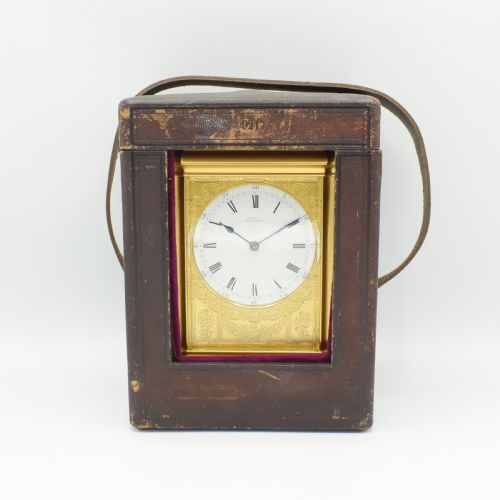
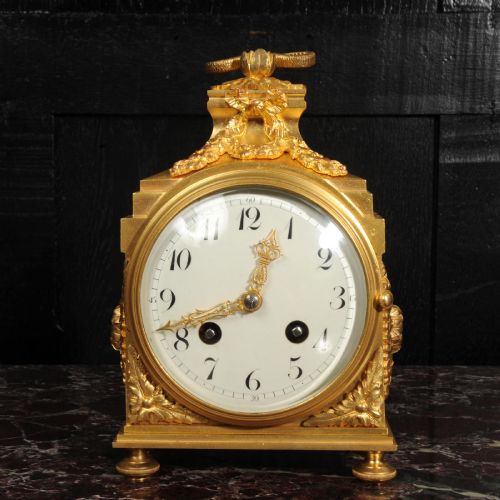
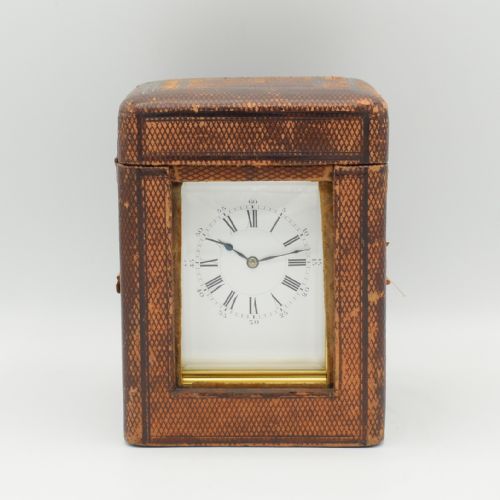
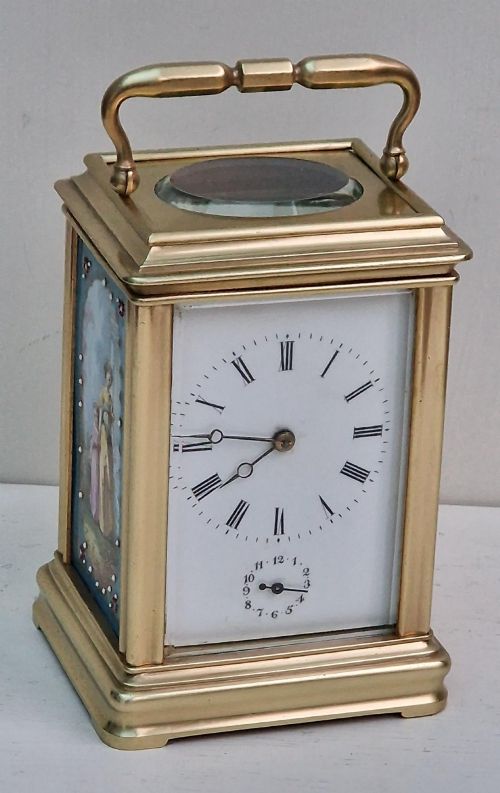
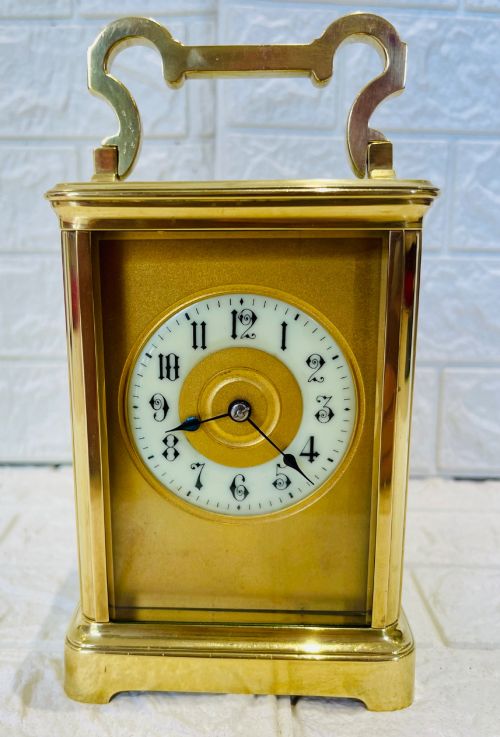
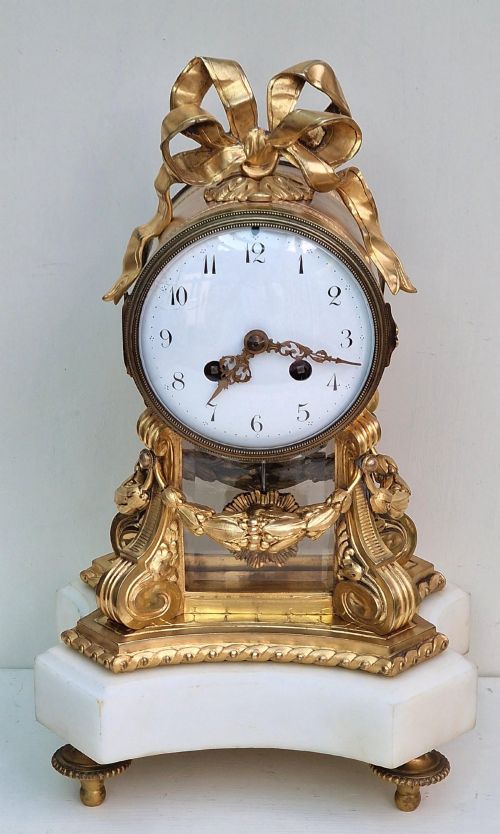
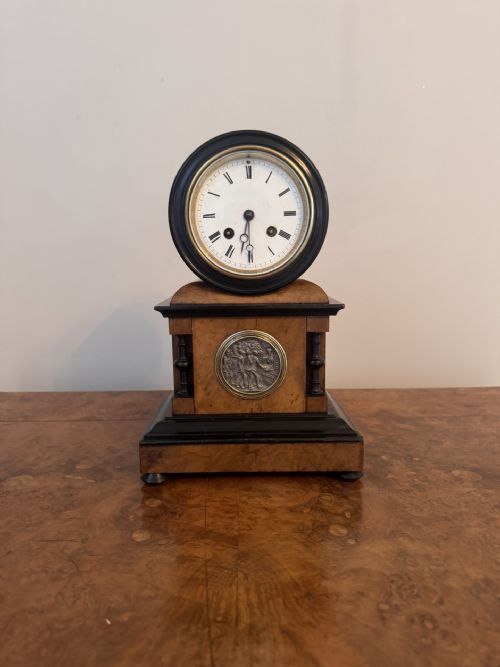
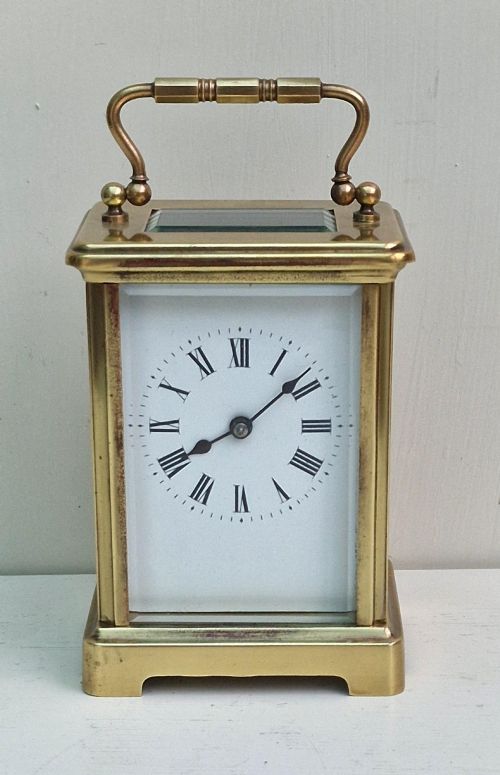
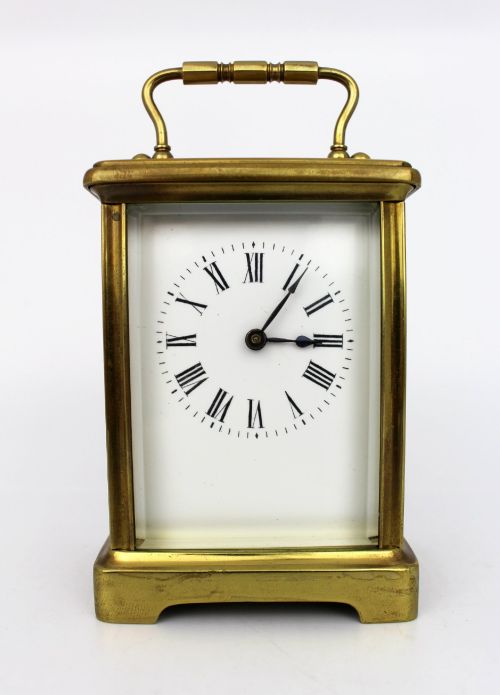
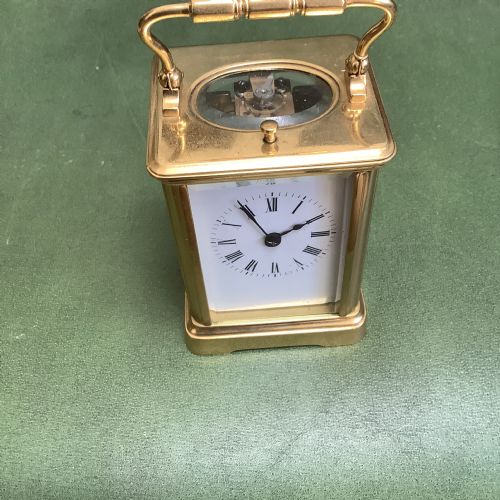
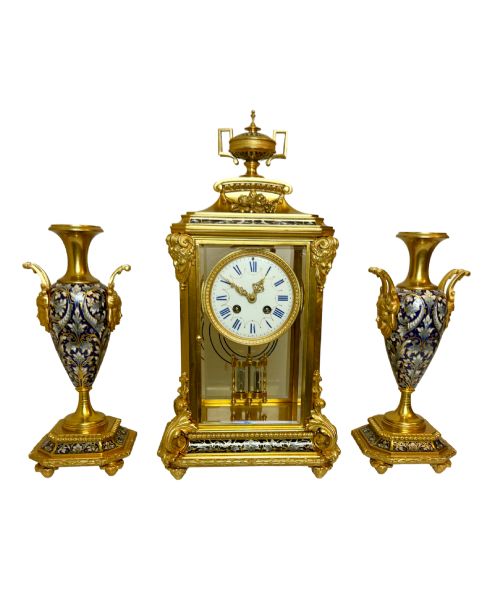
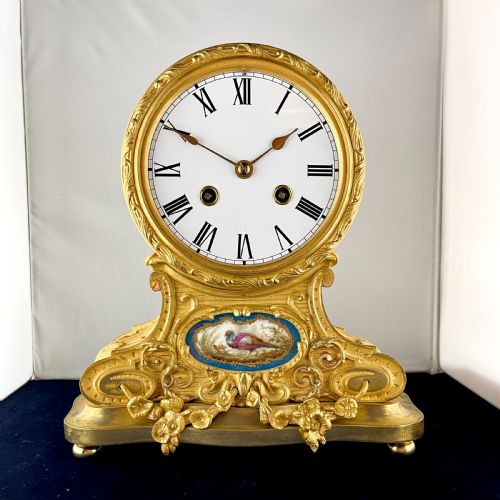
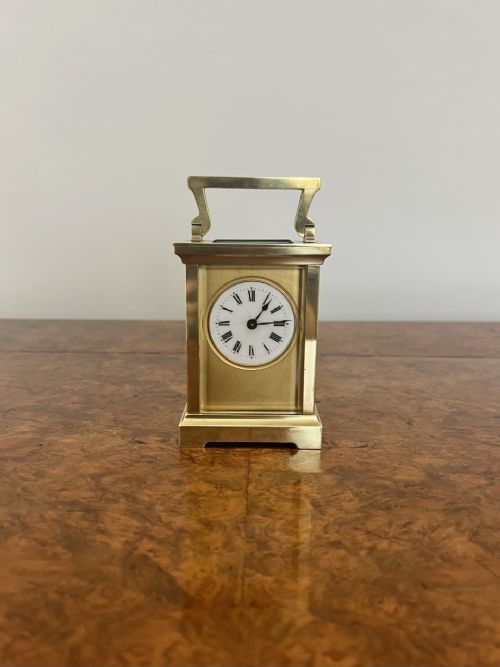
An enamel brass mantel clock brings together solid metal housings and vitreous dial panels, emerging primarily through Victorian and late nineteenth century French production. Pieces range from straightforward brass carriage clocks with enamel chapters to ornate gilt bronze and champleve garniture sets designed for prominent display on a mantelpiece.
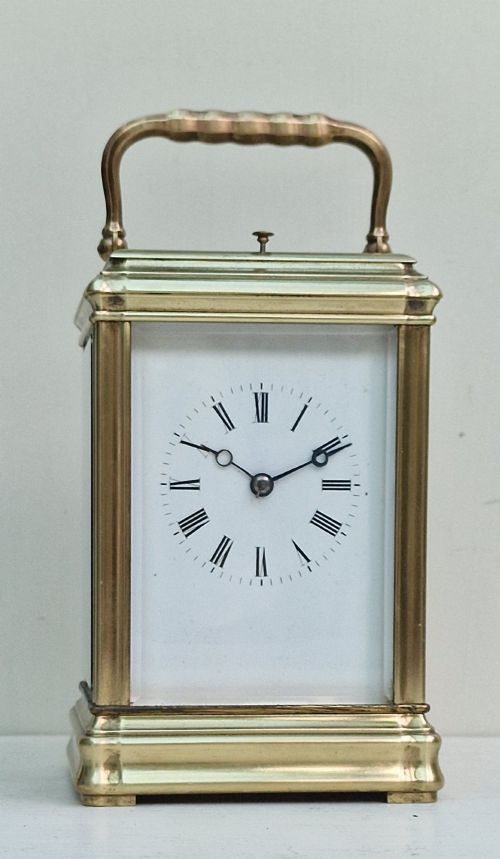
The most frequent examples encountered on this page are French carriage clocks and domestic mantel clocks spanning the 1860s to the 1910s. These vary from simple striking movements in gorge cases to fully engraved miniature designs accompanied by travel cases.
Materials and construction methods
Manufacturers built these objects using cast or sheet brass, gilt bronze, and ormolu as the structural core for cases, often incorporating glass panels to reveal the mechanical movement within. Dial faces and decorative highlights utilise enamel, porcelain, and champleve techniques to add colour and contrast against the metallic frames.
Movements relied on metal gear trains housed within brass plates, driven by springs or weights, with many incorporating Swiss movements, repeating strikes, or bell-striking mechanisms. Cases frequently received hand-engraving, bevelling on glass panes, and surface gilding to finish the exterior.
Travellers once relied on five-minute repeating mechanisms to tell the time in the dark by ear during bumpy coach journeys.
Distinctions in quality
Quality rests upon the crispness of the brass casting, the depth of the hand-engraving on the case, and the complexity of the internal movement, such as repeat striking or bell mechanisms. Superior examples display flawless enamel dials free from hairline cracks and retain their original fire gilding or ormolu finish.
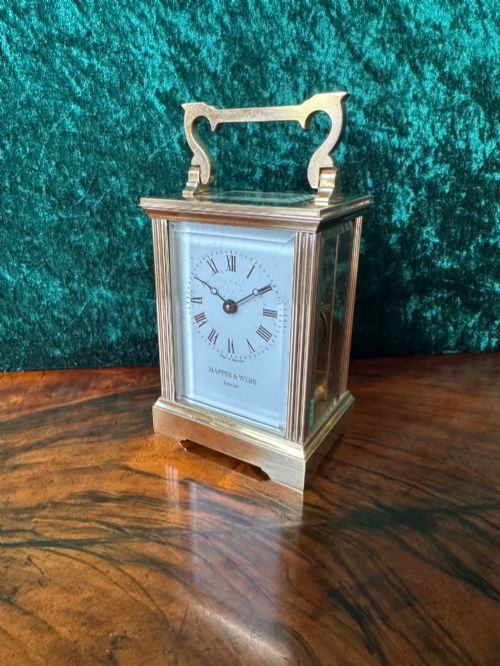
Makers known for signed movements and specific case architectures, such as gorge or doucine styles, command attention through precision engineering rather than basic assembly. The presence of matching travel cases or complete clock garniture sets further separates standard production items from finer workshop output.
Henri Jacot·Mappin and Web·Drocourt Paris·T. Martin and Co·Margaine Of France
The Enamel Brass Mantel Clock Glossary
- Champleve
- An enamelling technique where troughs or cells are hollowed out of a metal surface and filled with vitreous enamel before firing. This method creates decorative patterns in relief across bronze and brass clock cases.
- Gorge case
- A stepped, architectural brass carriage clock case profile featuring distinctive fluted pillars at the corners. It is characteristic of better quality nineteenth century French timepieces.
- Ormolu
- Finely ground high-carat gold mercury-gilded onto a bronze or brass base object. The technique yields a warm, durable metallic lustre found on decorative French mantel clocks.
- Carriage clock
- A portable spring-driven clock originally designed for travelling by officers and nobility during the nineteenth century. They typically feature a glass-panelled brass case with a handle on top.
- Garniture set
- A matched group consisting of a central clock flanked by matching decorative objects such as urns or candelabra. These sets were produced in various revival styles during the late nineteenth century.
Enamel Brass Mantel Clock: Frequently Asked Questions
What is a carriage clock?
A carriage clock is a portable timepiece developed in the nineteenth century for travel, housed in a brass case with glass windows and a carrying handle on top.
Most examples operate on an eight-day spring movement and often feature striking mechanisms or alarms to suit travellers.
How do I wind my brass clock?
Winding requires a dedicated key inserted into the winding squares on the backplate or dial face, turning gently until resistance stops the motion. Care must be taken not to overwind the mainspring.
Different movements require winding either the time train independently or both the time and strike trains separately depending on the mechanical setup.
How do I identify a French clock?
French pieces typically display maker stamps on the backplate of the movement, along with serial numbers and specific escapement types like platform cylinder or lever mechanisms. The styling often reflects periods such as French Rococo Revival or Louis XVI Revival.
Cabinet construction often employs heavy gilt bronze, ormolu, or champleve enamel panels rather than standard domestic wood cabinetry.
Where should I place a mantel clock?
Mantel clocks function best on stable, level surfaces away from direct sunlight, drafts, and moisture that could affect the delicate enamel and metalwork. A sturdy shelf or mantelpiece supports the substantial weight of brass and marble cases.
Placing the clock level ensures the pendulum or balance wheel beats evenly, allowing the mechanical movement to keep accurate time.