



Empire Style Gilt Candlesticks
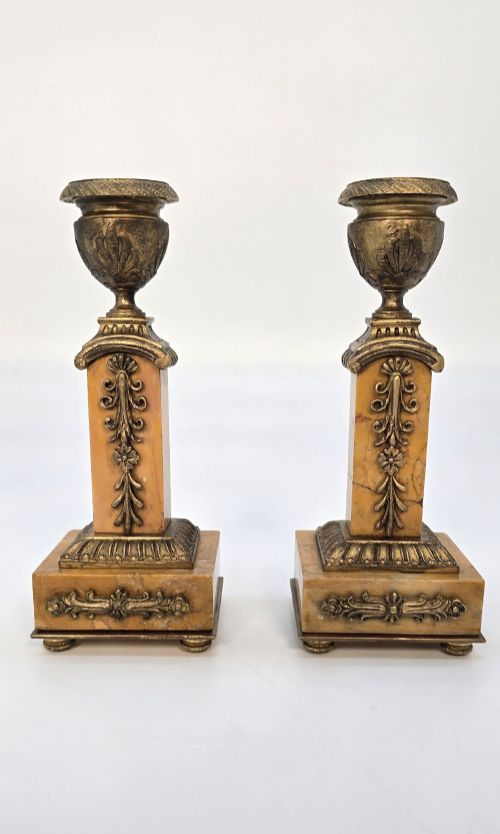
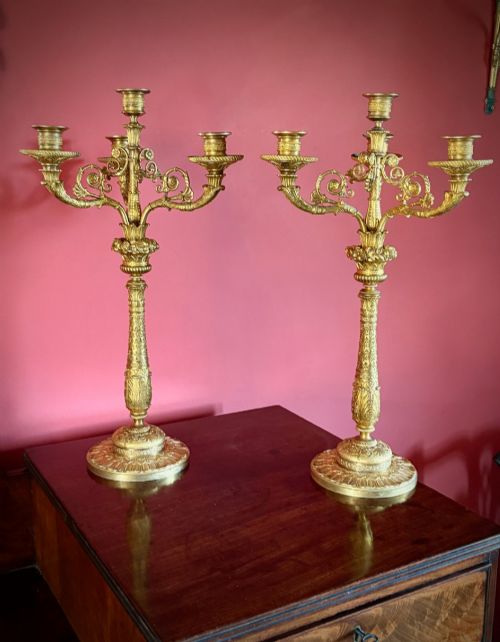
These empire style gilt candlesticks combine heavy cast bronze with rich gilding to bring formal neoclassical grandeur to a room.
Empire Style Gilt Candlesticks
When you search for empire style gilt candlesticks, you encounter a specialised form of lighting designed to catch and reflect candlelight through polished metal surfaces. The pieces listed here span the nineteenth century and the Regency period, drawing directly on classical motifs.
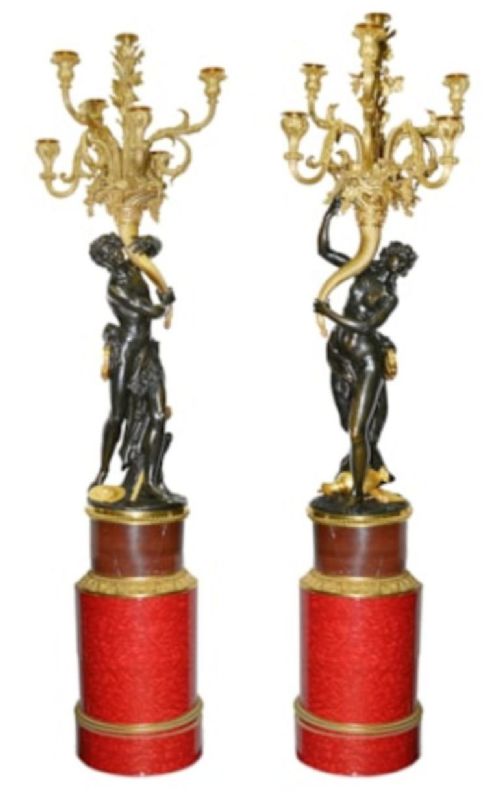
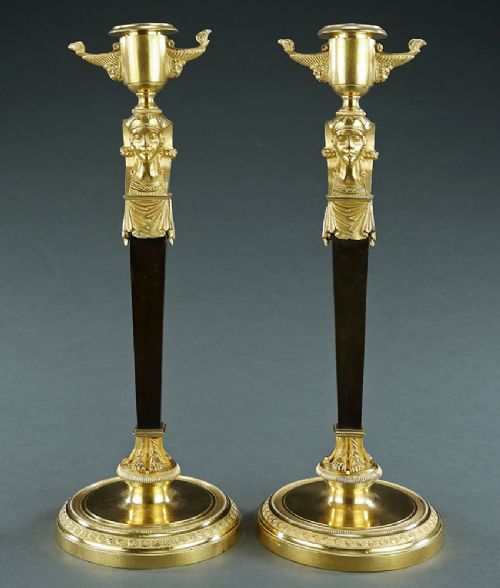
The selection extends beyond simple single-branch sticks to include table lamps, wall sconces and grander candelabra featuring figures such as caryatids, putti and griffins. These forms reflect both French Empire taste and the influence of the Grand Tour.
Materials and construction
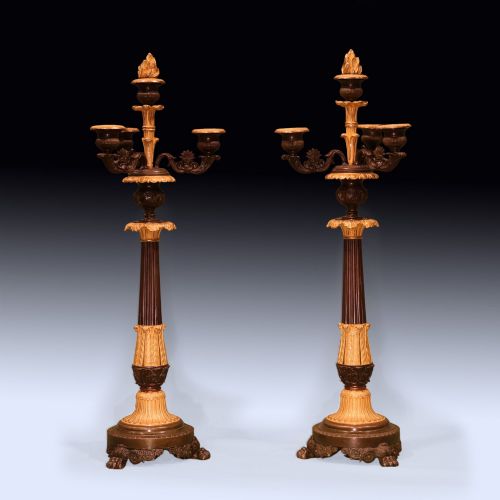
Makers utilised cast bronze as the primary structural body, often finishing the metal with fire-gilding known as ormolu to create a brilliant golden surface. Patinated bronze provided a dark, contrasting tone that highlighted the bright gilding.
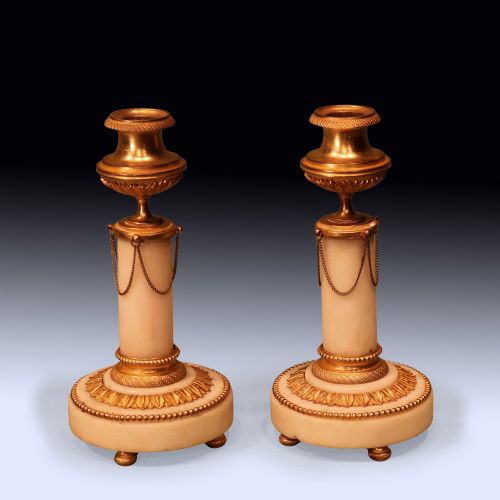
White marble frequently formed the bases or columns, adding weight and a cool classical proportion to the design. Gilt metal and cast iron also appear in later or alternative interpretations of the style.
Empire Style Gilt Candlesticks Retail Price Guide 2026
Typical asking prices for empire style gilt candlesticks among the pieces listed under this phrase on Sellingantiques today, from the lower quarter to the upper quarter. They describe what is for sale here now, not the wider market.
Object forms recorded here range from single desk sticks to five-branch candelabra and wall sconces.
Assessing quality and finish
The integration of materials also dictates standard, where tightly fitted marble bases and heavy, well-balanced bronze castings separate superior examples from standard production.
The Empire Style Gilt Candlesticks Glossary
- Ormolu
- Gilt bronze produced by applying a mercury and gold amalgam to cast bronze and heating it until the mercury vaporised. This historic technique leaves a durable, deep golden lustre.
- Patinated bronze
- Bronze treated with chemical solutions to darken the surface to a rich brown or black tone. It provides contrast against bright ormolu mountings.
- Caryatid
- A sculpted female figure serving as an architectural support or pillar. They frequently form the shafts of candlesticks in this style.
- Candelabra
- A branched candlestick holding multiple candles or light fittings. They offer greater illumination and presence than single sticks.
- Grand Tour
- A traditional trip through Europe undertaken by young upper-class men in the eighteenth and nineteenth centuries. They collected classical antiquities and souvenirs including these bronzes.
Empire Style Gilt Candlesticks: Frequently Asked Questions
What periods do these pieces date from?
The listings span the nineteenth century, encompassing the Regency period, Georgian eras and later nineteenth-century revivals.
Maker styles stretch from French Empire and Louis XVI to Swedish Empire and Charles X iterations.
How were these candlesticks used originally?
They sat upon dining tables, mantelpieces and desks to hold candles for illumination in formal rooms.
Multi-branch candelabra provided brighter light for evening entertaining and social gatherings.
Are these items converted to electricity?
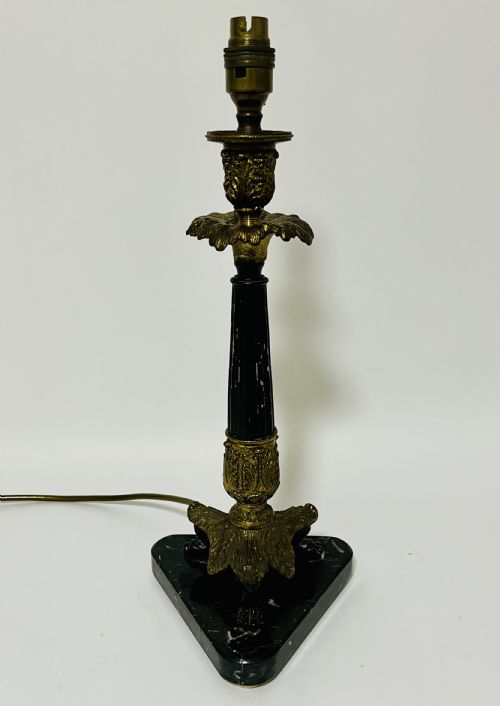
Several pieces function as table lamps with fitted electrical wiring alongside traditional candle holders.
Conversion methods vary according to when the adaptation occurred during the life of the object.
How do I tell Empire style from Louis XVI?
Louis XVI pieces draw on lighter neoclassical restraint with straight lines and ribbons.
Empire style favours heavier martial and classical symbols influenced by Napoleonic military campaigns.