

19th Century Gilt Candlesticks
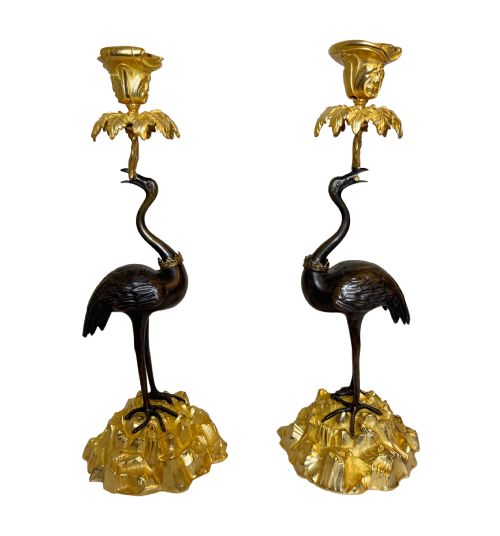
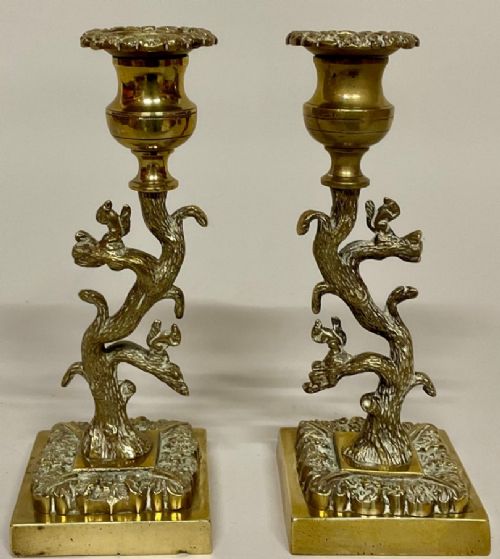
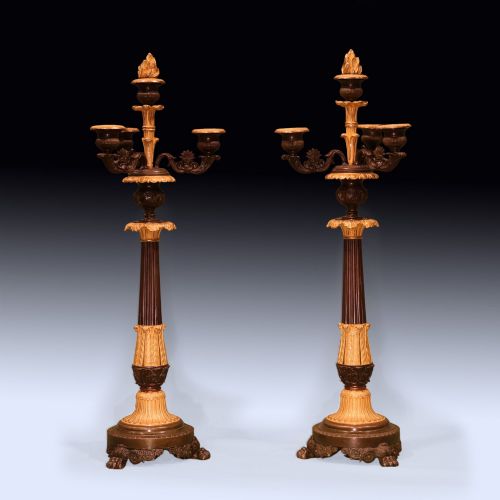
These 19th century gilt candlesticks bring warmth and formal presence to a room through varied bronze, brass, and ormolu construction.
19th Century Gilt Candlesticks
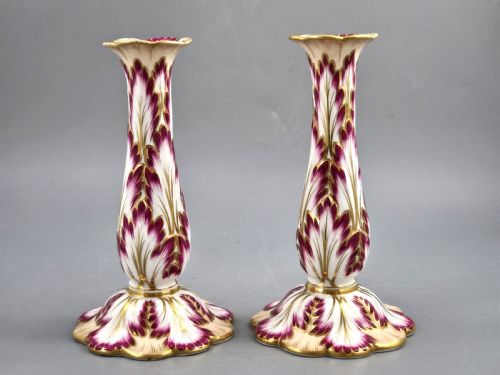
When searching for 19th century gilt candlesticks, buyers encounter objects designed to illuminate interiors while adding decorative weight to mantlepieces and tables. The selection ranges from compact desk accessories to large multi-branch candelabra spanning the Georgian, Victorian, and Regency periods.
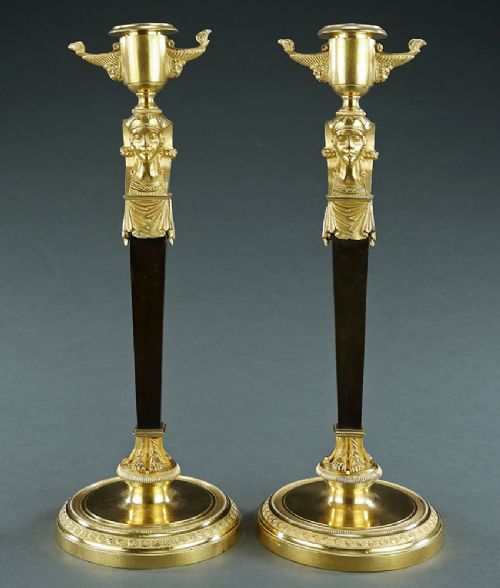
French Empire, Rococo Revival, and Neoclassical styles dominate the forms, frequently pairing gilded surfaces with contrasting patinated bronze, marble, onyx, or porcelain. Pairs created for symmetrical display appear regularly alongside single items and converted lamp bases.
Materials and construction methods
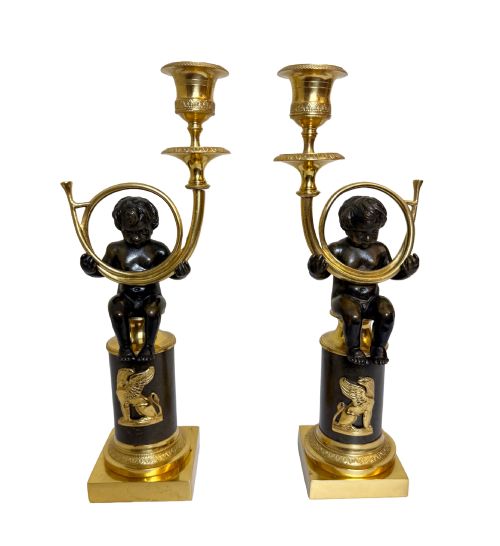
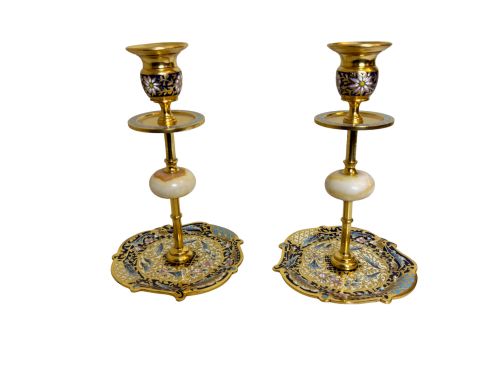
Foundry work relies heavily on bronze and brass casting, finished with applied gilding or mercury ormolu to achieve a bright metallic sheen. Stonework components like white marble or onyx provide heavy structural bases, while champlevé enamel adds coloured surface detail.
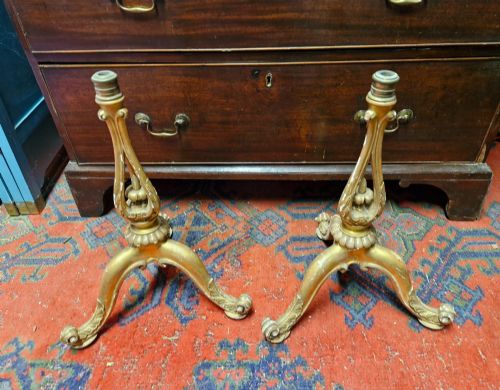
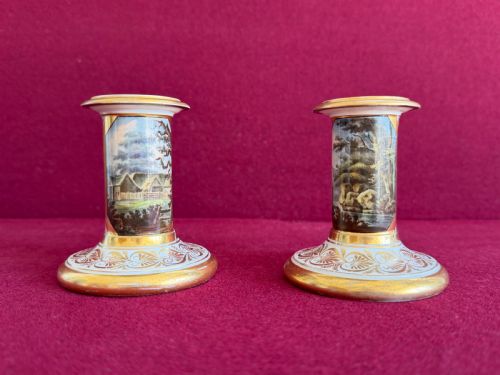
Secondary materials include carved giltwood, porcelain elements, and occasional treen components. Metal parts are cast in sections, chased by hand to sharpen surface details, and assembled using threaded pins or screws.
Listings feature periods spanning the Georgian, Regency, and Victorian eras, utilising gilt bronze, ormolu, marble, and porcelain.
Distinctions in manufacture and preservation
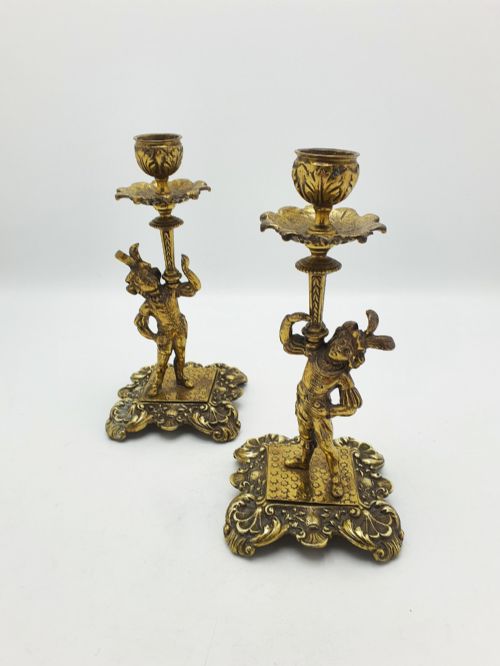
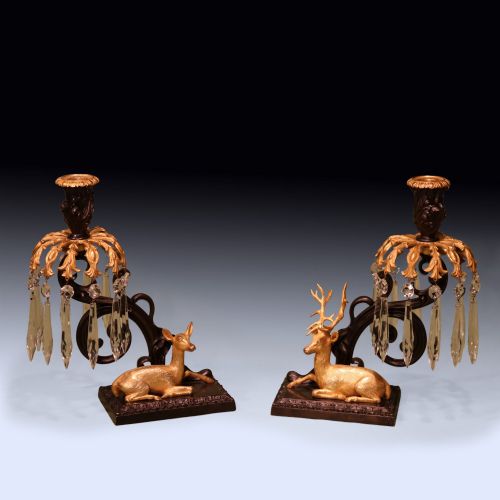
Execution depth in the metal chasing separates standard production pieces from finer examples, particularly where figural elements like cherubs, animals, or classical maidens are integrated. Crisp detailing in foliage, drapery, and cast motifs indicates skilled workshop output.
Original surface finishes and the retention of matching components dictate overall integrity. Preservation of the original gilding without excessive cleaning wear maintains the intended contrast against patinated bronze or marble sections.
Mappin And Webb·Ridgway·Barr Flight And Barr
The 19th Century Gilt Candlesticks Glossary
- Ormolu
- Gilded bronze produced through a mercury amalgamation technique common in French metalwork. This process creates a deep, durable golden finish.
- Champlevé
- An enamelling technique where troughs are dug into the metal surface and filled with vitreous colour before firing. It creates patterned decorative bands.
- Pricket
- A sharp metal spike on top of a candlestick designed to skewer and hold a candle in place. These appear frequently on ecclesiastical or traditional forms.
- Patinated bronze
- Darkened or chemically treated bronze metalwork that provides a contrasting tone against bright gilded sections. It emphasises sculptural depth.
19th Century Gilt Candlesticks: Frequently Asked Questions
Were these candlesticks converted to lamps?
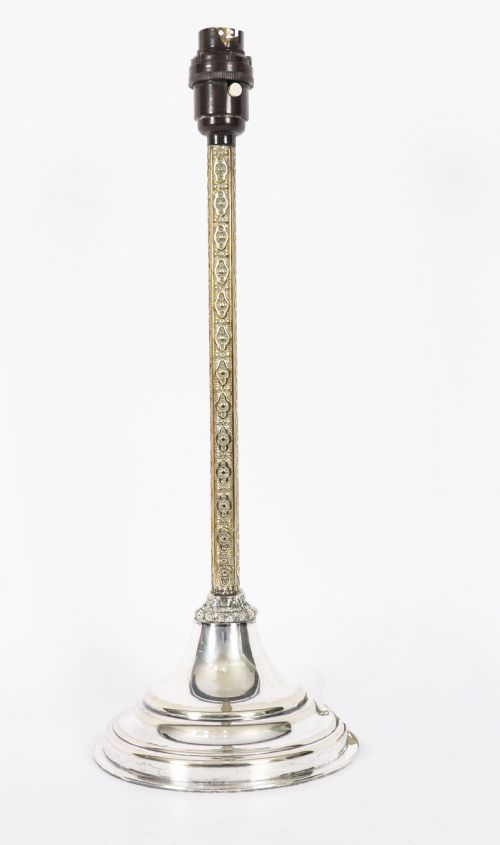
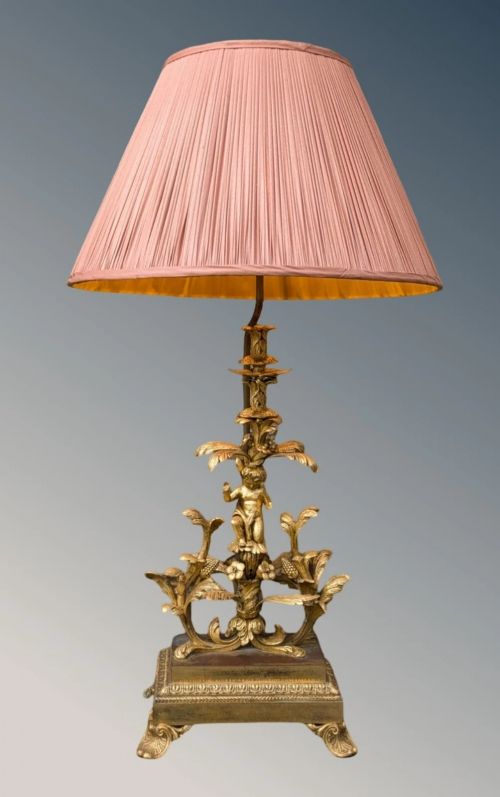
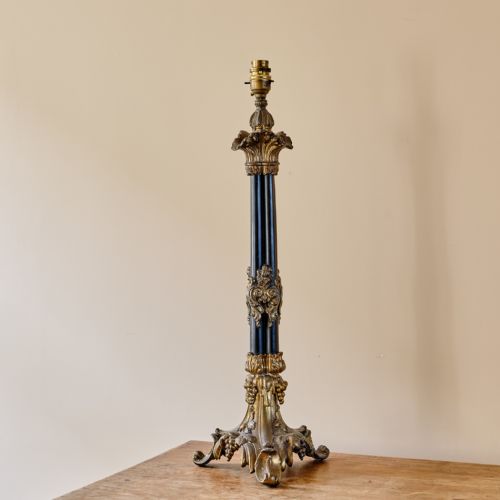
Many examples were adapted for electrical wiring during the twentieth century. These conversions often retain the original structural form while hiding cables through the centre.
Buyers find both unaltered candle holders and previously adapted lamp bases. Reversible conversions preserve the underlying metalwork without permanent structural damage.
How do I tell French and English pieces apart?
French production frequently employs heavier ormolu casting with distinct Empire or Rococo Revival motifs. Figures often depict classical mythology, cherubs, or specific regional style revivals.
English variants tend to show restrained Regency or Victorian casting characteristics. Materials like brass and porcelain appear with greater frequency in domestic English table wares.
What is the difference between a candlestick and a candelabra?
Candlesticks hold a single candle in an upright socket atop a central shaft. They function well on narrower ledges and smaller surface areas.
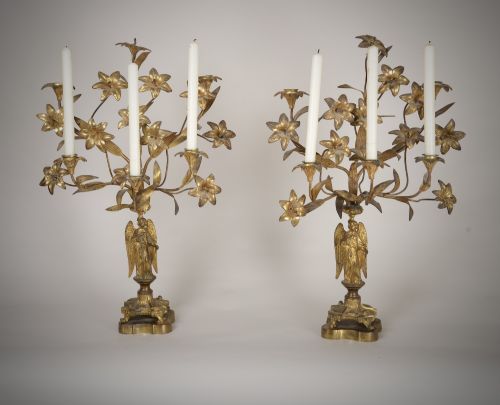
Candelabra branch out into multiple light fittings from a main stem. They offer greater illumination and scale for large dining tables or sideboard displays.