



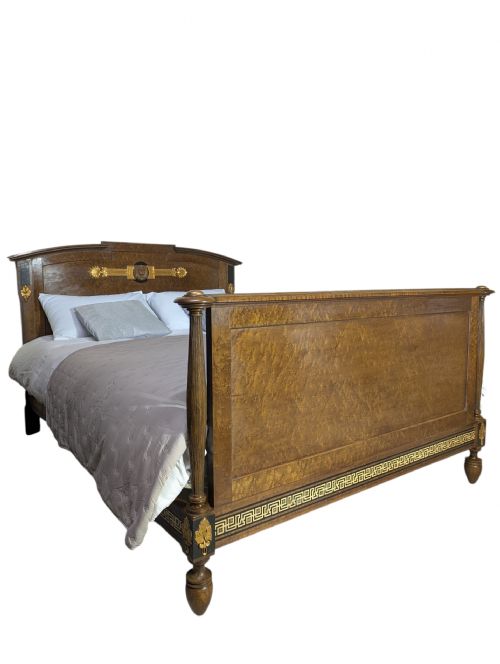


Empire Style Frame
These pieces for an empire style frame span grand mahogany beds and gilded mirrors shaped by classical restraint and Napoleonic ambition.
Empire Style Frame
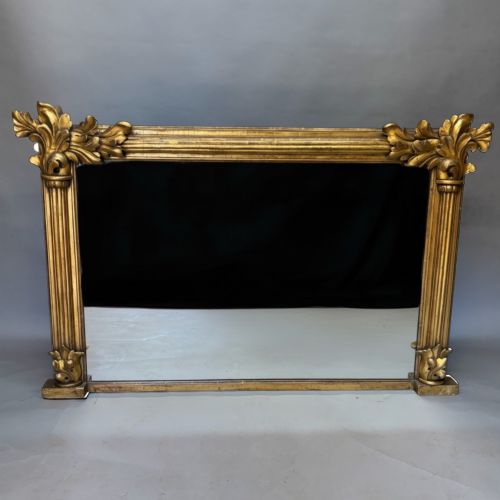
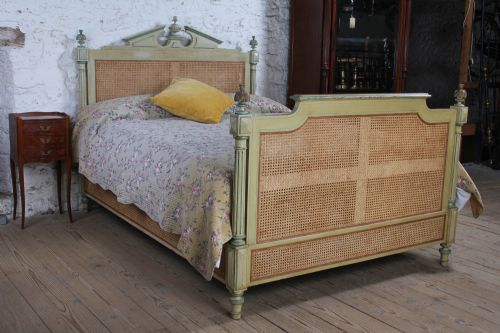
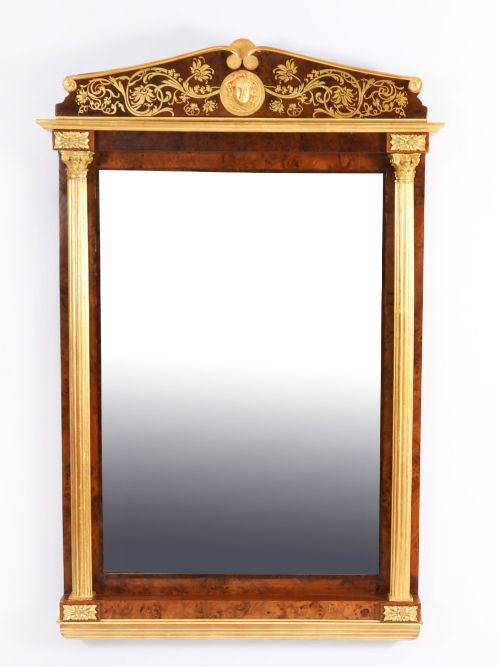
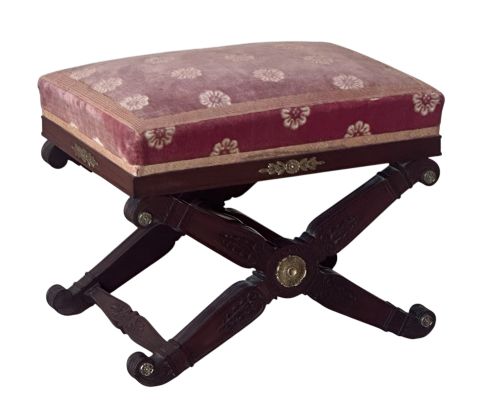
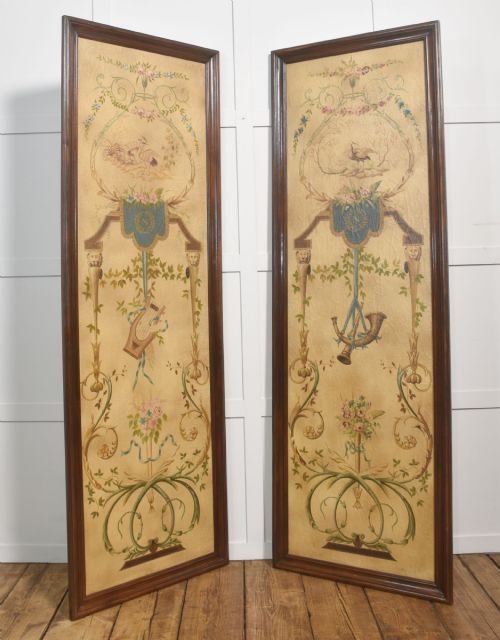
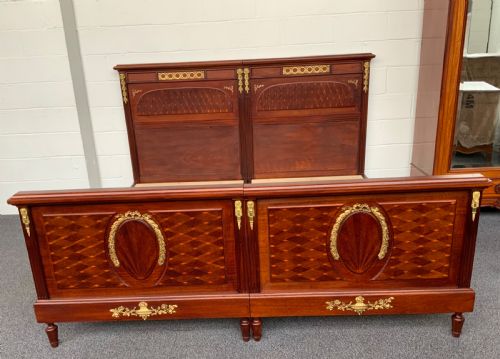
When you search for an empire style frame, you encounter large structural pieces and small display items built with the authoritative lines of the early nineteenth century. The selection ranges from architectural wall mirrors and giltwood seating to monumental mahogany bedframes and small cast ormolu photograph frames.
The most common examples on this page are substantial wooden beds and wall mirrors from the nineteenth century, alongside later revivals from the early twentieth century. Makers of these periods drew heavily upon French Empire, Regency, and Neoclassical vocabularies to create imposing focal points for domestic interiors.
Materials and construction
Timbers such as mahogany, walnut, and fruitwood form the robust structural carcasses of beds, settees, and large mirrors, often enhanced by parquetry or distinct veneers. These dense woods provide the necessary weight to support heavy architectural profiles and extensive carved ornamentation.
Surface brilliance relies on applied giltwood, gesso, and cast bronze ormolu mounts featuring classical motifs like bees, cherubs, and acanthus leaves. Metal elements are meticulously fastened to dark wood or black lacquer grounds to produce the sharp chromatic contrast characteristic of the aesthetic.
Empire Style Frame Retail Price Guide 2026
Typical asking prices for empire style frame among the pieces listed under this phrase on Sellingantiques today, from the lower quarter to the upper quarter. They describe what is for sale here now, not the wider market.
Listings feature 19th-century items alongside 20th-century revivals, utilising materials from cut glass and paper to solid mahogany and giltwood.
Judging the work
The distinction between ordinary and exceptional pieces rests upon the crispness of the carving and the fidelity of the bronze work. Finely chiselled ormolu mounts with deep relief define the upper tier of photographic frames and structural beds, whereas simpler cast details mark standard output.
Proportion and wood selection also dictate grade, with plum pudding mahogany and well-figured burr walnut elevating cabinetwork. The harmony between the gilded wooden frame and its secondary decorative reliefs reveals the competence of the workshop.
Boin Taburet·Jean Baptiste Isabey
The Empire Style Frame Glossary
- Ormolu
- Gilt bronze applied as a decorative mount to furniture and picture frames. This technique involves coating cast bronze with a finely ground mercury and gold amalgam before heating.
- Giltwood
- Timber that has been coated with a thin layer of gold leaf over a prepared gesso ground. It provides a luminous, durable surface for mirrors and decorative framing.
- Curule stool
- An ancient Roman magistrate's chair shape adopted by nineteenth-century designers for cross-framed X stools. These portable seats often feature classical scrolling supports.
- Pier mirror
- A tall vertical glass designed to hang on the wall space between windows. They frequently incorporate decorative relief panels at the top.
Empire Style Frame: Frequently Asked Questions
What periods do these frames represent?
The listings span the early nineteenth century through to various revival periods in the twentieth century. Pieces draw upon Regency, French Empire, and Neoclassical design principles.
Original items date from the height of the Napoleonic era, while later interpretations reflect twentieth-century revivals of the same heavy classical vocabulary.
How were large empire beds constructed?
Large beds utilise dense timbers like mahogany and walnut, frequently accented with cast brass or ormolu mounts. The structural frames support king and double dimensions with architectural authority.
Many examples incorporate upholstered headboards and footboards, pairing dark woods with silk fabrics or painted wooden finishes.
Where should a wall mirror hang?
Large mirrors function best as overmantels above fireplaces or as vertical pier glasses between windows. Their reflective glass and gilt frames amplify available natural light in a room.
Relief panels depicting classical figures such as Bacchus add an architectural focal point to a main reception room.
How do I identify a photograph frame?
Smaller frames are typically cast in bronze or brass with gilt finishes, often decorated with Napoleonic bees or floral motifs. They frequently include easel backs for desktop display.
These pieces apply the same heavy classical ornamentation found on larger architectural mirrors to domestic tabletop accessories.