
Empire Side Table
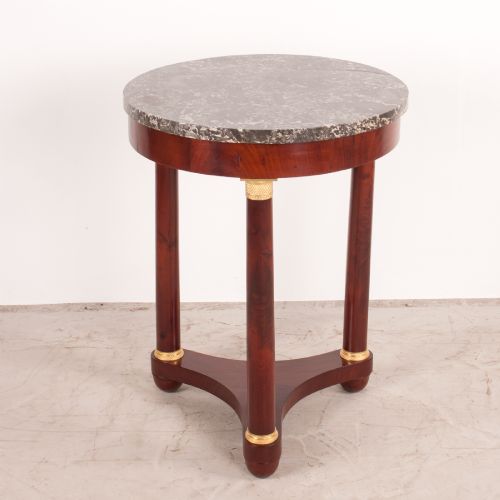
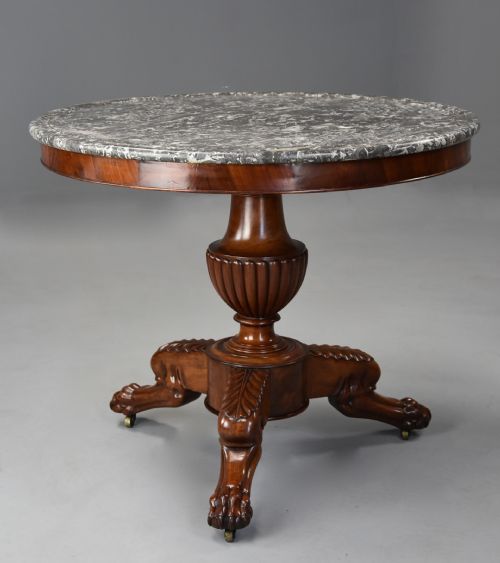
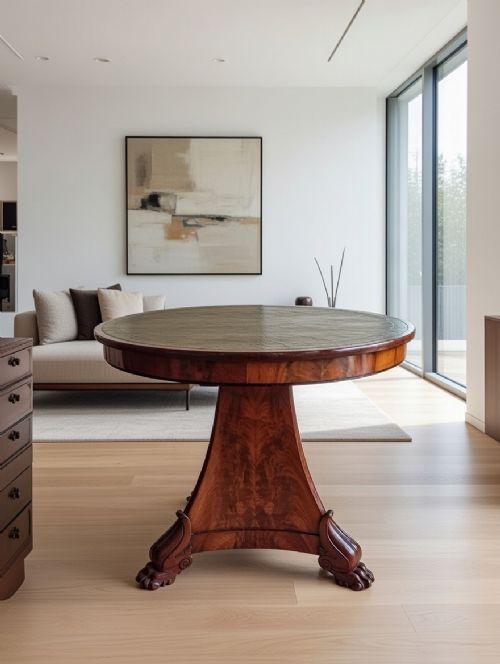
An empire side table brings formal neoclassical presence to a room through rich mahogany timbers and polished marble tops.
Empire Side Table
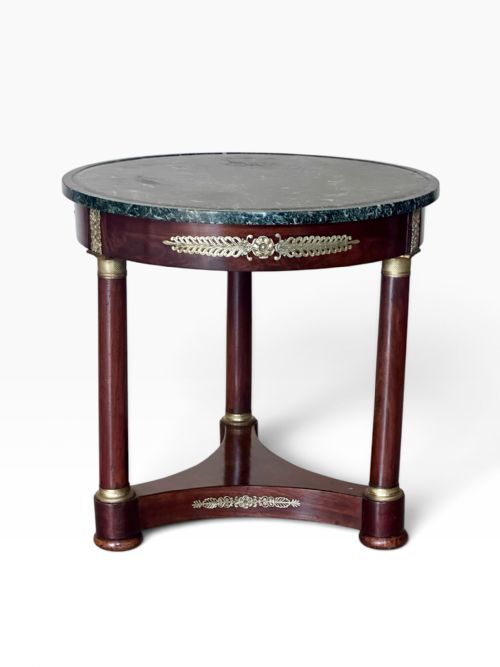
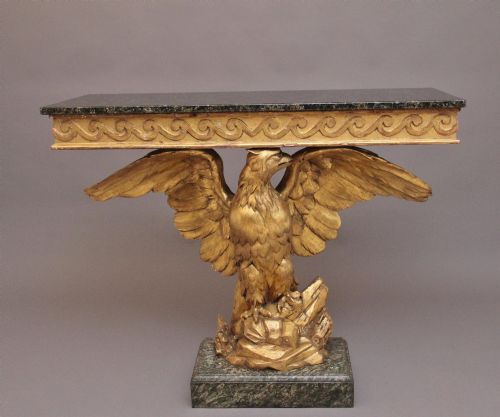
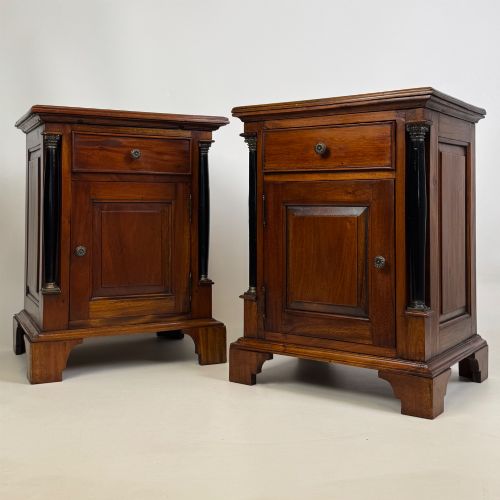
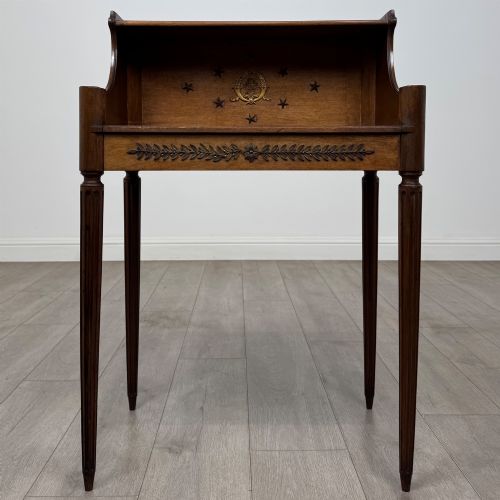
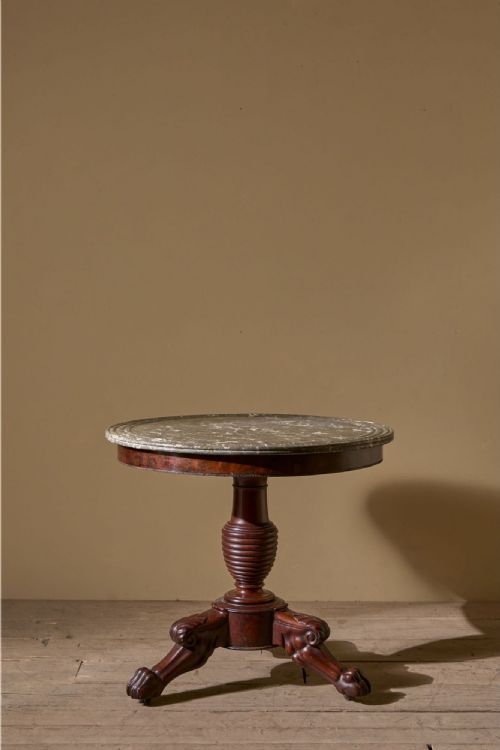
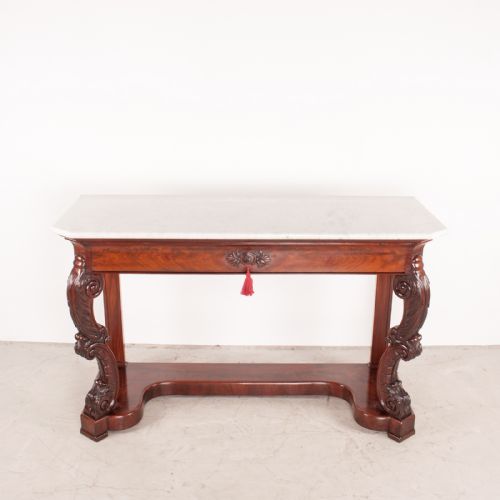
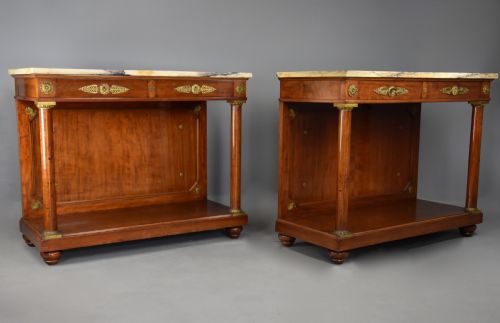
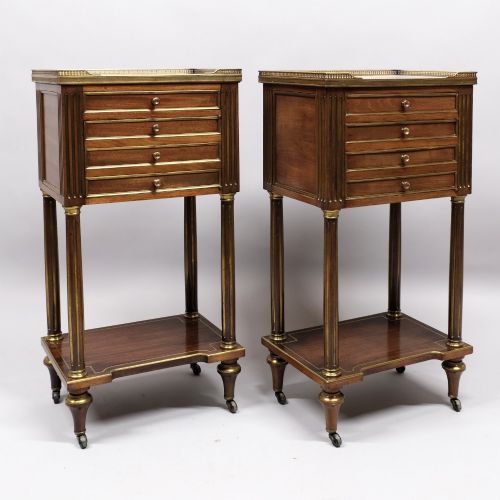
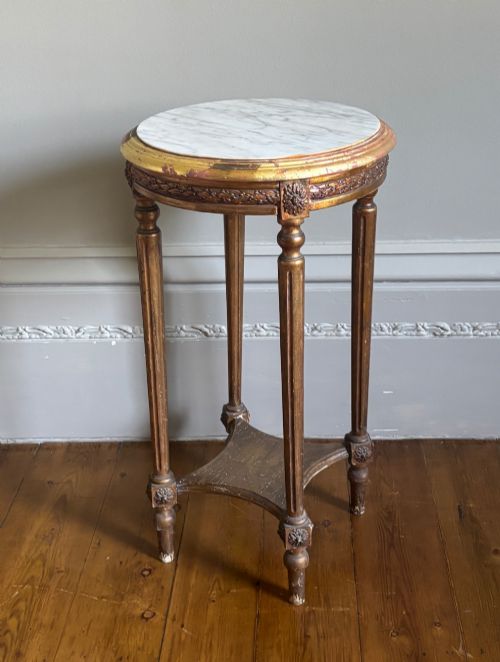
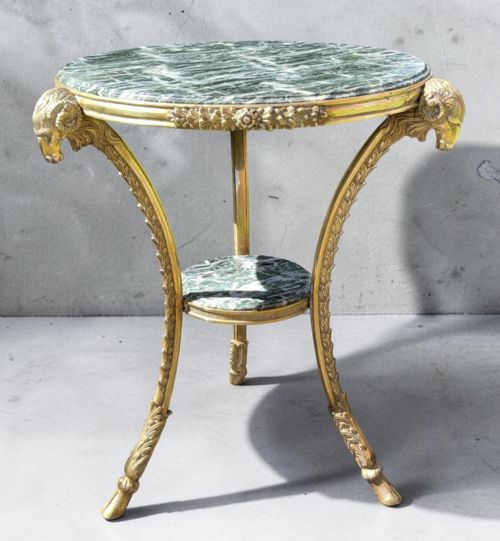
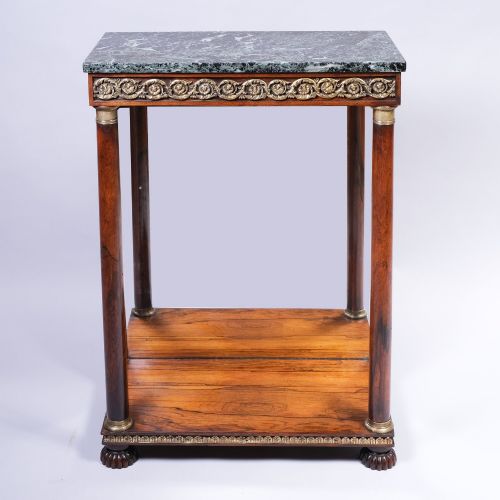
An empire side table encompasses round guéridons, console tables, and compact bedside cabinets originating primarily from nineteenth century France, alongside later revival iterations.
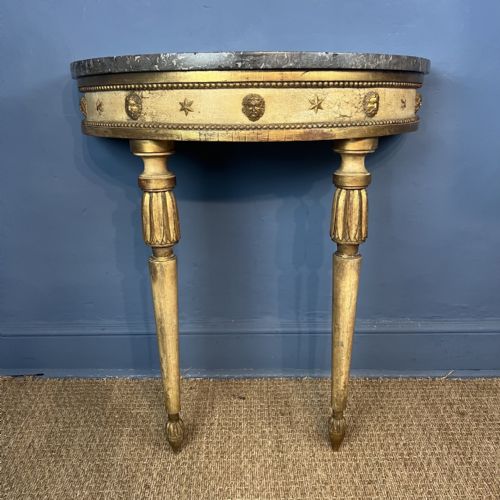
The selections span distinct forms including three-legged pedestal tables, wall-mounted consoles, and low sofa tables designed for domestic utility and display.
Makers drew on classical vocabulary, producing architectural silhouettes that range from austere Biedermeier birch to richly mounted French giltwood.
How they were made
Cabinetmakers constructed carcass frames from dense timbers such as mahogany, walnut, and burr birch, often applying veneer over secondary woods.
Surface ornamentation relied on cast ormolu mounts, brass galleries, and parcel-gilding, complemented by inset slabs of white, grey, or fossil marble.
Materials recorded across the inventory include fossil marble, ormolu, Karelian birch, ebonised wood, and giltwood.
What varies in quality
The refinement of cast bronze ormolu separates standard production from exceptional pieces, visible in the sharpness of chiselling and depth of mercury gilding.
Timber selection and matching dictate overall success, where figured mahogany veneers and continuous grain alignment show superior workshop standards.
Jean-Joseph Chapuis·Krieger Paris
The Empire Side Table Glossary
- Guéridon
- A small round French table supported by a single central pillar or three legs. These tables frequently feature inset marble tops.
- Ormolu
- Gilded bronze applied as decorative mounts to furniture frames. The technique involves treating metal with gold amalgam.
- Console table
- A table designed to stand against a wall, frequently secured with brackets. Early examples often incorporate rear mirror plates.
- Biedermeier
- A Central European style prioritising clean lines and warm domestic woods. This aesthetic spanned the early decades of the nineteenth century.
- Bouillotte
- A small round card table adapted for lighting and play. They typically incorporate raised galleries to contain dice or coins.
Empire Side Table: Frequently Asked Questions
What is an empire side table?
An empire side table is a formal piece of furniture reflecting early nineteenth-century neoclassical design principles. These tables are characterised by symmetrical geometry, dark timbers, and classical metal mounts.
They frequently appear as round guéridons or rectangular console tables designed for prominent placement in reception rooms.
How were they used historically?
These tables served specific domestic functions within grand interiors, acting as surfaces for lamps, decorative porcelain, or serving vessels. Guéridons stood in the centre of rooms or beside seating for tea and reading.
Console tables stood flat against walls beneath mirrors, while smaller cabinets functioned as bedside storage.
Where should I place one?
An empire side table works effectively in hallways, drawing rooms, or bedrooms as a functional accent piece. A round guéridon suits the centre of a room or an empty corner, while console tables anchor long wall spaces.
The marble tops provide durable surfaces for daily use alongside lamps and objects.
How do I spot a revival piece?
Revival pieces date from later periods such as the late nineteenth or early twentieth century, mimicking earlier Napoleonic styles. They often display mechanical fixings, different secondary wood choices, and standardised casting techniques.
Examining construction joints and timber ageing helps distinguish original nineteenth-century manufacture from later interpretations.