



Empire Bronze Centerpieces
Empire bronze centerpieces bring classical presence and heavy metalwork to a formal table, spanning French and Regency designs in bronze, ormolu and marble.
Empire Bronze Centerpieces
Empire bronze centerpieces comprise formal table vessels, tazzas, bowls and candelabra shaped by the neoclassical taste of the nineteenth century. These objects draw on French Empire, Charles X and Regency styles, translating classical architecture and mythology into substantial metal centerpieces for the dining table or sideboard.
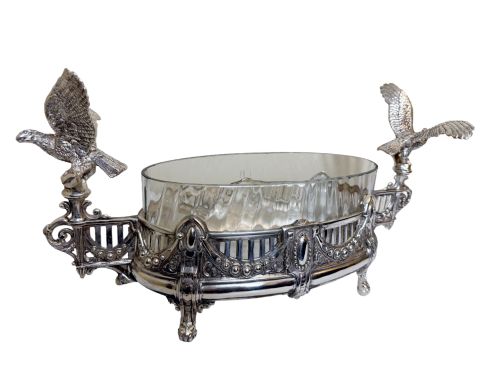
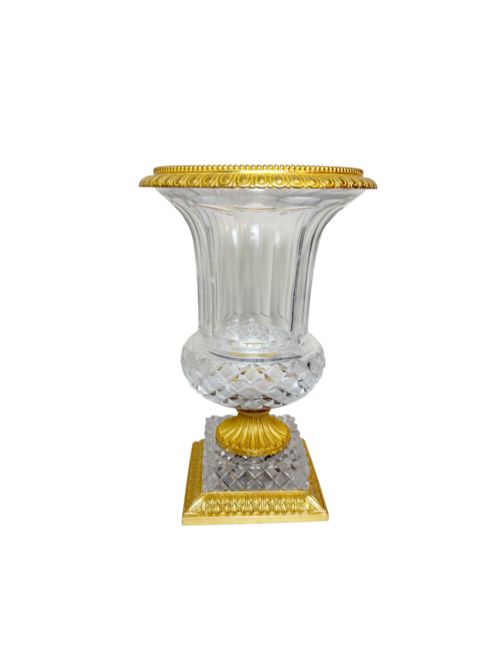
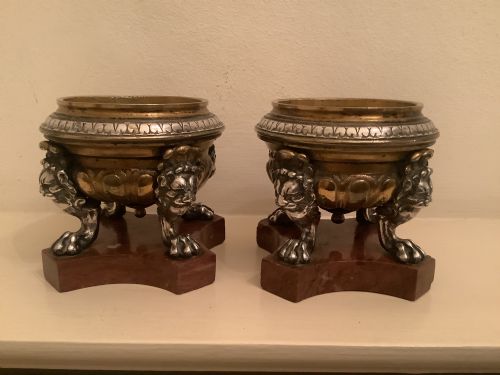
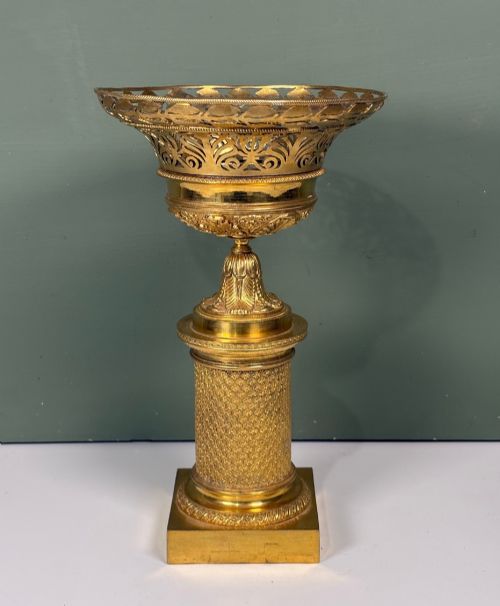
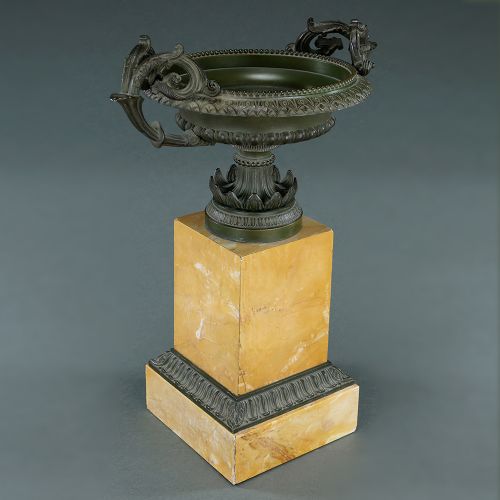
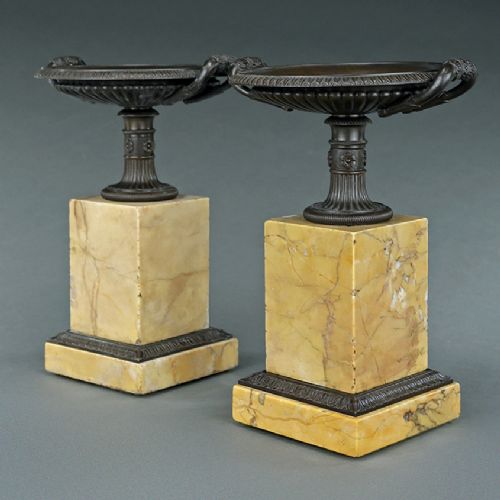
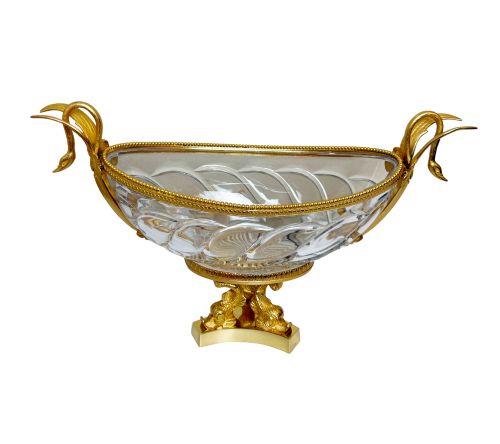
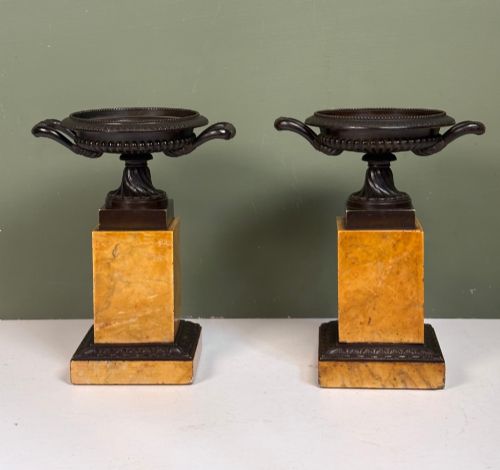
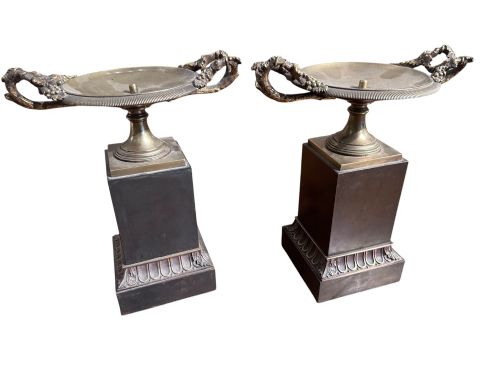
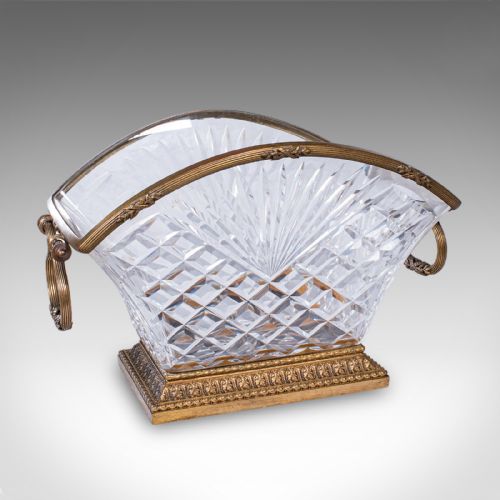
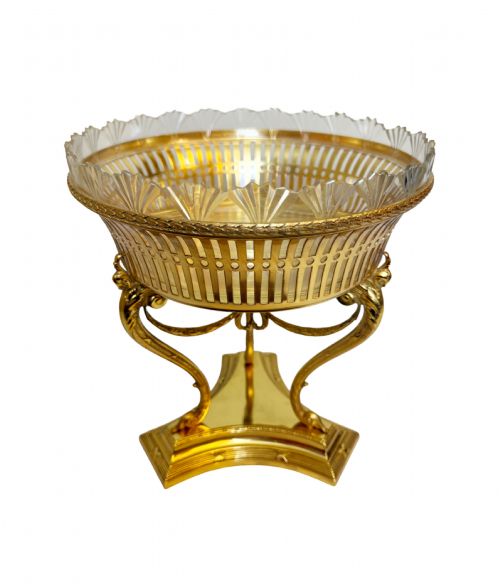
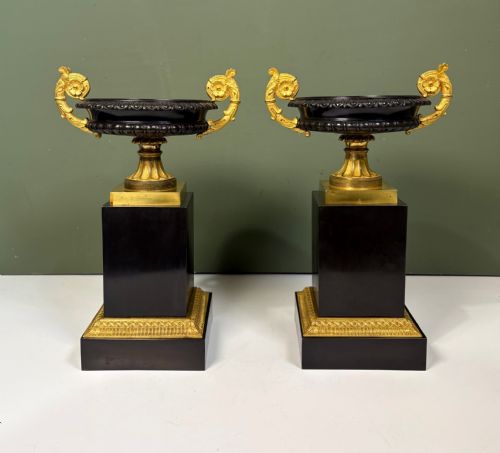
The pieces most frequently met on this page are tazzas and centrepiece bowls that combine cast bronze with contrasting materials. Examples pair patinated or silvered bronze with white, siena or black marble plinths, often incorporating cut glass inserts or crystal bowls held within ormolu mounts.
How they were made
The makers of these objects relied on metal casting to shape the structural bodies and figural supports in bronze, which they then finished through chasing and gilding to create ormolu surfaces. Gilt bronze sits alongside patinated and silvered bronze, contrasting matte dark tones with bright gold highlights on mounts, handles and bases.
Stonemasons turned and polished marble blocks, including siena and white varieties, to form heavy plinths and column bases that anchor the metalwork. Glassmakers contributed cut glass inserts and crystal bowls, fitting vessels precisely into metal collars and tazza rims.
Empire Bronze Centerpieces Retail Price Guide 2026
Typical asking prices for empire bronze centerpieces among the pieces listed under this phrase on Sellingantiques today, from the lower quarter to the upper quarter. They describe what is for sale here now, not the wider market.
Listings feature 19th-century periods including Regency, Victorian, and French Empire styles, executed in gilt bronze, ormolu, marble, and cut glass.
What varies in quality
Material selection dictates the upper tier of the range, marked by heavy siena marble bases, thick mercury gilding that retains a rich matte lustre, and heavy cut crystal inserts. Combinations involving silvered bronze or fine Limoges enamel plaques further distinguish finer works from standard production items.
Christofle Paris·Pierre Philippe Thomire·Lerolle Fres
The Empire Bronze Centerpieces Glossary
- Tazza
- A shallow saucer-shaped vessel raised on a stem and foot, commonly executed in bronze and marble for display on a dining table or sideboard.
- Ormolu
- Gilded bronze produced by applying an amalgam of gold and mercury to a bronze base and heating it to drive off the mercury, leaving a durable gold layer.
- Patinated bronze
- Metal treated chemically or thermally to produce a dark, stable surface coating that contrasts with bright gilt or silvered elements.
- Siena marble
- A yellow decorative marble quarried in Italy, featuring dark grey or brown veining, frequently utilised for classical plinths.
- Compote
- A raised bowl or dish used for serving fruit or sweetmeats, often sharing forms with the tazza in Regency and French design.
Empire Bronze Centerpieces: Frequently Asked Questions
What is an empire bronze centerpiece?
An empire bronze centerpiece is a heavy nineteenth-century decorative vessel, tazza or bowl cast in bronze and ormolu, often paired with marble plinths and glass inserts.
These objects were designed to occupy the middle of formal dining tables or sideboards, reflecting neoclassical and French Empire tastes.
How were these centerpieces used originally?
Dining rooms of the nineteenth century utilised these metal vessels to hold fruit, sweetmeats or floral arrangements during formal meals. They served as decorative focal points that displayed the host's taste and wealth through classical motifs.
When not holding food, bowls with glass inserts functioned as standalone decorative objects on side tables or mantelpieces.
How do I style an empire bronze centerpiece?
Place a tazza or bowl in the centre of a large dining table or heavy wooden sideboard where its weight and scale have room to breathe. Avoid crowding the piece with small items so the bronze, marble and crystal remain the visual focus.
Let natural light catch the ormolu highlights and the veining of the marble base by keeping the surrounding surface clear.
How do I tell French Empire from Regency pieces?
French Empire pieces rely heavily on strict classical symmetry, military motifs, and rich ormolu mounts combined with dark patinated bronze. Regency items often incorporate lighter classical references, distinctive patination, and sometimes playful or specific cultural motifs.
Both styles share a devotion to ancient Greek and Roman forms, executed through similar bronze-casting and marble-turning techniques.