


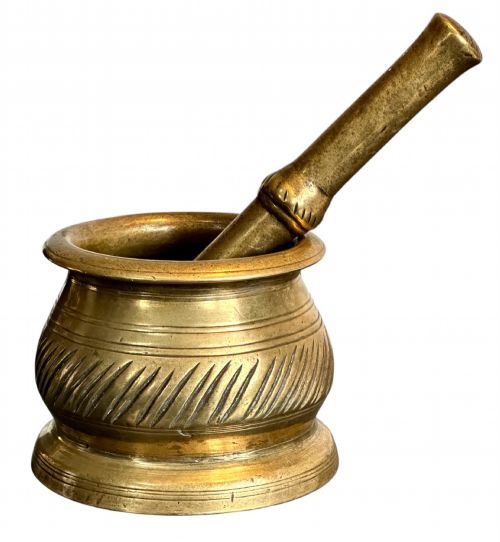

Decorative Metal Bowl
A decorative metal bowl brings weight and craftsmanship to a room, offering centuries of artistry in bronze, brass, and cloisonne enamel.
Decorative Metal Bowl
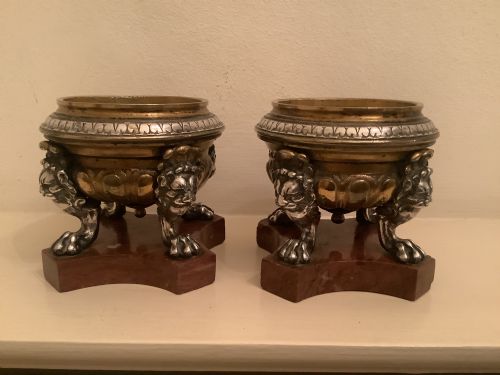
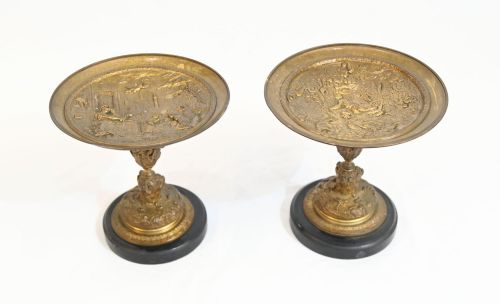
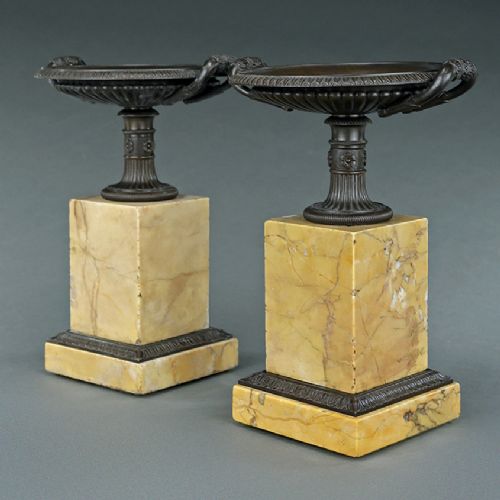
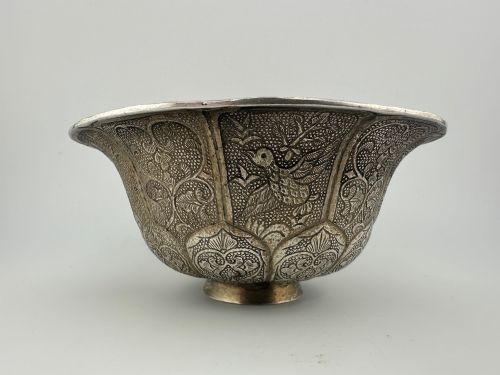
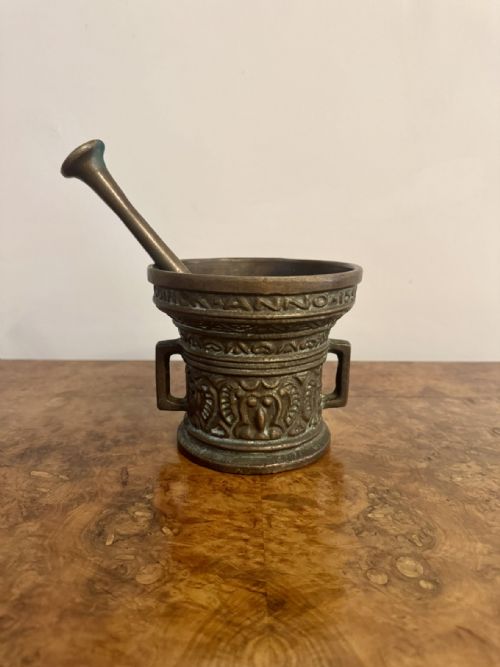
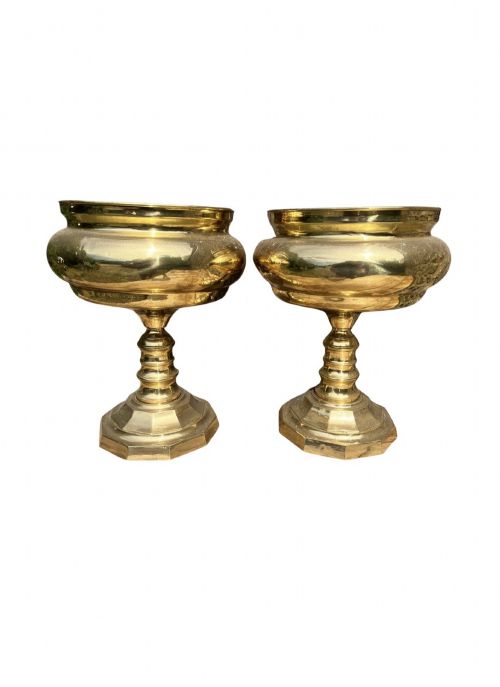
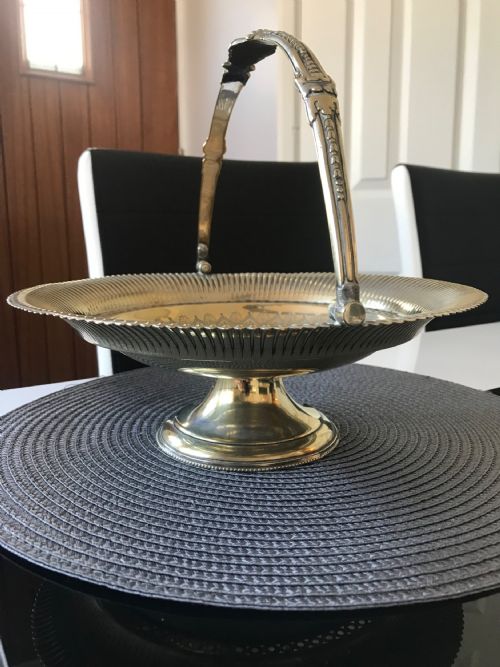
A decorative metal bowl serves as a table centrepiece, fruit basket, or tazza, often taking the form of a jardiniere, charger, or pedestal vessel. These items span the nineteenth century and earlier, drawing on Victorian, French Empire, Neoclassical, and Japanese Meiji aesthetics.
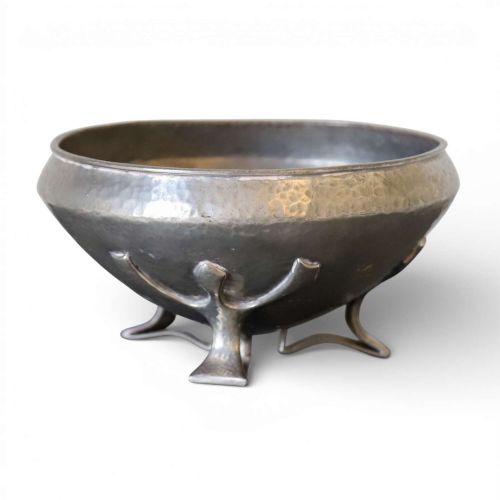
The most common examples on this page are French bronze and ormolu tazzas, Japanese cloisonne enamel chargers and bowls, and nineteenth-century brass or copper planters. Pieces range from Grand Tour marble-based displays to Persian inlaid copper dishes and Arts and Crafts pewter vessels.
Buyers encounter diverse regional traditions, including Chinese bronze bowls, Indian trays, and Middle Eastern vessels. Each object reflects the utilitarian or display purposes of its period, from grand dining table centrepieces to desk pots.
Materials and construction
Metals such as bronze, brass, copper, and silver plate form the primary structural body of these vessels, frequently shaped through casting, hammering, or spinning. Ormolu mounts and gilt finishes provide decorative contrast, while silver inlay and champleve enamel add surface detail.
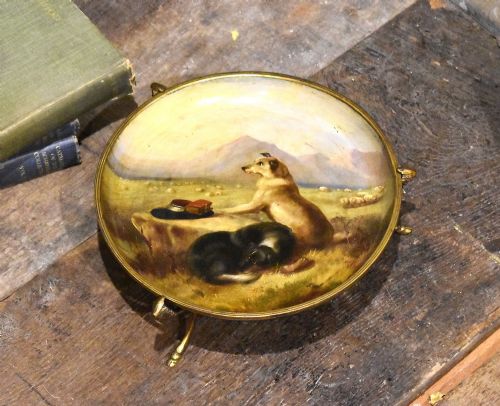
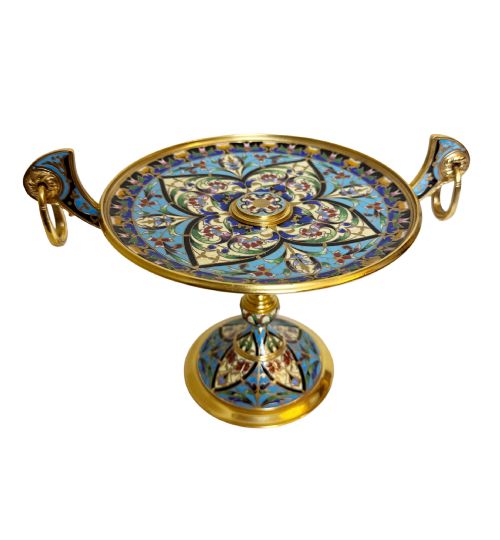
Cloisonne and painted enamels introduce colour and pattern across Japanese and Middle Eastern pieces, using wire cells or direct application on copper bases. Marble bases, agate cabochons, and papier-mache elements appear on select nineteenth-century comports and Grand Tour tazzas.
Several nineteenth-century models abandon fruit entirely, choosing instead to support winged cherubs, fighting dogs, or swimming shrimp.
Distinctions in quality
Quality rests in the crispness of the casting and the depth of the chasing on bronze and brass surfaces. Superior pieces display finely detailed figures, clean mounts, and harmonious proportions between metal bowls and their marble or ormolu supports.
In enamelled and inlaid works, the precision of the cloisonne wires, the richness of the palette, and the stability of the metal ground separate standard production from exceptional examples. Maker attribution, such as Liberty & Co Tudric pewter, also elevates a piece.
Liberty & Co Tudric·Oliver Baker
The Decorative Metal Bowl Glossary
- Tazza
- A shallow ornamental bowl or cup set upon a pillar and a foot. These elevated vessels often functioned as fruit stands or display centrepieces in nineteenth-century interiors.
- Jardiniere
- An ornamental pot or stand designed to hold growing plants or flowers. They appear in ceramic, brass, copper, and bronze across Victorian and continental workshops.
- Cloisonne
- An enamel technique where decorative patterns are created by soldering metal wires to a metal base and filling the resulting compartments with paste enamel.
- Ormolu
- Gilded bronze used for furniture mounts, clock cases, and decorative vessels. The technique involves applying a gold amalgam to a bronze base and heating it.
- Charger
- A large decorative plate or dish intended for display on a wall or sideboard rather than for practical dining use.
Decorative Metal Bowl: Frequently Asked Questions
What is a tazza used for?
A tazza is a shallow pedestal vessel traditionally used for serving fruit or sweets at formal dining tables. Over time, many examples transitioned into pure display objects placed on sideboards or mantelpieces.
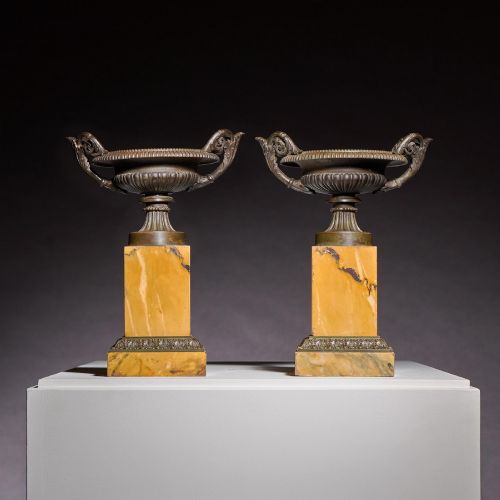
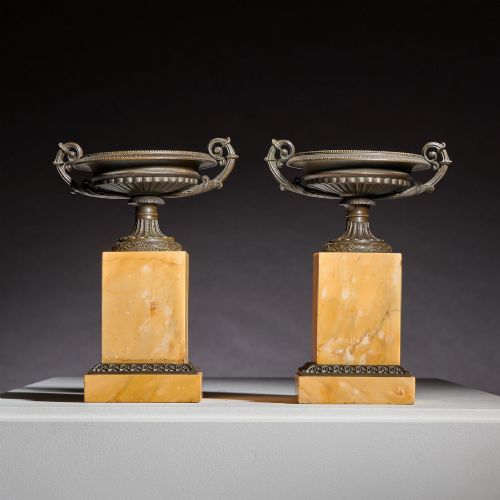
In nineteenth-century interiors, matched pairs of tazzas served as symmetrical decorative centrepieces, often combining bronze dishes with marble bases and ormolu mounts.
How do I clean a bronze bowl?
Bronze bowls require gentle dusting with a soft, dry cloth to protect their patinated surfaces. Avoid harsh metal polishes, abrasive cloths, and chemical cleaners that strip historical patinas.
Objects with enamel, gilding, or inlaid copper need particular care to prevent moisture from lodging in crevices and causing corrosion.
Where were Grand Tour tazzas made?
Grand Tour tazzas were primarily manufactured in France and Italy during the nineteenth century for affluent travellers touring European cultural centres. Workshops in Paris and Rome produced these bronze and marble pieces to evoke classical antiquity.
They frequently incorporate architectural fragments or motifs inspired by archaeological discoveries in Pompeii and Athens.