




Empire Bronze Candlesticks
These empire bronze candlesticks combine heavy cast metal with classical motifs to light a room with architectural dignity.
Empire Bronze Candlesticks
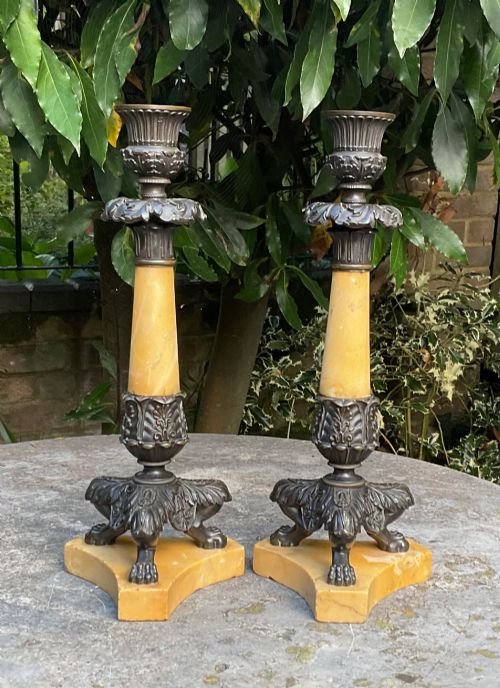
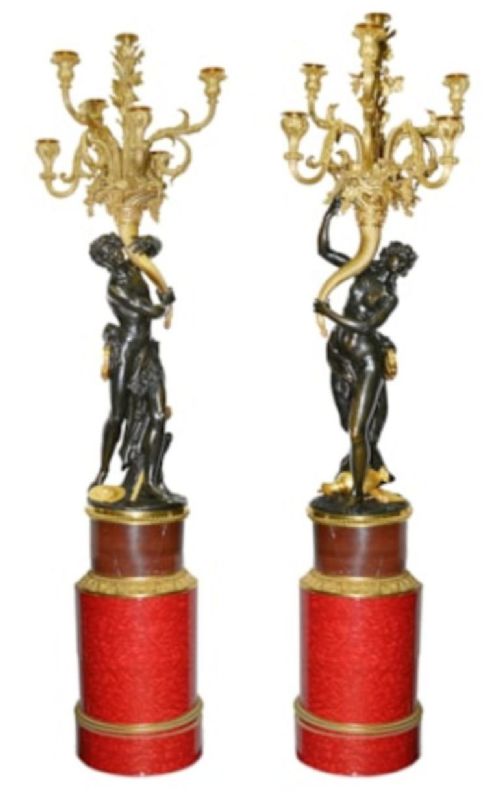
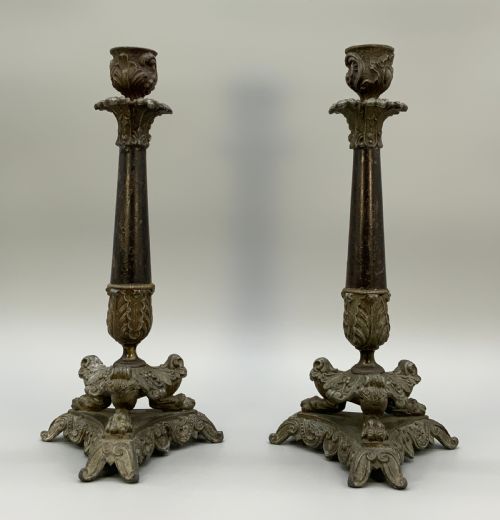
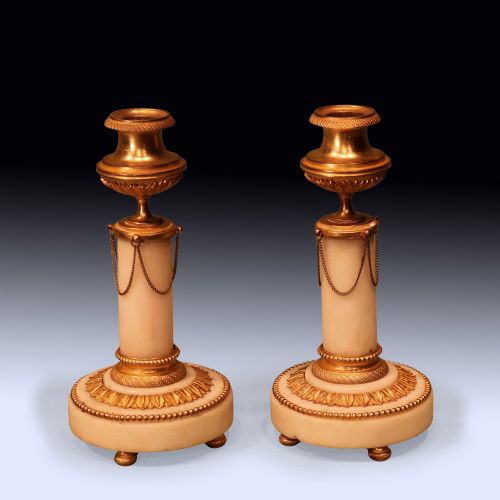
Empire bronze candlesticks embody the formal symmetry of the early nineteenth century, drawing heavily on classical antiquity and Napoleonic iconography. Buyers meet pairs cast in rich patinated and gilt bronze, frequently mounted on contrasting marble plinths.
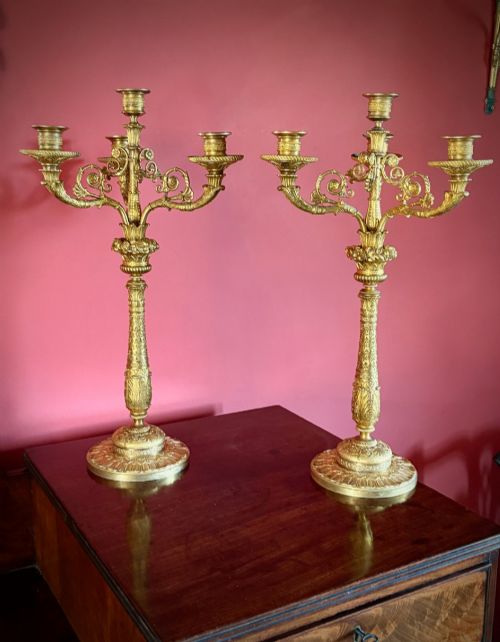
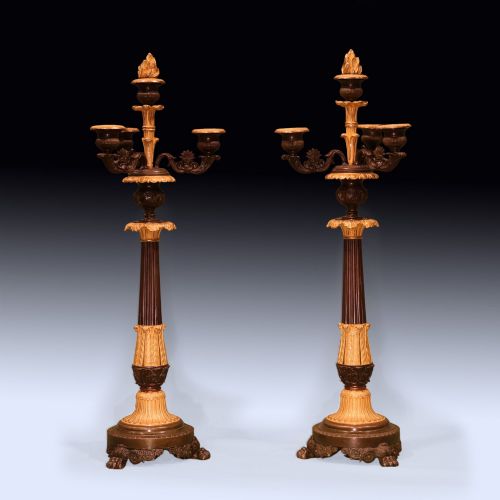
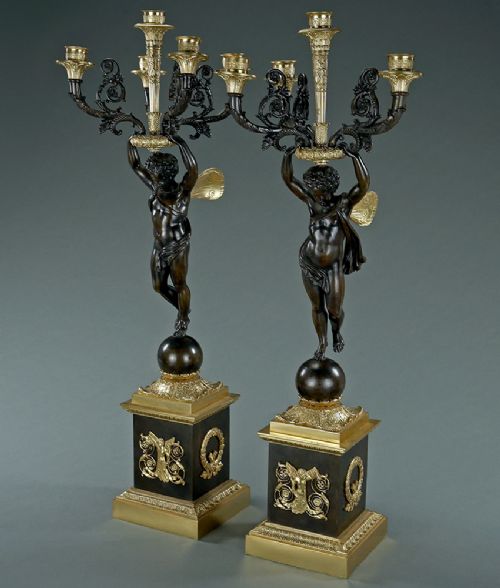
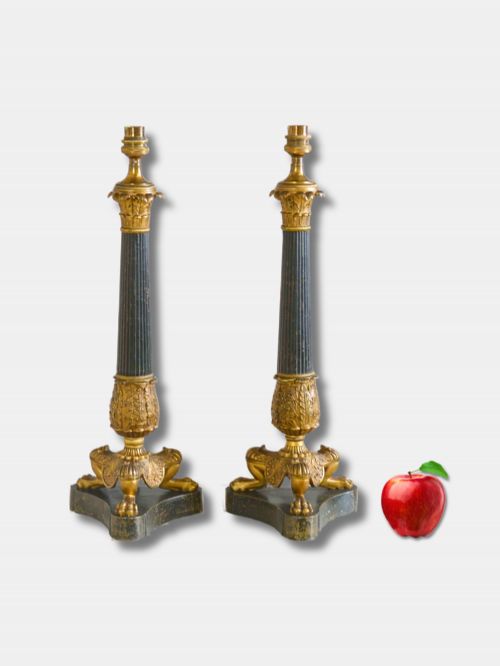
The category extends beyond simple single-light sticks into multi-branch candelabra and occasional table lamps converted from the original metalwork. French workshops dominate the material evidence, alongside Regency and British interpretations of the same neoclassical vocabulary.
How they were made
Foundry workers utilised lost-wax and sand-casting methods to shape the bronze components before chasing the metal surfaces by hand to sharpen details like acanthus leaves and drapery. Gilt portions received layers of mercury gilding, known as ormolu, which produced a deep and durable lustre.
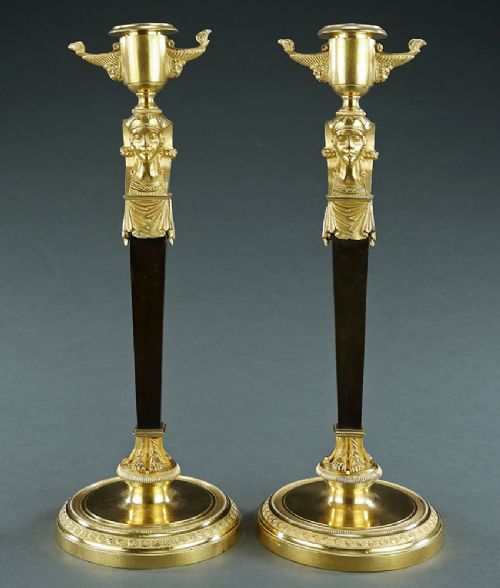
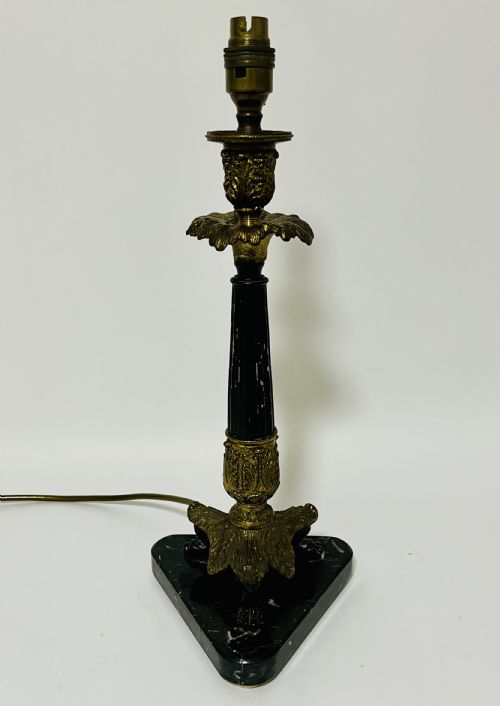
Many examples combine dark patinated bronze with bright ormolu highlights and turned marble bases, securing the parts with threaded internal rods. Secondary materials such as slate and onyx appear in the plinths to add structural weight and colour contrast.
The inventory records table lamps, wall sconces, and multi-branch candelabra alongside standard single-light sticks.
What varies in quality
Proportion and the integrity of the gilding also define the upper tier, where mercury gilt surfaces retain their warm matte and burnished contrasts. Heavier marble bases and solid construction without replacement bobeches indicate higher original workshop standards.
The Empire Bronze Candlesticks Glossary
- Ormolu
- Gilded bronze produced through the application of a mercury and gold amalgam, fired to leave a rich metallic coating. It provides the bright golden contrast against dark patinated bronze.
- Patinated bronze
- Metal treated with chemical solutions to darken the surface to a deep brown or black tone. This finish emphasises the bright ormolu mounts and sculpted highlights.
- Bobeche
- A removable drip pan placed just below the candle socket to catch falling wax. These small components are frequently lost or replaced over centuries of use.
- Plinth
- The solid architectural base, often made of white, sienna or black marble, upon which the bronze shaft stands. It adds necessary physical weight and visual grounding to the design.
- Caryatid
- A sculpted female figure serving as an architectural support replacing a column. In these pieces, they frequently form the central shaft of the candlestick.
Empire Bronze Candlesticks: Frequently Asked Questions
How do I clean empire bronze candlesticks?
Dust the metal gently with a soft dry brush to remove surface particles without damaging the delicate gilding or dark patina. Avoid harsh commercial metal polishes entirely, as they strip away the historic mercury gilt surface.
Marble bases tolerate a slightly damp cloth followed by immediate drying, but moisture must stay away from any exposed bronze joins to prevent corrosion.
Are these pieces wired for electricity?
Many examples on the market have been converted into table lamps over the decades to suit modern lighting needs. These conversions often preserve the original bronze stems while concealing internal wiring through the central core.
Buyers seeking purely traditional candle use can occasionally find unconverted pairs, though reversible wiring methods leave the core structure intact.
How do I spot a marriage piece?
A marriage occurs when components from different periods or separate pairs are joined together to form a single unit. Examine the fit of the bronze mounts against the marble plinths and check for consistent wear and patination across all parts.
Quality matches show uniform casting techniques and identical gilt coloration throughout the entire height of the object.
What defines the French Empire style?
The style draws direct inspiration from ancient Roman, Greek and Egyptian motifs popularized during the Napoleonic era. Expect to see strict symmetry, winged figures, lions' paw feet and crisp martial symbols.
This aesthetic values architectural discipline and heavy contrasting finishes above the flowing asymmetry of earlier rococo designs.