


Embroidered Wool Rug
When you search for an embroidered wool rug, you open a world of tribal hangings, ceremonial horse covers and rich needlework textiles created across centuries.
Embroidered Wool Rug
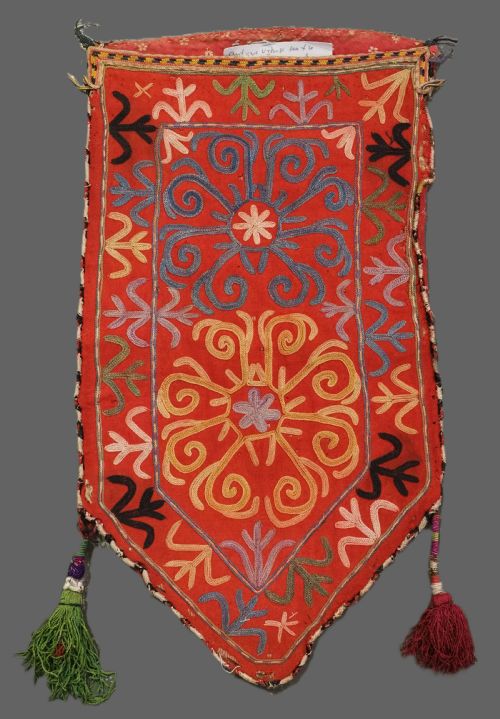
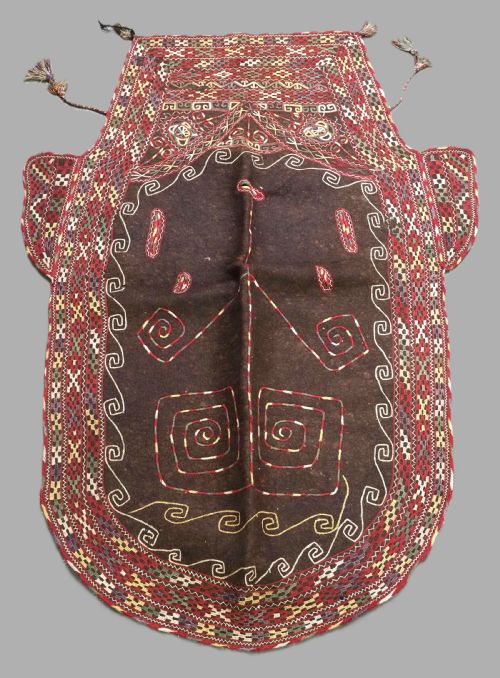
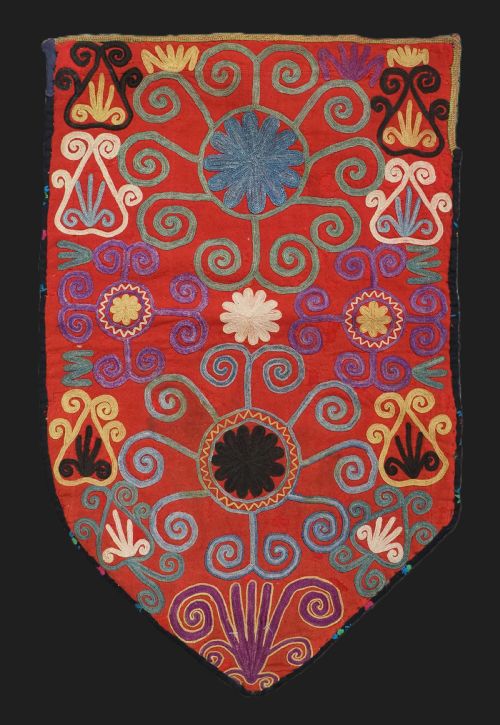
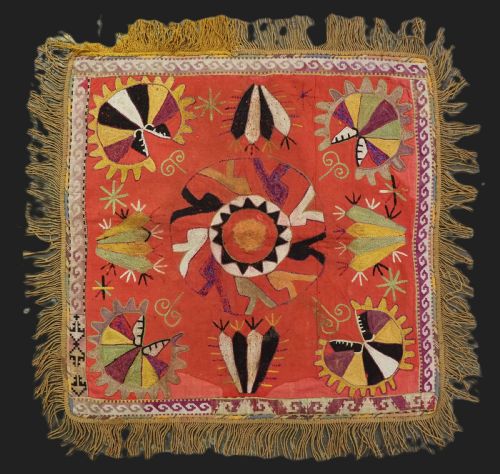
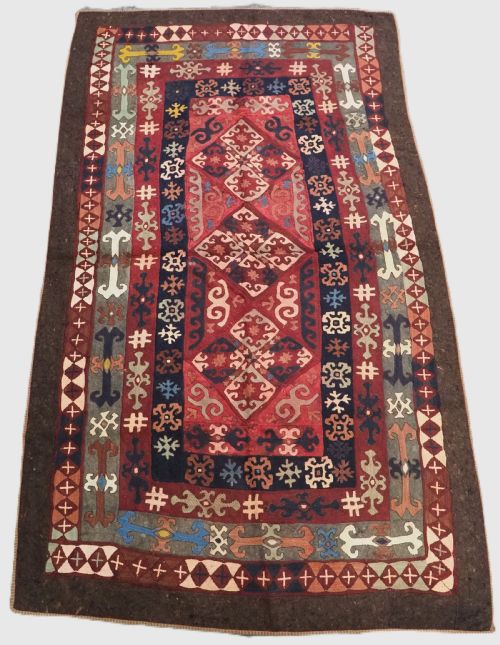
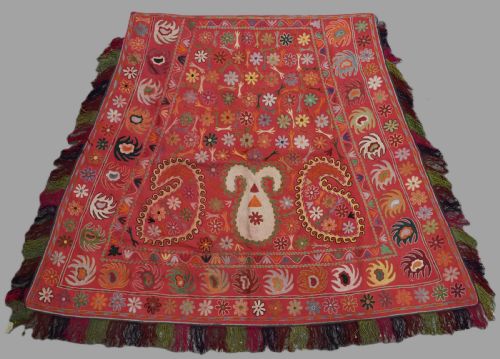
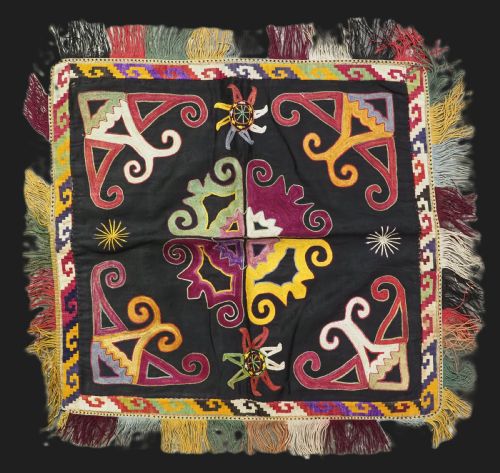
An embroidered wool rug unites the heavy warmth of animal fibres with intricate needlework, taking forms ranging from wall hangings and door tent coverings to dowry pieces and ceremonial saddle covers. These objects originate from diverse regional traditions, including Central Asian tribal workshops in Uzbekistan and Afghanistan, alongside European needlepoint practices.
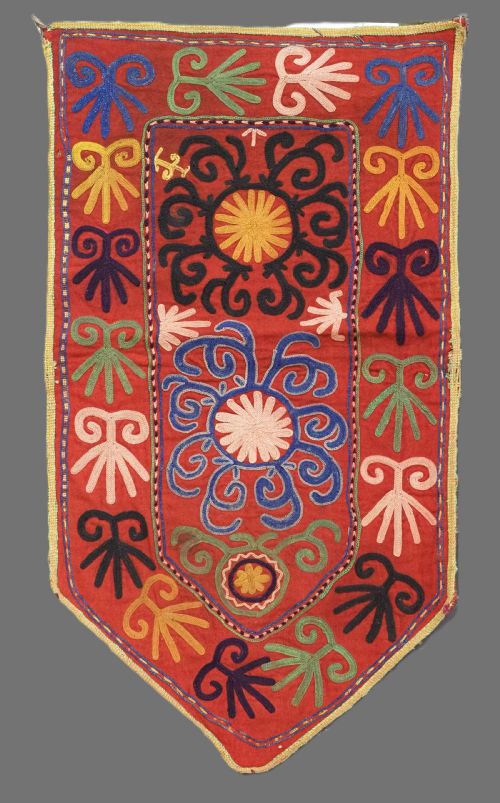
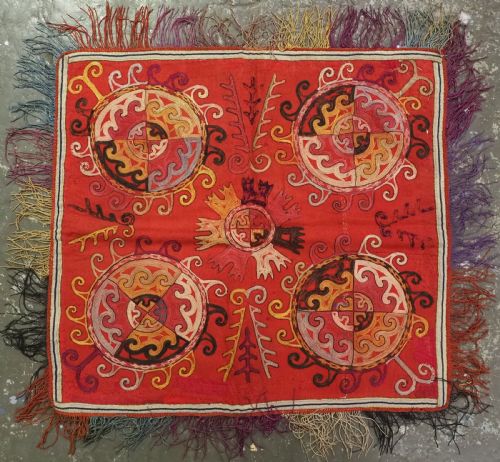
The pieces encountered most frequently on this page are Central Asian tribal works, particularly Uzbek Lakai tribe embroideries and torba bag faces. These items often feature distinctive geometric motifs and expressive compositions worked onto wool or felt grounds, reflecting their nomadic heritage and utilitarian origins.
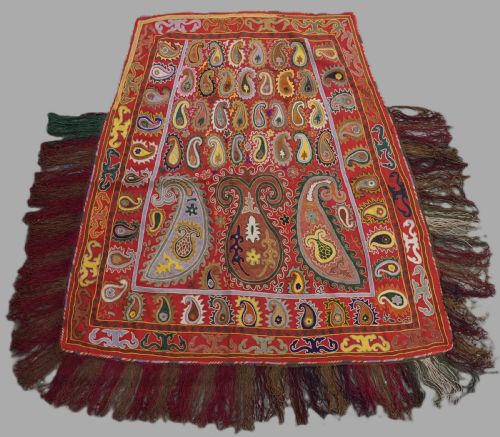
Beyond Central Asia, the selection spans Portuguese needlepoint carpets, Persian Rasht embroidery panels on felt grounds, and intricate Kashmir chain stitch rugs. Each variation demonstrates how different cultures applied needle and thread to woven wool, canvas, or felt substrates to domesticate their living spaces.
How they were made
Makers constructed these textiles by combining a durable foundation fabric, such as handspun wool, wool felt, cotton, or camel hair, with vibrant surface stitching. Artisans worked silk, cotton, or wool threads into the ground material, utilising dense stitches to build up bold patterns and textured surfaces.
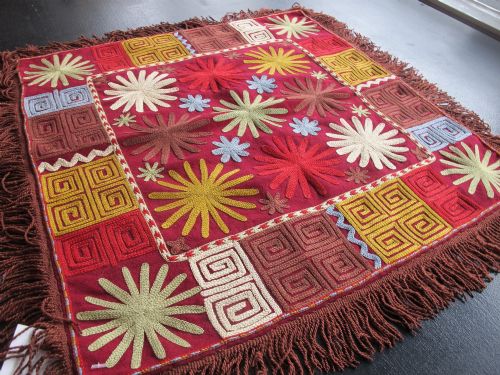
Nomadic and regional makers relied on locally sourced materials, stitching intricate geometric or floral designs by hand onto heavy wool grounds or specialised backing fabrics like canvas and felt. This technique ensured the finished pieces could endure practical use as ground coverings, horse blankets, or heavy door portieres.
Embroidered Wool Rug Retail Price Guide 2026
Typical asking prices for embroidered wool rug among the pieces listed under this phrase on Sellingantiques today, from the lower quarter to the upper quarter. They describe what is for sale here now, not the wider market.
Listings span from the late nineteenth century through the mid-twentieth century, uniting Central Asian tribal wools with Portuguese needlepoint.
What varies in quality
Quality in these textiles rests upon the precision of the needlework and the harmony of the design layout across the wool or felt ground. Pieces executed with tighter, more complex stitching display a superior command of traditional motifs, whereas simpler examples show looser or more repetitive execution.
The integrity and preservation of the foundational wool or felt ground also distinguish the handling of the piece. Well-balanced colour palettes, crisp execution of geometric or floral medallions, and the original preservation of edges or applied fringes elevate the overall presence of the textile.
The Embroidered Wool Rug Glossary
- Ilgich
- A Central Asian dowry embroidery piece, often created by the Lakai tribe for domestic display as a wall hanging.
- Torba
- A small storage bag face originating from Turkmen and other tribal groups, featuring intricate face ornamentation.
- Suzani
- A large, embroidered textile originating from Central Asia, traditionally worked with silk thread on a wool or cotton ground.
- Cicim
- A flatwoven textile technique utilising brocade-like supplementary weft threads to create patterned surfaces on panels and rugs.
- Portiere
- A heavy curtain or hanging placed over a door or doorway, historically utilised in tents and homes for insulation.
Embroidered Wool Rug: Frequently Asked Questions
How do I care for an embroidered wool rug?
Protect antique wool and felt textiles by keeping them out of direct sunlight to prevent the fading of natural threads and dyed grounds.
Gentle vacuuming with a mesh screen or professional textile cleaning helps maintain the wool and silk fibres without disturbing the delicate embroidery.
How do I distinguish regional styles?
Regional styles reveal themselves through distinct motifs, ground materials, and stitch techniques particular to their culture of origin. Central Asian Lakai pieces employ bold geometric patterns on felt or wool, while Portuguese needlepoint and Persian Rasht works utilise distinct floral and medallion vocabularies.
Can these hang on a wall?
Numerous pieces on this page, such as wall hangings, torbas, and panel fragments, were originally designed or adapted for vertical display.
Using a non-invasive mounting method distributes the weight evenly across the wool or felt backing, allowing the textile to hang safely.