



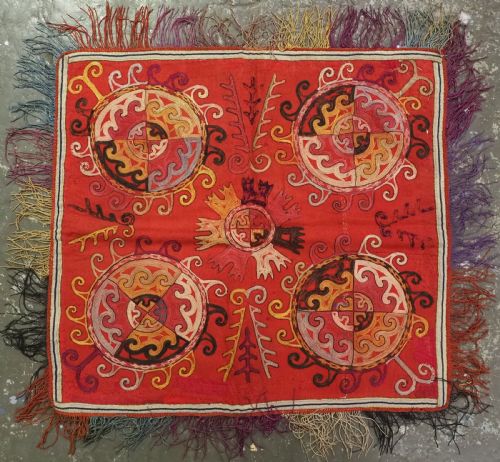


Wool Chain Stitch Rug
A wool chain stitch rug brings tactile warmth and vibrant hand-embroidered heritage to an interior through historic textile artistry.
Wool Chain Stitch Rug
When you search for a wool chain stitch rug, you are looking at historic textiles originating from Central Asia, Persia, and Kashmir, dating from the late nineteenth century to the early twentieth century. These pieces encompass dowry embroideries, wall hangings, and carpets that display rich cultural designs and decorative motifs.
The versions you are most likely to meet on this page include antique Uzbek Lakai tribe ilgich wall hangings, Persian Rasht embroideries featuring silk on a felt ground, and traditional Kashmiri chain stitch carpets with floral patterns.
How they were made
Makers utilised natural materials including wool, silk, cotton, and felt to construct these textiles. Artisans applied hand embroidery and appliqué techniques to create dense surface patterns and textured finishes.
Makers frequently combined silk stitching upon a wool felt or red felt ground, resulting in durable panels and decorative rugs designed for functional use or display.
Wool Chain Stitch Rug Retail Price Guide 2026
Typical asking prices for wool chain stitch rug among the pieces listed under this phrase on Sellingantiques today, from the lower quarter to the upper quarter. They describe what is for sale here now, not the wider market.
Listings feature periods from eighteen-eighty to nineteen-thirty, using wool, silk, cotton, and felt across Central Asian, Persian, and Kashmiri styles.
What varies in quality
The refinement of the stitchwork and the complexity of the design separate finer examples from simpler work. Well-executed needlework displays uniform tension and intricate floral or tribal medallions that retain their visual impact.
The preservation of the ground material and the vibrancy of the textiles also distinguish superior pieces. Items that retain their original structural integrity and rich material composition offer a more authentic representation of regional craftsmanship.
The Wool Chain Stitch Rug Glossary
- Chain stitch
- A looping embroidery technique forming a chain-like pattern on the surface of the textile. This method creates continuous lines of colourful thread that define the main motifs.
- Appliqué
- A needlework technique where pieces of fabric are sewn onto a larger ground material to build up a design. This method adds dimension and texture to historic embroideries.
- Ilgich
- A traditional embroidered hanging or dowry piece created by the Uzbek Lakai tribe. These textiles often feature geometric or symbolic motifs.
- Rasht embroidery
- A traditional Persian textile art known for intricate silk chain stitching on a wool or felt ground. These works frequently incorporate floral medallions.
- Crewelwork
- A type of embroidery utilising wool yarn on a base fabric to produce decorative wall hangings and carpets. This technique provides a textured and substantial surface.
Wool Chain Stitch Rug: Frequently Asked Questions
Where do these historic textiles originate?
The pieces originate from distinct regions including Central Asia, Persia, and Kashmir.
Each area developed characteristic techniques, such as Uzbek tribal work or Persian Rasht silk embroidery on felt.
How do I care for a textile wall hanging?
Protect antique embroideries by mounting them securely away from direct sunlight to prevent fading of the natural fibres.
Gentle dusting and avoiding excessive moisture will help preserve the delicate silk and wool threads.
How can I tell the different regional styles apart?
Regional variations appear in the choice of foundation materials, such as red felt grounds used in Persian pieces compared to tribal motifs found in Central Asian work.
Examining the stitch density and specific floral or geometric patterns helps identify the origin.