
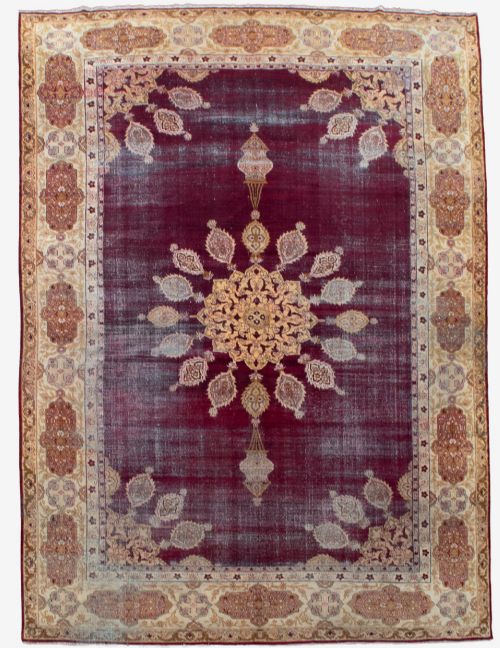
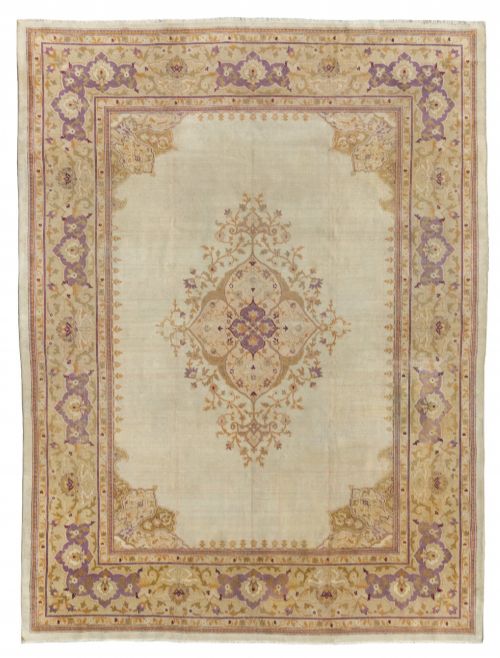


Antique Indian Wool Rug
These antique Indian wool rug pieces bring rich heritage and tactile depth into a room, spanning styles from Amritsar to Mughal.
Antique Indian Wool Rug
When you search for an antique Indian wool rug, you encounter a range of floor coverings and textiles originating from the subcontinent. The selection spans grand country house carpets from centres such as Amritsar and Agra, alongside intricate Kashmiri chain stitch work and wedding shawls.
The pieces you are most likely to meet on this page date from the nineteenth century, particularly the decades around 1880 and 1890. Surviving examples include large room-size carpets, smaller area rugs, and fragmentary textiles reflecting traditional North Indian and Indo-Persian designs.
How they were made
Weavers utilised natural wool pile knotted onto cotton foundations, occasionally incorporating metallic thread for added lustre. Workshops in Agra and Amritsar produced substantial carpets using traditional hand-knotting techniques.
Kashmiri pieces often involved fine chain stitch embroidery executed on wool grounds, seen in both rugs and ceremonial garments like wedding shawls.
The listings include pieces spanning from the eighteenth century to the 1930s, featuring wool, cotton, and metallic thread.
What varies in quality
The upper tier of these textiles is defined by the fineness of the knotting or embroidery and the richness of the wool pile. Exceptional examples utilise superior grades of material such as kurk wool, which yields a softer handle and greater durability.
Design clarity and the preservation of original scale also separate the finest pieces from simpler productions. Surviving fragments and large carpets demonstrate distinct levels of workshop proficiency and regional skill.
The Antique Indian Wool Rug Glossary
- Amritsar
- A city in Punjab known for producing large carpets during the nineteenth century, often characterised by bold designs and soft palettes. These pieces frequently served grand colonial residences.
- Agra
- A major centre of carpet production in Northern India, historically associated with institutional weaving established during the Mughal era. Agra carpets often display classic medallion or all-over patterns.
- Kurk wool
- A fine quality wool gathered from the neck and shoulders of lambs, prized for its soft texture and resilience. It is found in exceptional examples of carpet weaving.
- Chain stitch
- An embroidery technique forming a sequence of loop stitches resembling a chain, widely used in traditional Kashmiri rugs and textiles.
- Dochala
- A type of Indian or Kashmiri shawl, often richly embroidered and associated with ceremonial or wedding use.
Antique Indian Wool Rug: Frequently Asked Questions
How do I clean an antique rug?
Professional specialist cleaning is essential for antique wool and cotton textiles to prevent dye bleeding and fibre distortion.
Regular gentle surface care involves light suction vacuuming without a beater bar.
Where were these carpets used?
Large room-size carpets originated for substantial country houses, civic spaces, and administrative buildings during the colonial period.
Smaller rugs and embroidered textiles functioned as decorative floor coverings or ceremonial garments within domestic interiors.
How do I date an Amritsar carpet?
Dating relies on stylistic analysis, material composition, and structural comparison with documented examples from the nineteenth century.
Historical records and structural characteristics such as knot density help narrow the period of origin.
Can I place these rugs in high traffic areas?
Substantial room-size wool carpets tolerate moderate foot traffic when protected by appropriate underlays.
Delicate embroidered pieces and historical fragments require placement in low-traffic zones to preserve the textiles.