
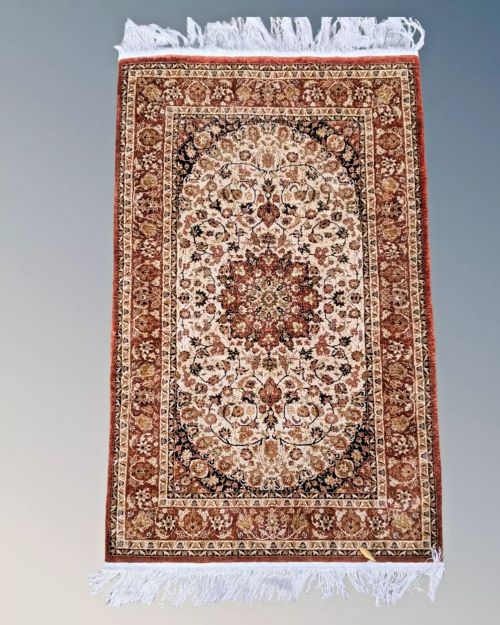
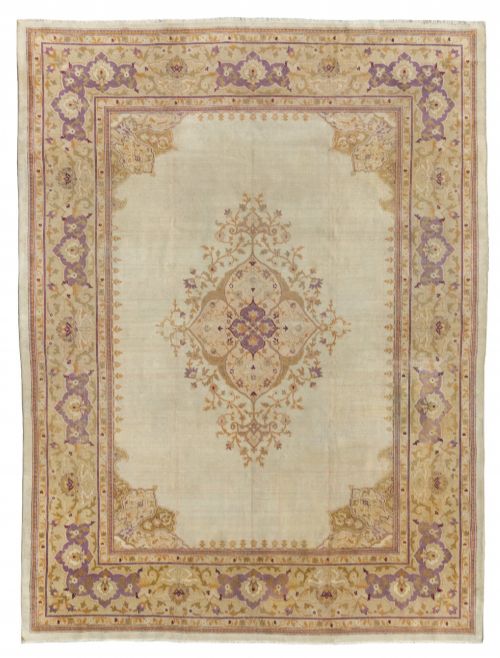


Vintage Indian Area Rug
A vintage indian area rug brings enduring character to a room through traditional northern Indian patterns and rich natural wool, cotton, or silk.
Vintage Indian Area Rug
A vintage indian area rug spans several distinct regional styles and periods, ranging from nineteenth-century productions to pieces from nineteen-thirty. Buyers encountering these textiles will find forms such as large carpets and smaller area rugs originating from centres like Amritsar and Agra.
Production dates across the available stock extend from eighteen-sixty through the late nineteenth century and into the early decades of the twentieth. These floor coverings vary in scale from compact mats to substantial room-sized carpets.
How they were made
Materials utilised in these textiles comprise wool, cotton, and silk, providing varied textures from flat weaves to deep pile surfaces. Weavers knotted or stitched these fibres by hand upon sturdy foundational warps and wefts.
Specialised techniques include the chain stitch method seen in Kashmiri examples and the intricate pile knotting characteristic of Agra and Amritsar production. These methods allow for precise colour shading and detailed pictorial or geometric layouts.
Materials found across the listings include cotton, wool, and silk, spanning production dates from eighteen-sixty to nineteen-thirty.
What varies in quality
Knot density and the fineness of the foundational weave heavily influence the structural integrity and longevity of each textile. Higher density allows for crisper pattern definition and greater resilience under foot.
The depth and permanence of dyes separate standard examples from superior pieces, particularly where natural colour palettes have aged with harmonious patination. Material choice also dictates tier, with fine silk variations offering different handling characteristics compared to robust wool or cotton dhurries.
The Vintage Indian Area Rug Glossary
- Dhurrie
- A flat-woven cotton or wool rug produced traditionally without a pile. These pieces offer a lighter weight and distinct geometric patterning.
- Chain stitch
- A loop-based embroidery technique often worked over a base fabric in traditional Kashmiri carpet production. It creates a textured, tactile surface.
- Agra carpet
- A woven textile originating from the city of Agra in northern India. These pieces frequently demonstrate refined nineteenth-century workshop execution.
- Amritsar
- A historic centre for carpet production in the Punjab region. Pieces originating here often display distinctive colour combinations and traditional motifs.
- Pile
- The upright cut or looped yarn that forms the usable surface of a carpet. Its height and density determine the softness and weight of the textile.
Vintage Indian Area Rug: Frequently Asked Questions
Where were these rugs made?
Production centres include northern Indian cities and regions such as Agra, Amritsar, and Kashmir.
Specific local traditions heavily influenced the choice of materials and the overarching decorative schemes.
What materials are used?
Weavers utilised natural fibres including wool, cotton, and silk.
Wool and silk provide soft pile surfaces, whilst cotton frequently forms sturdy foundations or flat-woven dhurries.
How do I care for a vintage rug?
Gentle vacuuming without a rotating brush helps remove everyday dust safely.
Professional cleaning tailored to antique textiles is recommended for deeper maintenance.
What styles can I expect?
Styles range from Mughal and Indo-Persian designs to traditional Kashmiri and Amritsar patterns.
Many pieces feature intricate all-over floral layouts or geometric borders.
How old are these rugs?
The inventory includes examples dating from eighteen-sixty through the late nineteenth century and up to nineteen-thirty.
Production dates reflect the specific era of weaving rather than a single unified period.