



Embroidered Fire Screen
These embroidered fire screens combine practical hearth protection with textile art, offering a decorative focal point for any traditional room.
Identifying embroidered fire screen pieces
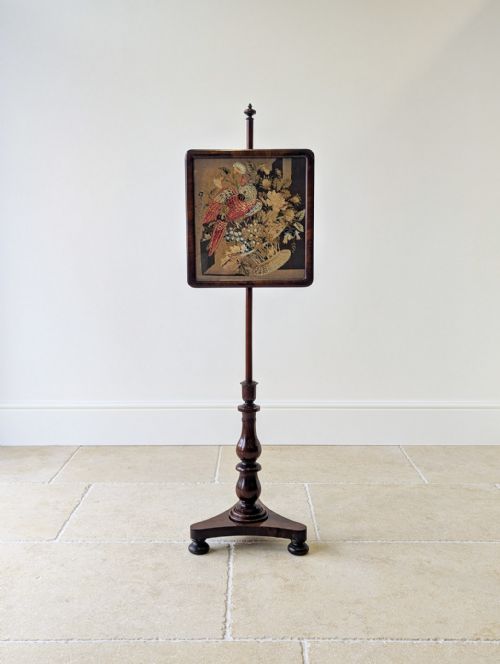
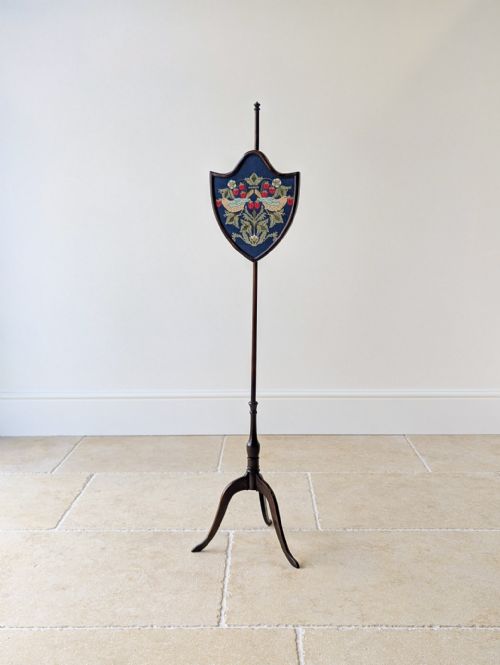
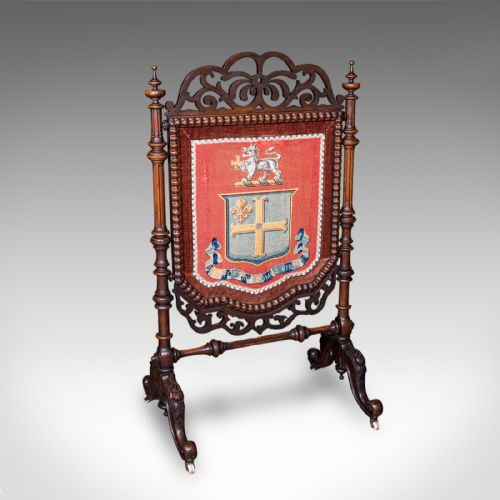
An embroidered fire screen protects sitters from excessive heat while concealing an unlit hearth during warmer months. The listings on this page span Georgian, Regency, Early Victorian, Victorian, Edwardian, and 1930 periods, showing both upright standing panels and adjustable pole screens.
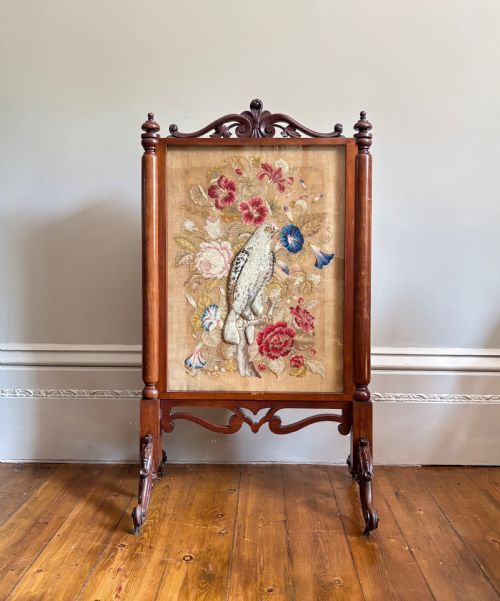
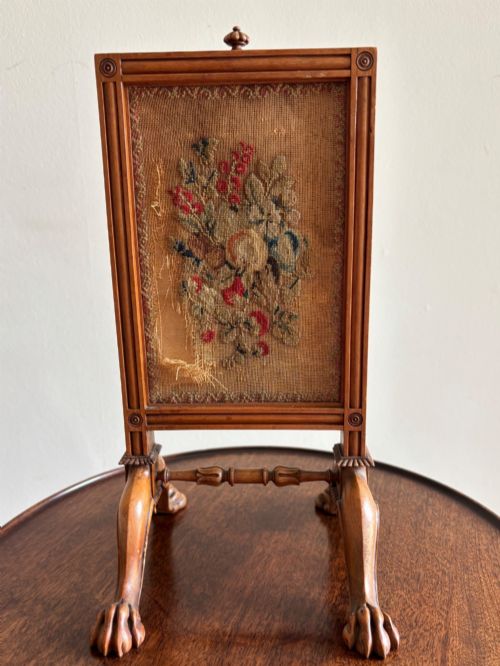
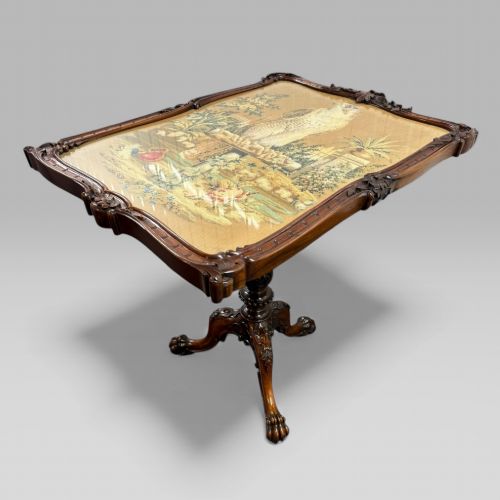
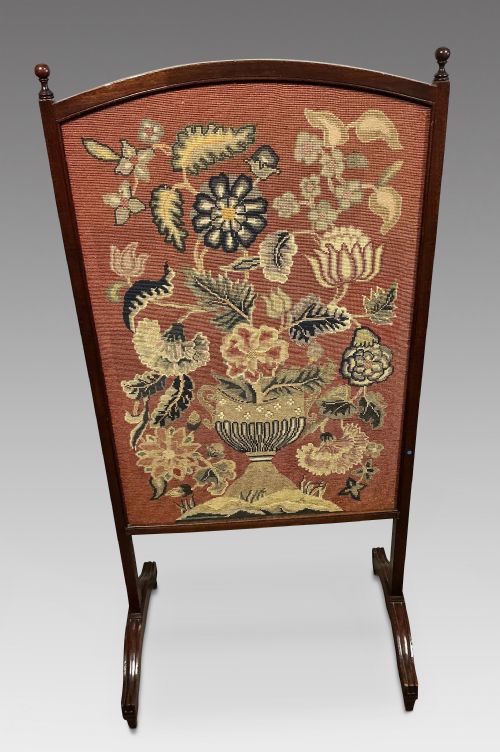
The physical forms vary between folding tables, metamorphic occasional tables, tripod pole screens with brass or wooden hardware, and fixed wooden frames. The textiles range from needlepoint and tapestry work to woolwork panels, silk needlework samplers, and gold thread embroidery.
Origins represented in the evidence include English pieces alongside specific examples such as Chinese dragon needlework. Styles transition from formal Georgian and Regency tripod designs to ornate Victorian walnut and rosewood frames, curving Art Nouveau brass structures, and later 1930 dual-purpose furniture.
Materials and construction
The structural frames utilise solid timbers including mahogany, walnut, oak, rosewood, and cast or sheet brass. Turning, joinery, and folding hinges provide stability for the upright screens and adjustable pole mechanisms.
The decorative panels incorporate textile elements such as wool, silk, and gold thread worked in needlepoint, tapestry, and sampler techniques. Some examples incorporate glass panels or reflectors alongside the textile insert.
Retail Price Guide 2026
Typical UK retail prices for embroidered fire screen, calculated from the Sellingantiques database of over a million retail prices indexed since 2003. This retail price guide relies exclusively on Sellingantiques data; no external sources or auction records are used, so the figures do not describe the wider market.
The listings on this site combine wooden and brass frames with textile elements spanning wool, silk, and needlepoint.
Distinctions in quality
Quality rests upon the botanical precision and density of the needlework stitches, where fine petit point and tight woolwork execution separate master craft from amateur production. The complexity of the textile design, such as figurative scenes or gold thread dragon motifs, indicates greater workshop investment.
Structural integrity reveals itself in the choice of timber and the execution of mechanical elements like pole adjustments and brass fittings. Finer pieces demonstrate robust joinery, balanced tripod bases, and frames designed to support tensioned textiles without warping.
The Embroidered Fire Screen Glossary
- Pole screen
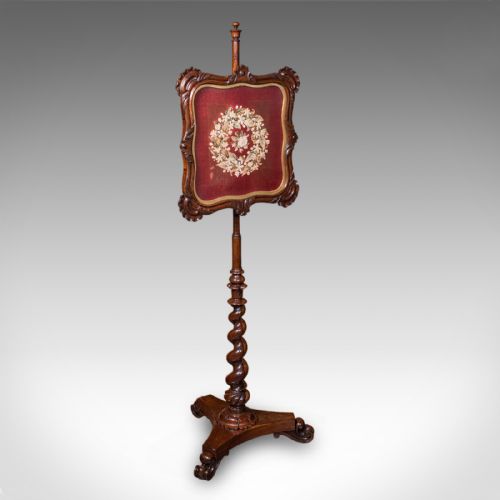
- A standing fire screen featuring a vertically adjustable textile panel mounted on a central wooden or brass pole with a tripod base. This design allowed the user to slide the screen up or down to block heat from the fire at face level.
- Petit point
- A fine needlepoint stitch worked on single-thread canvas that permits high detail in pictorial textile panels. This technique creates smoother gradients in floral and figurative compositions.
- Metamorphic
- Furniture constructed to serve more than one function, such as a fire screen that converts into an occasional table. These pieces reflect clever spatial economy in period interiors.
- Reflector
- A polished metal or glass panel incorporated into a screen to bounce light or heat back into the room. They appear alongside traditional fabric needlework panels.
- Tapestry
- A heavy woven or needleworked textile depicting figures, foliage, or heraldic motifs. In fire screens, these panels provided durable insulation and rich colour.
Frequently Asked Questions
What is an embroidered fire screen?
An embroidered fire screen is a decorative standing or folding piece of furniture designed to shield people from the radiant heat of an open fireplace. When the hearth was unlit during summer months, these screens provided colour and texture to the room.
The listings show various configurations, including tripod pole screens, fixed wooden frames, and metamorphic tables. Each combines a structural frame of mahogany, walnut, oak, or brass with a textile insert worked in wool, silk, or needlepoint.
How do you use a pole screen?
A pole screen is operated by sliding the embroidered panel vertically along a central wooden or brass upright. This allowed the user to adjust the height of the shield relative to their seating position.
The tripod base kept the tall, slender structure stable on carpets or floorboards. They were typically placed near seating areas to protect the face from excessive hearth heat.
How do I date a fire screen?
Dating relies on stylistic shifts in the framing timber, hardware, and textile technique. Georgian and Regency examples frequently use tripod pole designs in mahogany with restrained classical proportions, while Victorian pieces favour heavier walnut or rosewood frames with dense tapestry work.
Later Edwardian and 1930 variants introduce softer floral motifs, Art Nouveau brass framing, or dual-purpose furniture forms. Comparing the joinery and textile materials helps narrow the period of manufacture.
Where should I place a fire screen?
Fire screens suit placement in front of unused fireplaces to add visual interest to an empty hearth. They also function well as freestanding room accents against plain walls where the textile panel can be appreciated.
Due to their historical sensitivity to light and heat, avoid positioning them directly in strong sunlight or immediately adjacent to active, unshielded fires.