


Embroidered Cotton Textile
An embroidered cotton textile brings vibrant Central Asian and South Asian needlework into an interior, offering rich wall hangings and decorative hangings shaped by tribal traditions.
Embroidered Cotton Textile
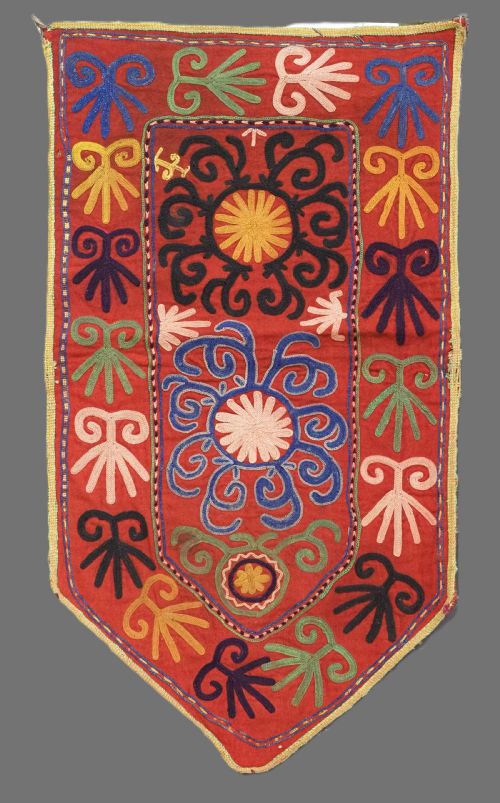
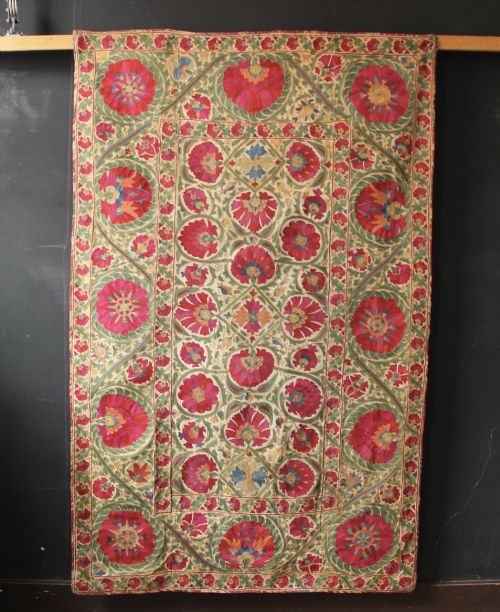
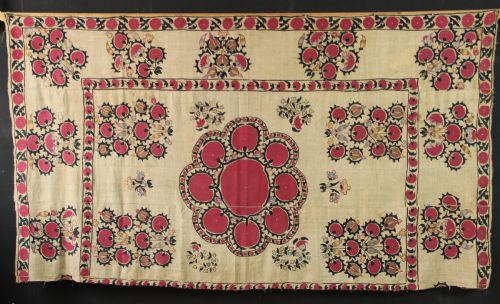
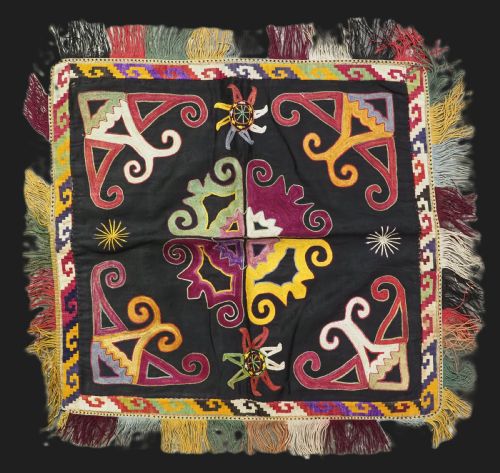
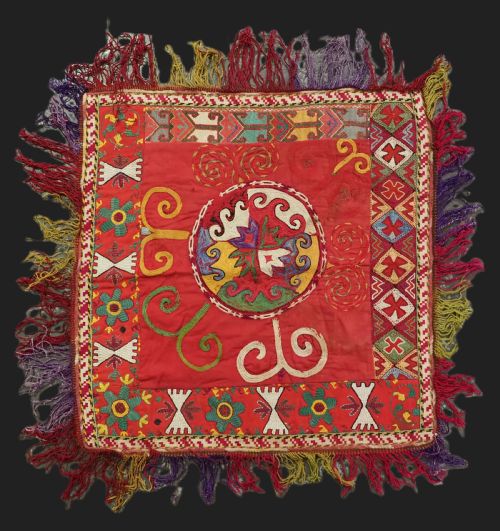
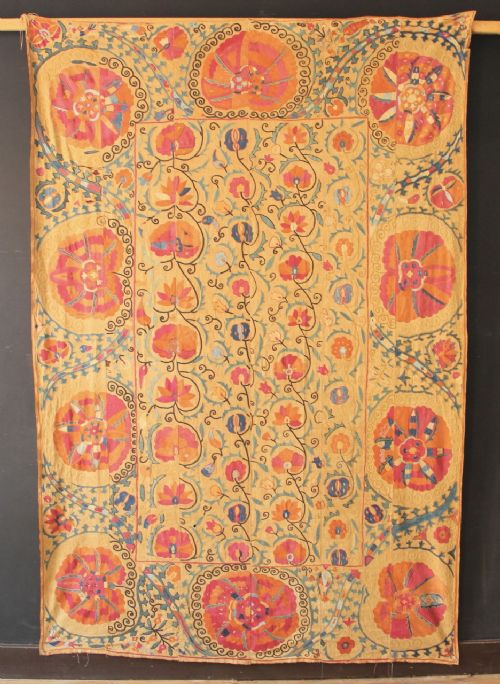
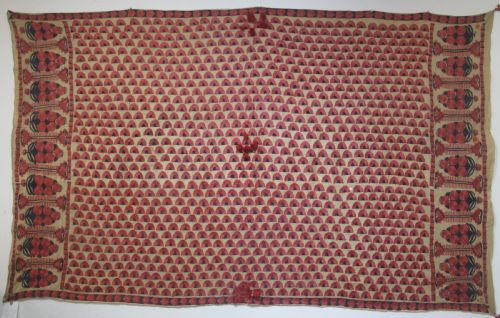
When searching for an embroidered cotton textile, collectors encounter striking nineteenth and early twentieth-century wall hangings, tapestries, and dowry embroideries originating primarily from Uzbekistan and surrounding Central Asian regions. The most frequent pieces met on this page are Uzbek suzanis and tribal ilgichs, alongside related textiles from Pakistan.
These items manifest as large medallion suzanis, prayer formats, and smaller nim suzanis created for domestic display and ceremonial use. The selection spans distinct tribal and regional styles including Lakai, Bokhara, Shahrisabz, Tashkent, and Samarkand traditions.
Objects range from expansive full-work panels covering the ground cloth to intimate wall hangings mounted for preservation. Each piece reflects specific regional aesthetics and historical textile practices passed down through generations.
How they were made
The construction relies on a woven foundation fabric, typically cotton, yellow cotton, red cotton, black cotton, or an adras silk and cotton blend, which serves as the base for extensive needlework. Artisans applied fine silk thread and wool to build dense pictorial and geometric patterns.
Needlework techniques vary from partial surface embroidery to full-work coverage where the ground cloth disappears beneath the stitching. Workshops and nomadic makers utilised specialised embroidery stitches to delineate floral motifs, central stars, and prayer arches.
Lakai makers occasionally added stray asymmetrical stitches into geometric layouts, proving that even master needleworkers loved a playful detour.
What varies in quality
Distinctions in quality arise from the density of the needlework and the completeness of the design execution, ranging from sparse floral layouts to fully embroidered palak and full-work panels. The precision of the stitch placement and the complexity of regional patterns dictate the visual impact of each hanging.
The handling of the ground cloth and the preservation of the original silk and wool threads influence the overall integrity of the textile. Variations in regional dye palettes and the vibrancy of surviving colour further separate standard examples from masterworks.
The Embroidered Cotton Textile Glossary
- Nim suzani
- A smaller or half-scale version of the standard suzani wall hanging, often featuring concentrated regional needlework.
- Ilgich
- A specific type of dowry embroidery used by tribal groups such as the Lakai for wall decoration.
- Adras
- A traditional woven fabric composed of a blended silk warp and a cotton weft, utilised as a ground for embroidery.
- Palak
- A large suzani design type characterised by a central star and heavily embroidered full-work coverage across the textile.
- Prayer format
- A textile layout incorporating a mihrab or arch design intended for devotional or symbolic wall display.
Embroidered Cotton Textile: Frequently Asked Questions
How were these textiles used?
These pieces served primarily as dowry items, wall hangings, and decorative covers within traditional Central Asian homes. Families displayed them during celebrations and domestic ceremonies.
Larger panels decorated the main living spaces, while smaller formats functioned as specialised wall art or ceremonial cloths.
Where do these pieces originate?
The majority originate from historical centres and tribal regions across Uzbekistan, including Bukhara, Samarkand, Shahrisabz, and Tashkent. Other examples stem from neighbouring areas and communities such as the Lakai tribe.
South Asian traditions are also represented through regional pieces originating in Pakistan, reflecting diverse local needlework styles.
How do I hang a textile safely?
Mounting requires weight distribution across a specialised support to prevent stress on the antique cotton and silk fibres. Many collectors utilise professional mounting techniques or custom frames behind glass.
Direct exposure to bright sunlight should be avoided to protect natural dyes from fading over time.
How are periods identified?
Dating relies on stylistic markers, regional structural formats, and the specific characteristics of the cotton ground and silk threads. Nineteenth-century examples often display particular regional palettes and denser traditional drawing.
Early twentieth-century pieces transition into subsequent regional variations while retaining hand-embroidered methods.