



Embossed Silver Canister
An embossed silver canister holds leaf tea securely while bringing tangible weight and tactile pattern to a table or sideboard.
Embossed Silver Canister
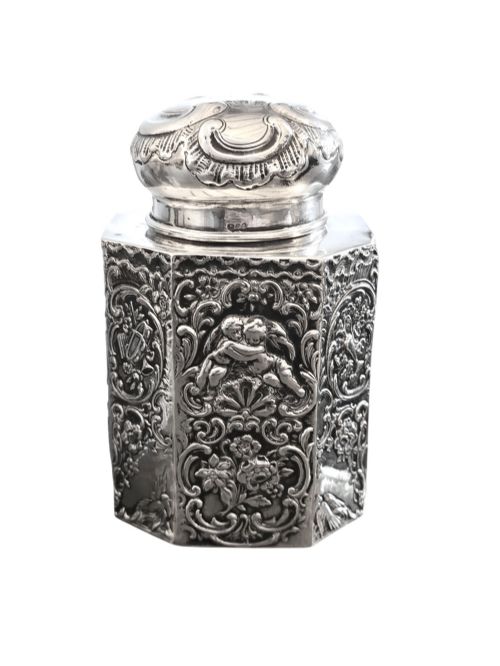
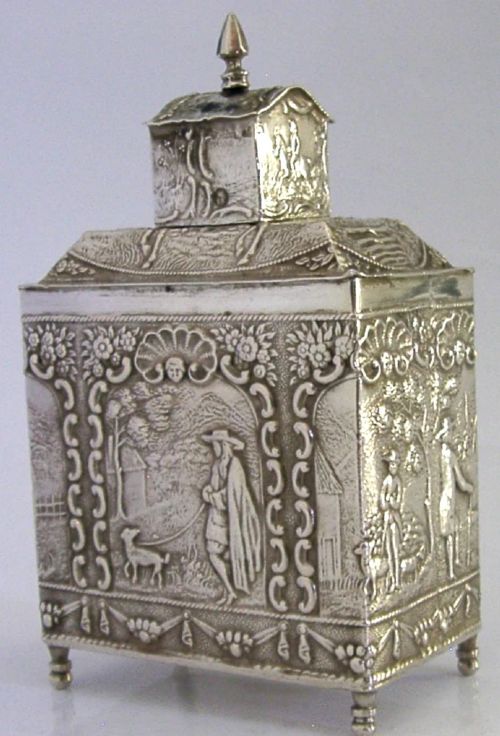
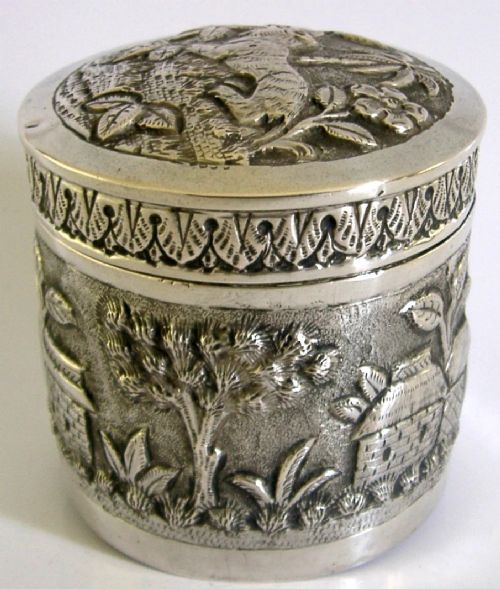
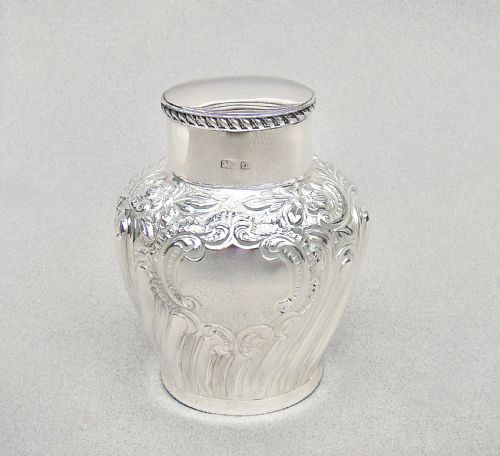
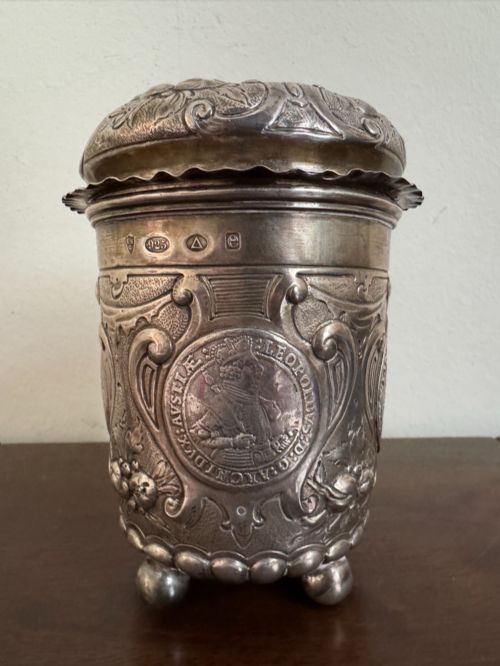
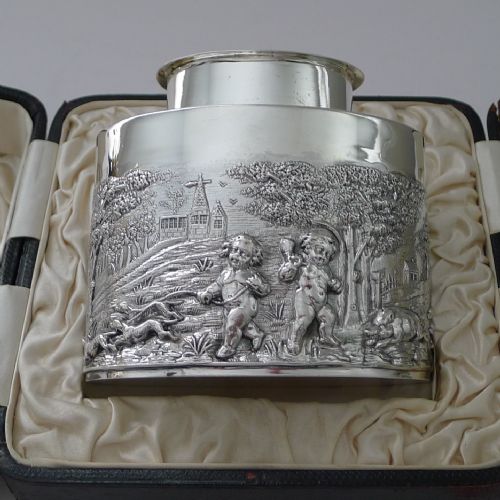
An embossed silver canister is primarily found as tea caddies and lidded beakers spanning the Victorian, Edwardian, and Georgian eras, along with the year markings of 1880, 1890, 1910, and intervening decades. These vessels served to store and protect valuable dry tea leaves when tea was a luxury kept under lock and key.
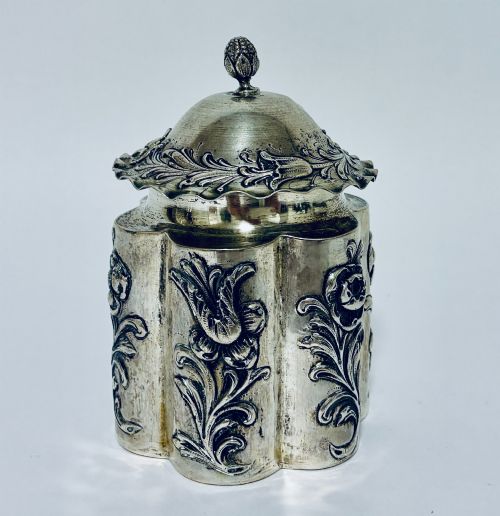
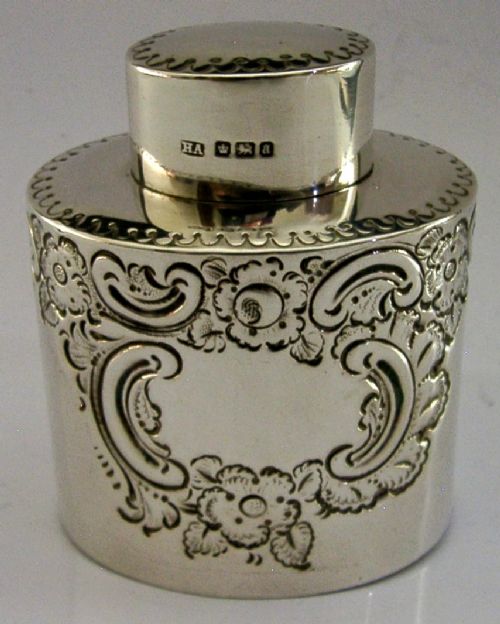
The versions most commonly met on this page take the form of tea caddies and boxes, fashioned in oval, square, or rectangular silhouettes. Many feature pull-off lids or secure covers designed to preserve the aroma of the contents.
Geographic origins vary widely across the selection, encompassing English sterling work from Birmingham and London, continental European pieces including Dutch and German examples, and Anglo-Indian production.
How they were made
Makers primarily utilised sterling silver, solid silver, and standard silver plate, occasionally turning to copper or coinage metals for specific continental forms. The metal was worked into substantial sheets before being hammered, chased, or embossed from behind to push out intricate relief designs.
Surface ornamentation relies heavily on revivalist aesthetics such as Dutch Rococo, Baroque, and Art Nouveau motifs, featuring embossed roses, foliage, and figurative elements like the Green Man. Panels often incorporate vacant cartouches intended for personal engraving.
Embossed Silver Canister Retail Price Guide 2026
Typical asking prices for embossed silver canister among the pieces listed under this phrase on Sellingantiques today, from the lower quarter to the upper quarter. They describe what is for sale here now, not the wider market.
What varies in quality
The distinction between tiers of quality rests in the crispness of the hand-chased relief work and the gauge of the metal used for the body and lid. Thicker metal retains its structural integrity and allows for deeper, sharper detailing that does not flatten with handling.
The distinction also lies in the weight of the piece and the precision with which lids fit their collars. Finer examples display balanced proportions, clear hallmarks indicating maker and date, and interior gilt finishes that protect the silver from tea staining.
Thomas Hayes·William Hutton and Sons·William Comyns·Deakin and Francis
The Embossed Silver Canister Glossary
- Sterling silver
- A silver alloy containing 92.5 percent pure silver by mass and 7.5 percent other metals, usually copper. This standard ensures durability while maintaining a bright, lustrous finish.
- Tea caddy
- A small box or jar designed to store tea leaves. Originally kept locked in a tea chest, these vessels prevented the precious dry leaves from losing their flavour.
- Embossing
- A metalworking technique where a design is raised from the reverse side using hammers and punches. This creates a tactile, three-dimensional surface texture on the canister walls.
- Hallmark
- An official stamp applied by an assay office to indicate the purity of the metal, the maker, and the year of production. These marks provide a reliable anchor for dating antique silver.
- Cartouche
- An ornamental frame or panel with a flat centre, often bordered by scrollwork or foliage. It was traditionally left blank to allow owners to engrave their family crest or initials.
Embossed Silver Canister: Frequently Asked Questions
What were embossed silver canisters used for?
These vessels were created to store dry tea leaves safely in the dining room or parlour. Because tea was an expensive commodity, the caddy protected the leaves from moisture and light.
They often sat within lockable wooden tea chests to prevent domestic staff or guests from accessing the supply unsupervised.
How do I clean an antique silver canister?
Dust the piece gently with a soft microfibre cloth to remove surface grit. Avoid harsh commercial dips that strip away the dark oxidation in the recessed parts of the embossing.
Traditional mild silver polish used sparingly with a soft brush helps maintain the contrast between the raised bright metal and the shadowed background.
Can I still store tea inside them?
Many surviving caddies retain their fitted lids, making them suitable for dry storage. However, older pieces may lack airtight seals due to generations of gentle wear.
If you choose to use one for modern tea, ensure the interior is clean and dry, though many collectors prefer to display them empty.
How can I tell the Victorian pieces apart?
Victorian examples often rely on distinct revival styles, such as Rococo scrolls or naturalistic floral embossing. Examining the base often reveals hallmarks or stamped registry numbers.
Comparing the weight and the clarity of the chased motifs helps distinguish mid-century production from later Edwardian output.