




Elm Wood Carvers
Elm wood carvers bring honest vernacular strength to an interior, built for comfort and hard daily use.
Elm Wood Carvers
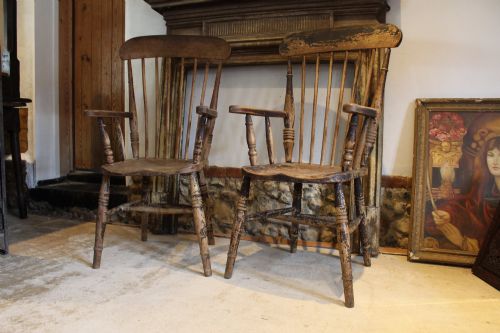
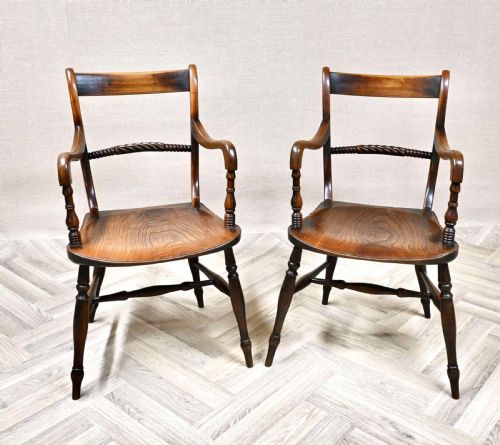
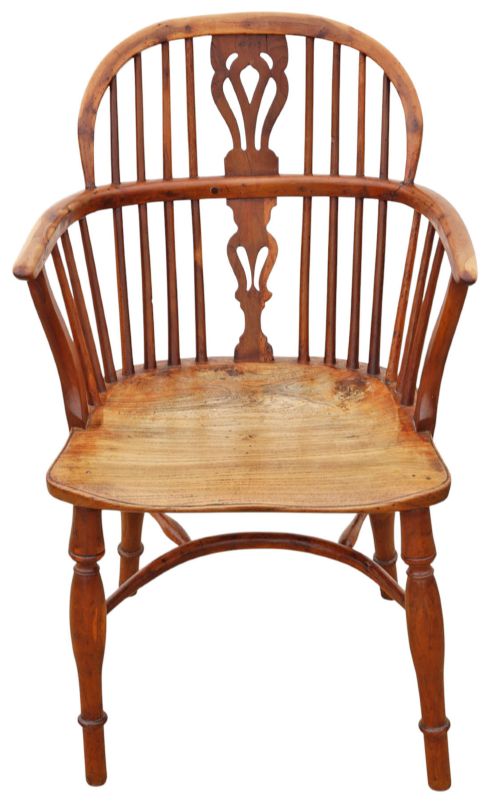
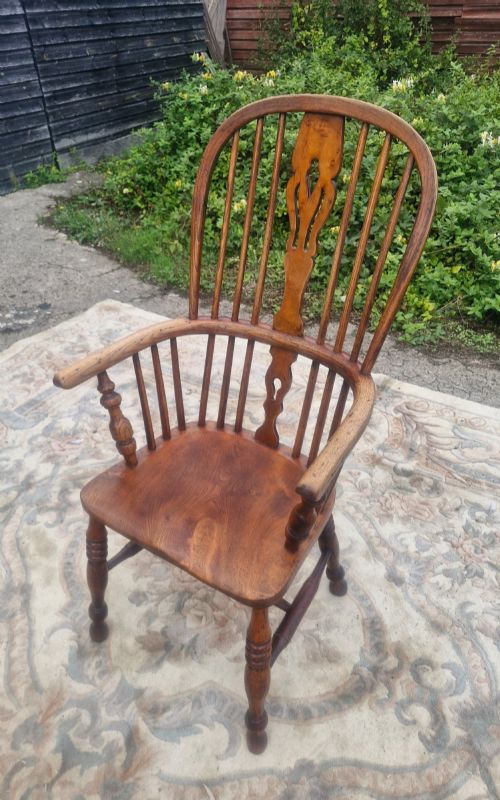
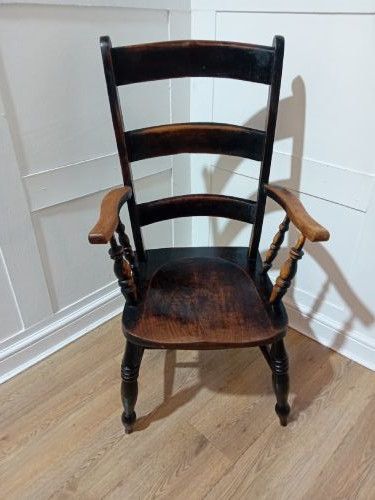
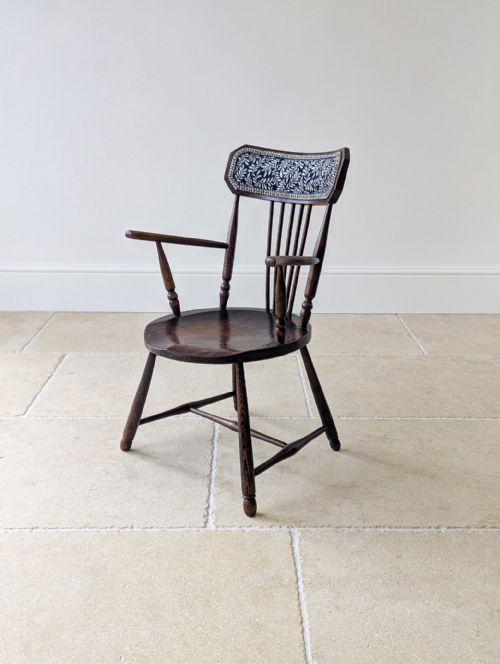
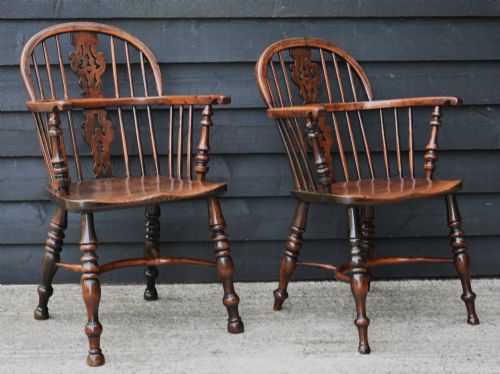
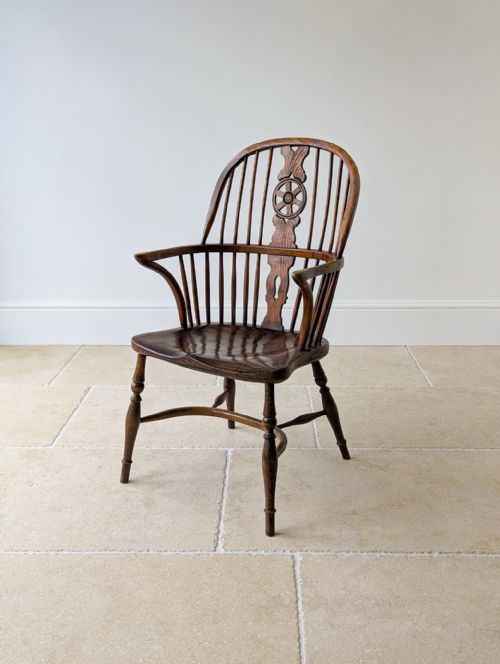
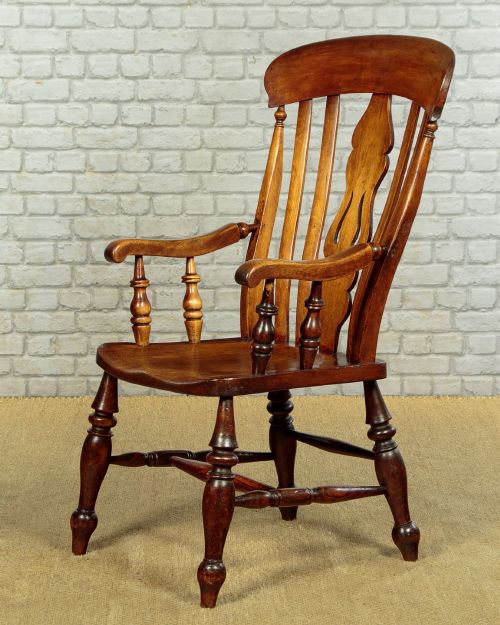
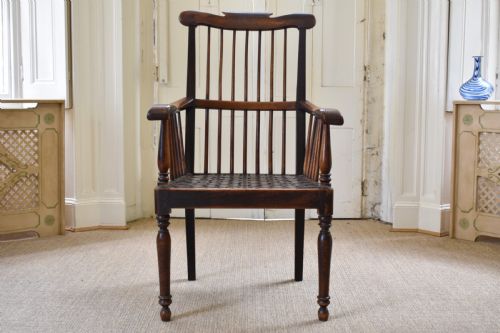
Elm wood carvers comprise robust country seating designed with supportive armrests for domestic life. You will regularly encounter Windsor armchairs, stick backs, and wheel backs shaped by regional makers across the eighteenth and nineteenth centuries.
The material identity rests firmly on timber combinations, with solid elm seats paired with ash, yew, beech, or fruitwood frames. These regional pieces range from simple vernacular kitchen chairs to substantial Thames Valley and Nottinghamshire models.
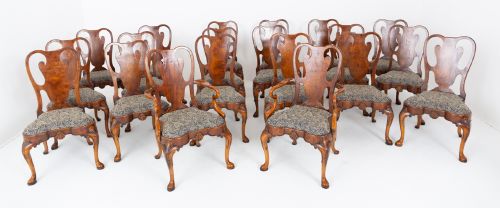
Styles span Georgian country forms to Victorian vernacular interpretations, alongside Queen Anne style dining sets and occasional Swedish neoclassical armchairs. Their primary purpose remains practical seating, carrying the marks of rural workshops.
Materials and construction methods
Constructors relied on dense elm for thick saddle seats because the interlocking grain resists splitting under pressure. Spindles, legs, and bow backs utilised tough timbers like ash, yew, and beech to provide flexible structural support.
Makers shaped solid wood components using traditional turning lathes, drawknives, and adzes to achieve ergonomic contours. Component parts were joined using pegged mortise and tenon joints, securing the frame directly into the thick plank seat.
Materials documented across the inventory include rush seating alongside solid elm, ash, yew, beech, oak, and fruitwood.
Markers of distinction and build
Superior examples display balanced proportions, deep saddle-shaped elm seats, and well-figured grain patterns in the accompanying yew or fruitwood elements. Original surface finishes and patination accumulated through decades of use elevate a piece significantly.
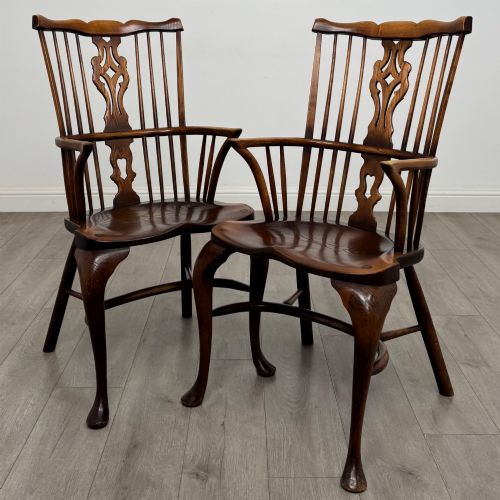
Strong structural integrity relies on tight joints and minimal replacement parts, whereas heavy alterations or mismatched components diminish the integrity of the design. Regional distinctiveness, such as crinoline stretchers or comb backs, adds architectural interest to better chairs.
The Elm Wood Carvers Glossary
- Carver chair
- An armchair designed with elbow supports, often used at the head of a dining table or as a parlour seat. They frequently match a set of smaller single chairs.
- Windsor chair
- A wooden chair constructed with upright spindles inserted into a solid carved wooden seat. The back and legs are secured directly to this central plank.
- Crinoline stretcher
- A curved hoop stretcher connecting the legs of a Windsor chair to provide extra stability. This design is typical of earlier nineteenth-century English country workshop production.
- Vernacular furniture
- Practical objects made by regional craftsmen using local materials rather than following strict metropolitan design rules. These pieces prioritise utility and local tradition.
- Yew wood
- A dense, highly figured softwood prized for its rich amber colour and grain. It was frequently combined with elm in traditional country chair production.
Elm Wood Carvers: Frequently Asked Questions
How do I care for elm chairs?
Keep wooden chairs away from direct heat sources and sudden temperature shifts to prevent the timber from splitting. Feed the surface periodically with natural beeswax to maintain the finish.
Avoid using harsh chemical polishes that can strip the historic patination accumulated over generations. Gentle dusting with a soft cloth is sufficient for routine maintenance.
What is a carver chair?
A carver chair is an armchair traditionally placed at the ends of a dining table. These seats offer supportive armrests while matching the style of the surrounding dining chairs.
In country houses, similar armchairs also served as fireside or desk seating due to their robust construction and comfort.
How do I date a Windsor chair?
Dating relies on examining the construction methods, tool marks, and timber choices visible across the frame. Earlier pieces from the eighteenth century often feature broader saddle seats and simpler, heavier undercarriages.
Victorian examples frequently introduce steam-bent components and varied spindle turnings like wheel backs or bar backs.
Can I use antique carvers daily?
Solid elm and ash country chairs were built for generations of hard domestic use. Their sturdy frame construction makes them well-suited for everyday seating around a table.
Checking that the joints remain tight ensures the chair handles daily weight without sustaining structural damage.