




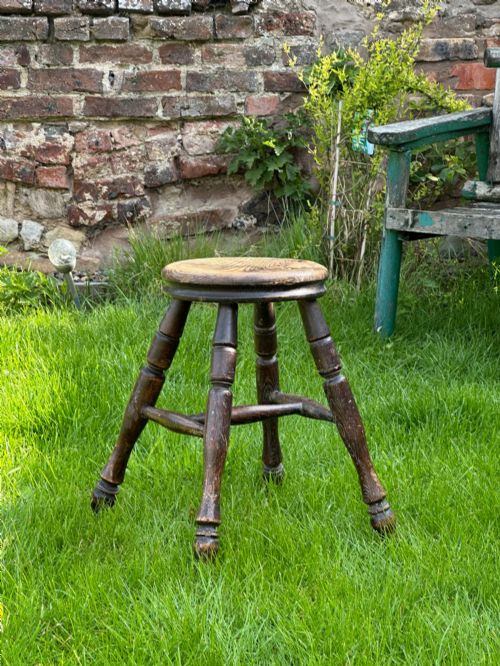


Elm Milking Stool
An elm milking stool is a utilitarian vernacular seat, prized for its honest grain and simple three-legged form in country interiors.
Elm Milking Stool
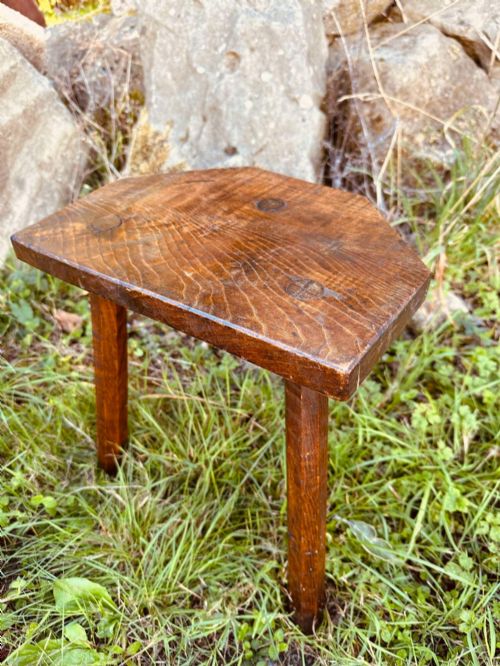
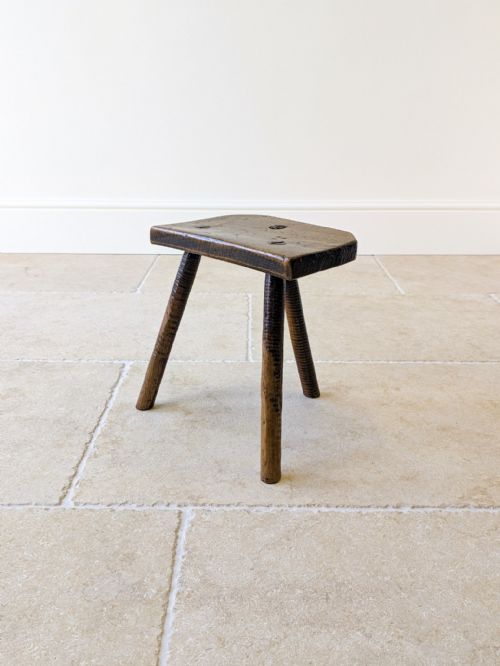
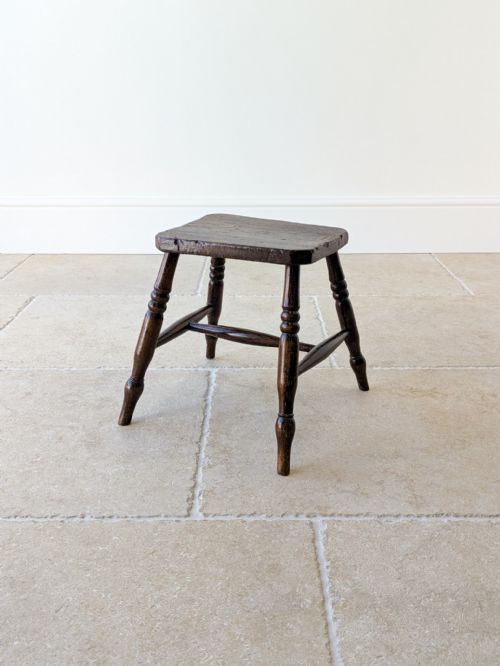
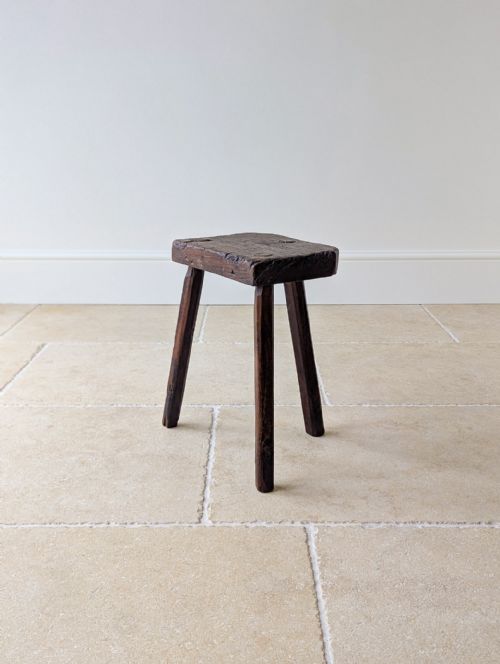
An elm milking stool is a practical piece of country furniture created for agricultural labour, specifically designed for milking cows by hand in the dairy or field. These humble seats appear primarily in 18th century and 19th century guises, spanning Georgian and Victorian periods.
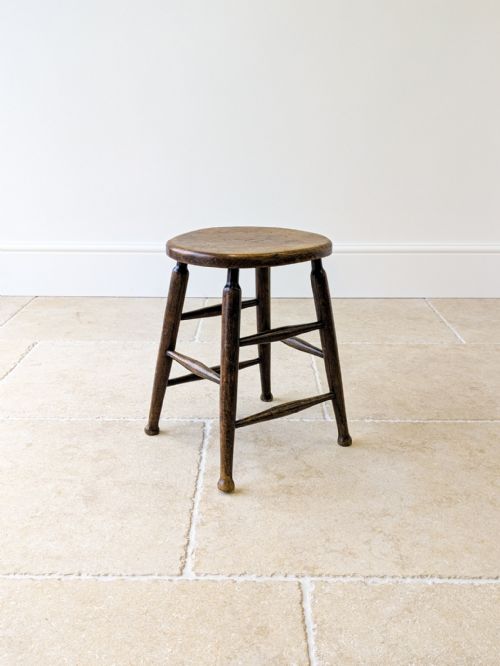
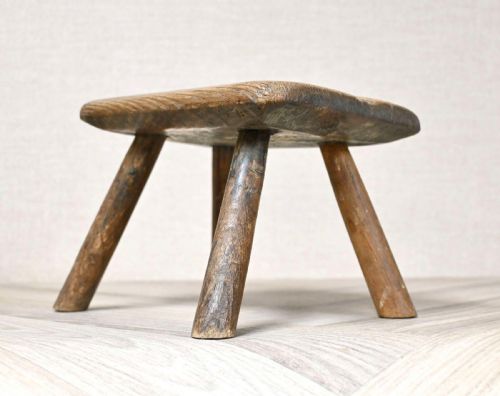
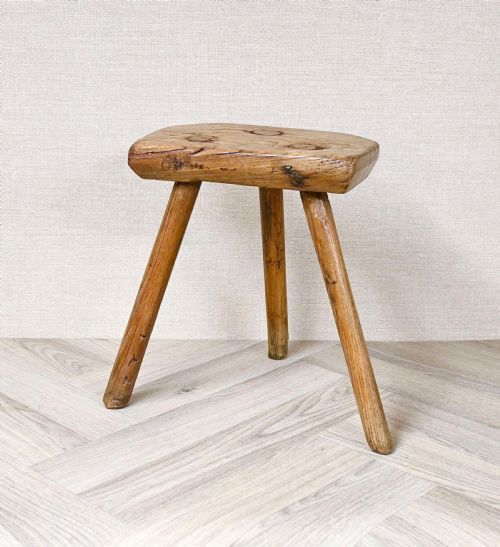
The most common survival on this page is the three-legged round or dished seat version, often braced with ash or beech components. Makers also produced variants associated with specific trades, such as jewellers, cutlers and lace makers.
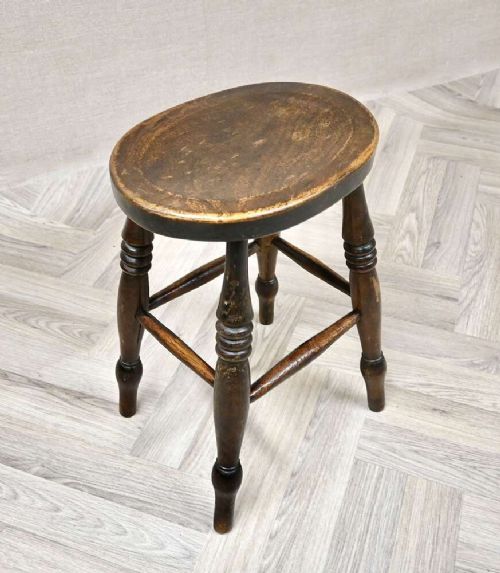
Forms range from low hearth stools and tall stools to live edge rustic timber slabs and Windsor-style seats. Survivals frequently exhibit vernacular traits including retained old paint and heavy surface wear from decades of agricultural use.
How they were made
Makers selected elm for the seat because the interlocking grain resisted splitting under heavy downward pressure and sudden movement. They paired this tough timber with straight-grained ash or beech for the legs, turned or cleft by hand and wedged firmly into drilled socket holes.
Many examples utilise a dished or concave top scooped from a solid block of wood to provide a comfortable seat for the worker. Surface finishes were minimal, relying on natural friction fit, simple pegged joints, and occasional coats of protective paint.
Elm Milking Stool Retail Price Guide 2026
Typical asking prices for elm milking stool among the pieces listed under this phrase on Sellingantiques today, from the lower quarter to the upper quarter. They describe what is for sale here now, not the wider market.
Some hardworking seats even doubled as lace makers' perches and jewellers' benches before retiring to the fireside.
What varies in quality
Quality rests in the balance of the timber and the integrity of the wedged joints rather than decorative flourishes. A superior seat displays a thick, deeply carved elm slab with rich figuring, showing authentic wear without structural compromise to the leg sockets.
Proportion and stance dictate the character of the piece, with well-splayed legs offering stability and visual grace. Lesser examples suffer from clumsy replacement legs or excessive shrinkage cracks that weaken the overall frame.
Boden And Co
The Elm Milking Stool Glossary
- Vernacular
- An object made by local craftsmen for everyday use rather than high-style polite society. These pieces follow regional traditions and practical needs.
- Dished top
- A seat surface hollowed out into a shallow bowl shape by an adze or gouge. This shaping fits the body and prevents slipping.
- Live edge
- A furniture edge that retains the natural contour of the tree trunk rather than being sawn straight. It highlights the organic origins of the timber.
- Windsor
- A construction method where legs and spindles are inserted directly into a solid wooden seat rather than a frame. It provides robust joint strength for heavy utility.
Elm Milking Stool: Frequently Asked Questions
What is an elm milking stool?
An elm milking stool is a traditional three-legged or four-legged seat used by agricultural workers during milking. They were built for utility in the dairy, featuring solid wooden tops and sturdy pegged legs.
Over time, these durable seats found their way into domestic settings as low tables, plant stands or decorative rustic accents.
How old are these antique stools?
The pieces available range primarily from the 18th century through the Victorian era. Many date from the Georgian period up to the late 19th century.
Age is determined by construction marks, tool traces, timber shrinkage and the depth of the patina accumulated through generations of use.
Why do they have three legs?
Three legs ensure that a stool remains completely stable on uneven farmhouse floors, dairy yards or cobbled ground without rocking. This practical geometric necessity defined vernacular dairy seating.
Four-legged variants also exist, often associated with specific trades like lace making or general domestic hearth use.
How should I clean and care for one?
Maintain the aged timber surface by dusting with a dry cloth and occasionally applying a neutral beeswax to nourish the dry wood. Avoid harsh modern chemical cleaners that strip the historic finish.
Keep the stool away from direct heat sources and dramatic humidity shifts to prevent the elm seat from splitting further.