



Elizabethan Storage Chest
An elizabethan storage chest is a heavy timber repository built for domestic security, bringing sixteenth-century craftsmanship directly into modern interiors.
Elizabethan Storage Chest
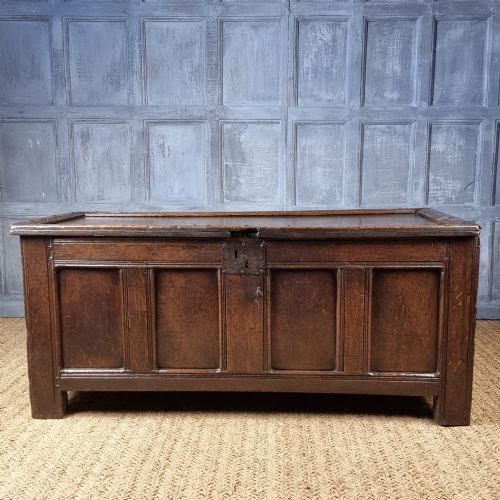
When you search for an elizabethan storage chest, you encounter sturdy coffers and trunks dating principally from the sixteenth century, alongside later seventeenth-century examples and twentieth-century revivals. These pieces functioned as robust household repositories for valuables, linens, and documents before dedicated wardrobes and closets became common.
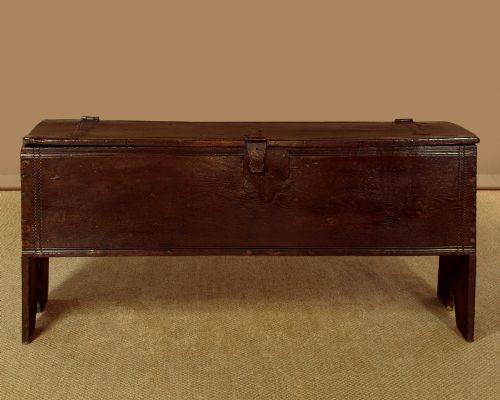
The pieces on this page are most frequently encountered as solid oak boarded or plank structures, occasionally described as coffers or sword chests. Welsh regional variations appear alongside broader English pieces, showing the distinct craftsmanship of the period.
Styles span the Elizabethan, Tudor, and Jacobean periods, with an occasional Elizabethan Revival piece from nineteen hundred. These forms showcase the fundamental utilitarian architecture of early domestic furniture.
Construction and materials
Construction relies primarily on sturdy English and Welsh oak, shaped into heavy planks and boards to form the body of the chest. Iron and wrought iron provide essential structural reinforcement through strap hinges, latches, and corner brackets.
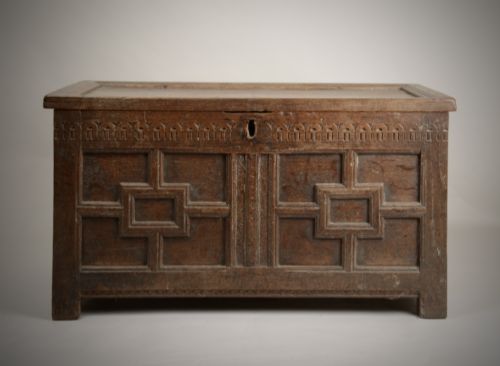
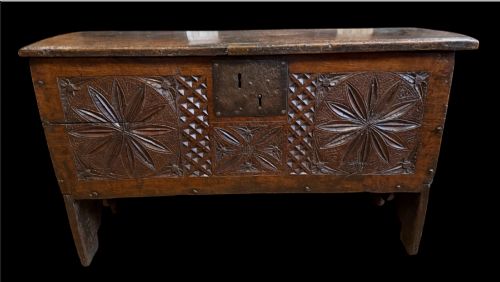
Decorative detailing employs inlaid wood and fruitwood inlay to create geometric or floral patterns across the oak surfaces. Carving is applied directly to the timber facade in regional Welsh and English workshops.
Current listings feature sixteenth-century, seventeenth-century, and nineteen-hundred periods, constructed primarily from oak with iron and fruitwood inlay.
Distinctions in quality
Quality rests in the integrity of the original oak boards and the precision of the joinery used to unite them. Pieces featuring intricate carved detailing or complex inlaid wood display a higher level of workshop skill than plain boarded variants.
The survival of original ironwork, such as wrought iron hinges and locks, elevates the historical completeness of the piece. The presence of contemporary surface patination demonstrates age and honest use over the centuries.
The Elizabethan Storage Chest Glossary
- Boarded coffer
- A primitive chest constructed from vertical planks joined at the edges, representing the earliest form of domestic storage. These pieces rely on simple carpentry rather than complex frame-and-panel techniques.
- Inlaid wood
- A decorative technique where contrasting timbers, such as fruitwood, are fitted into recessed channels within the primary oak surface. This method creates flat ornamental patterns across the front panels.
- Wrought iron
- Iron beaten into shape by hand to produce functional hardware like hinges and brackets. The irregular texture reveals traditional blacksmithing methods of the sixteenth and seventeenth centuries.
- Elizabethan revival
- A nineteenth-century or twentieth-century movement recreating the distinct architectural styles and heavy timber forms of the original sixteenth-century period. These later interpretations utilise period motifs on more modern frames.
Elizabethan Storage Chest: Frequently Asked Questions
What did they store inside?
These heavy timber chests held valuable household textiles, silver, church plate, and important documents securely under lock and key. Because homes lacked fitted closets, families relied on these portable strongboxes to protect their most prized possessions.
In practical terms, the deep interior accommodated bulky woollen blankets and spare garments away from damp stone floors. Travellers and merchants also utilised long trunks for transporting goods on horseback or by wagon.
How do I date an old chest?
Dating relies on observing the construction methods, tool marks left by hand axes, and the evolution of decorative styles from Tudor to Jacobean periods. Plain six-plank boards often indicate sixteenth-century origins, while specific carving motifs align with distinct reigns.
Changes in ironwork hardware and the transition from simple peg joinery to sophisticated framing provide further clues. Comparing the timber species and regional Welsh or English characteristics helps narrow the decade of manufacture.
Where were they placed originally?
Historic inventories place these heavy repositories primarily in great halls, bedchambers, and occasionally parish churches for safekeeping parish records. Their substantial weight meant they remained stationary against walls rather than moving freely between rooms.
Servants and masters alike used the flat lids as impromptu tables or benches when sitting quarters were scarce. Their robust build allowed them to double as seating furniture in busy household environments.
Are revivals worth collecting?
Twentieth-century revival pieces offer an accessible entry point into early furniture aesthetics without the heavy acquisition cost of sixteenth-century originals. They demonstrate traditional woodworking skills applied in later eras.
Collectors focused strictly on period authenticity usually prefer sixteenth-century or seventeenth-century pieces. However, quality revival chests still hold decorative and historical interest for traditional interiors.