



Elizabethan Oak Table
These elizabethan oak table pieces bring genuine early domestic gravity into a modern room, offering heavy timber surfaces built for centuries of use.
Elizabethan Oak Table
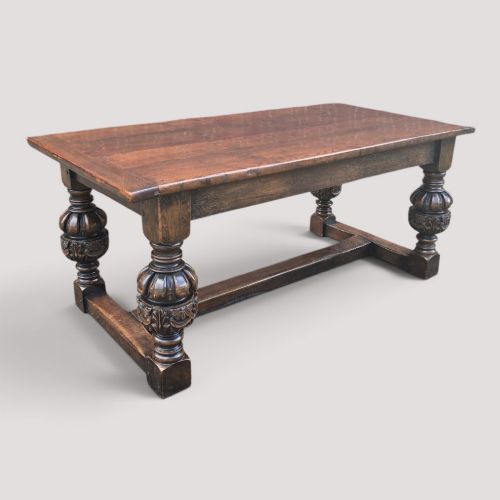
An elizabethan oak table is a substantial piece of vernacular furniture built around heavy timber supports and planked tops. The examples found here span genuine Tudor origins as well as later revival interpretations from the nineteenth and early twentieth centuries.
Buyers most commonly meet revival pieces dating from the Victorian and Edwardian eras, constructed in styles that echo sixteenth-century joinery. These tables appear as long refectory dining boards, library desks, and smaller occasional pieces.
The material vocabulary relies principally on solid oak, frequently paired with walnut, brass, or iron fixings. Forms range from simple farmhouse boards to grand extending dining sets flanked by matching chairs.
How they were made
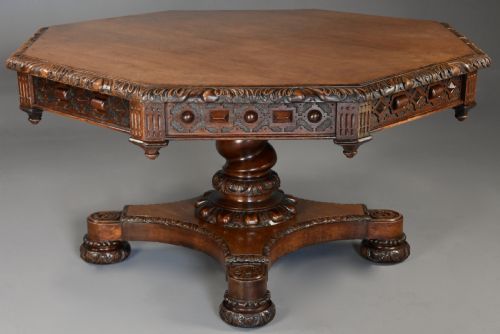
Construction relies upon heavy solid oak timbers, joined with traditional pegged mortise and tenon joints that provide structural rigidity. Selected pieces also incorporate pollard oak, burr oak, and walnut veneers to create decorative surface patterns.
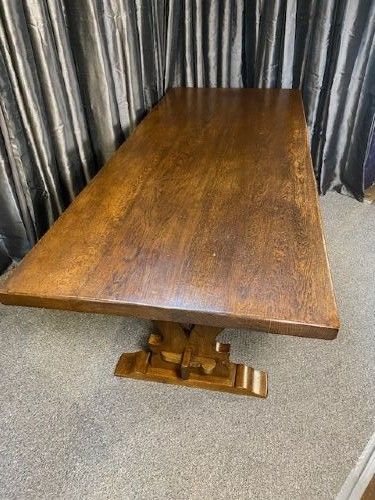
Makers utilised straight-grained timber for structural stretchers and legs, ensuring the table could bear immense weight. Surfaces were often finished with hand-planed top boards, leaving subtle tool marks that confirm manual shaping before the advent of mechanical planers.
The inventory records periods ranging from the Tudor era through the nineteenth century and into nineteen-twenty.
What varies in quality
Quality separates genuine sixteenth-century construction from later nineteenth-century revivals through the integrity of the original timber and the depth of hand-carved ornamentation. Early pieces show the natural weathering and wear of centuries, whereas revival items demonstrate the decorative ambitions of later workshops.
The choice of secondary woods and the selection of figured pollard or solid oak veneers dictate the visual weight of the piece. Superior examples maintain original tops to base connections without excessive modern timber replacement.
The Elizabethan Oak Table Glossary
- Refectory table
- A long dining table traditionally used in monastic refectories and large domestic halls. These pieces feature sturdy underframes connected by low floor stretchers.
- Pollard oak
- Timber taken from trees that have been pruned close to the trunk to encourage a dense, branched head. This process creates highly figured wood grain with distinctive cluster markings.
- Draw-leaf table
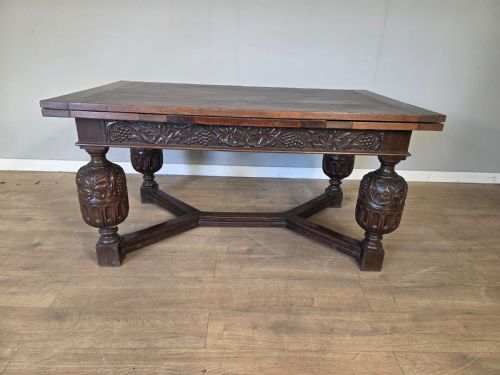
- An extending table fitted with two leaves stored beneath the main top. These leaves pull out to lengthen the surface area without removing the centre boards.
- Jacobean Revival
- A nineteenth-century design movement copying the heavier architectural motifs of the early seventeenth century. It frequently appears alongside Elizabethan styling in oak furniture.
- Box stool
- A low seat with a storage compartment beneath the lid, often utilised as an occasional table. Surviving examples frequently combine sixteenth-century elements with later nineteenth-century adaptation.
Elizabethan Oak Table: Frequently Asked Questions
Are these tables suitable for everyday dining?
These tables provide generous surface areas and sturdy timber construction well suited to daily meals. Their robust frames easily accommodate frequent domestic use.
Care should be taken with unsealed antique surfaces regarding moisture and heat. Using protective mats preserves the historic finish of the timber.
How do I tell an original Tudor table from a revival piece?
Original sixteenth-century pieces display authentic hand-tool marks, traditional peg construction, and centuries of oxidation on the oak surfaces. They carry the structural wear expected from prolonged domestic service. Ninteenth-century revival pieces often utilise machine-sawn components and cleaner joinery methods while copying earlier decorative motifs.
What rooms suit an elizabethan oak table?
Large refectory forms anchor spacious dining rooms or open-plan kitchens with strong architectural presence. Smaller occasional and library tables fit comfortably into studies or hallways. Their dark timber tones pair effectively with both contemporary white walls and traditional panelled interiors.
How do I care for antique oak furniture?
Maintaining these surfaces requires regular dusting with a dry cloth and occasional application of traditional beeswax. Avoid placing timber pieces near direct heat sources or strong sunlight. Keeping room humidity stable prevents the old oak boards from splitting or warping over time.