
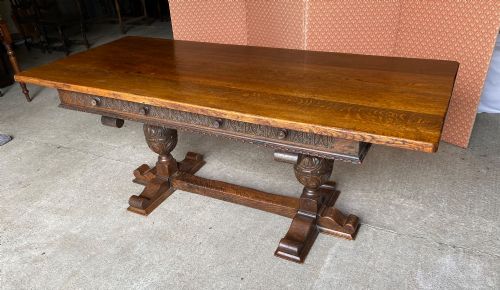
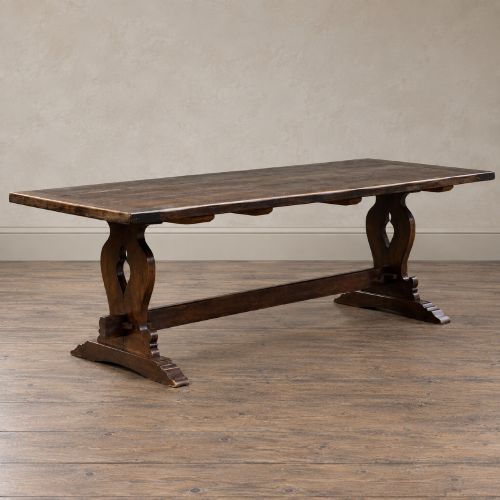
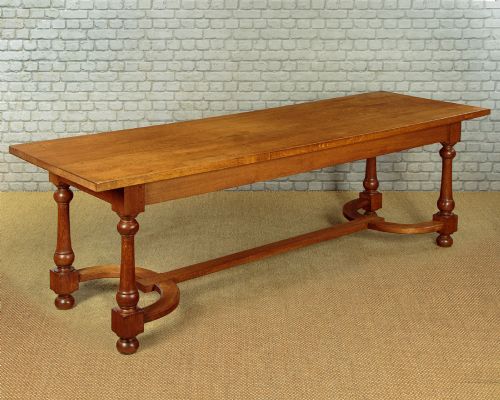
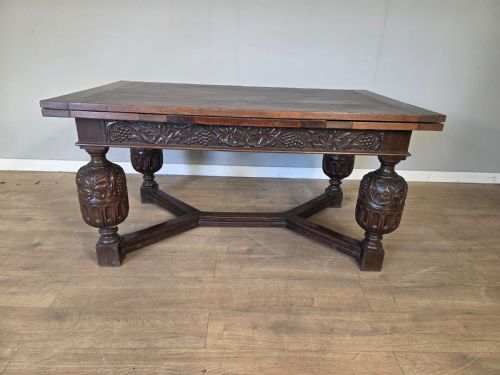



Tudor Refectory Table
A tudor refectory table brings historic presence into a room, offering robust solid oak timber and long dining proportions.
Tudor Refectory Table
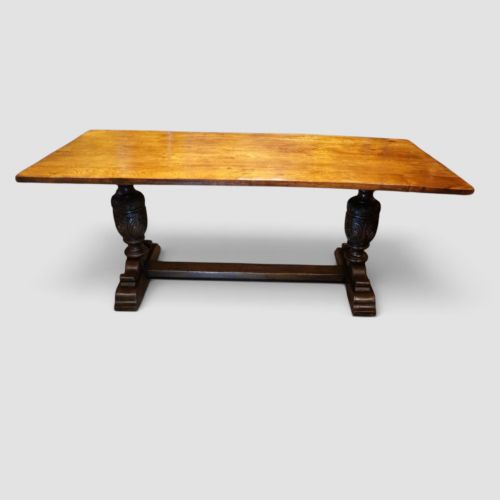
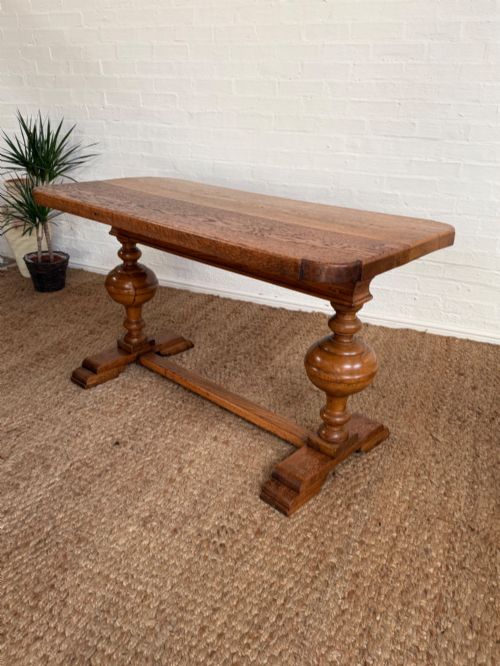
When you search for a tudor refectory table, you are looking at substantial dining tables and coffee tables built from solid oak. The majority of pieces on this page date from the 17th century through to the 20th century, encompassing revival periods such as Jacobean and Elizabethan styles alongside rustic farmhouse forms.
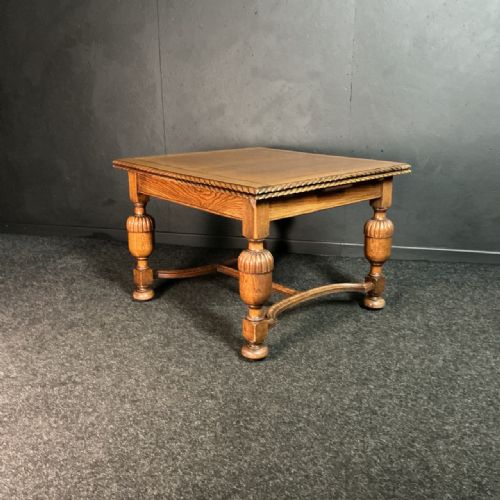
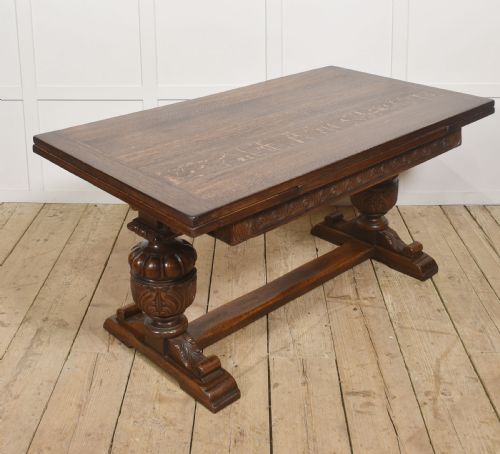
The pieces include fixed top refectory boards and extending variants with pull-out extensions or draw leaves. You will encounter grand dining proportions as well as smaller examples, all rooted in the heavy timber construction characteristic of the style.
How they were made
These tables rely on solid oak timbers, occasionally joined by fruitwood depending on the specific revival or regional workshop. Joinery prioritises robust construction methods suitable for heavy daily use.
Surface work on the pieces often incorporates carving, giving structural elements and friezes decorative detail. Extending mechanisms like pull-out extensions and draw leaves are integrated directly into the timber framework.
Listings span from the 17th century through the Edwardian era and the 1930s, executed entirely in solid oak and fruitwood.
What varies in quality
Quality in a tudor refectory table rests on the integrity of the timber and the depth of the carving. Tables retaining original tops to their bases show a higher degree of historical continuity.
The proportion and balance of the structure dictate the visual success of the piece, particularly in extending formats and smaller coffee table adaptations.
The Tudor Refectory Table Glossary
- Refectory table
- A long narrow dining table historically used in monasteries and large halls. This form provides the structural archetype for the listings here.
- Draw leaf table
- An extending table featuring leaves stored beneath the main top that pull out to lengthen the surface. This mechanism appears frequently in 20th century iterations.
- Jacobean style
- A design influence stemming from the early 17th century characterised by sturdy turnings and geometric carving. Revival pieces often draw heavily on this aesthetic.
- Solid oak
- Timber derived entirely from the oak tree without veneering. It forms the primary material substance across these pieces.
Tudor Refectory Table: Frequently Asked Questions
What is a tudor refectory table?
A tudor refectory table is a long, sturdy dining table made from solid oak, designed historically for communal dining halls.
Today, the selections include genuine early examples alongside revival pieces from the 19th and 20th centuries that emulate the historic form.
How do extending versions work?
Many tables utilise pull-out extensions or draw leaf mechanisms integrated beneath the main surface. These allow the ends of the table to slide outward when extra length is needed.
This practical addition maintains the heavy timber appearance while offering flexibility for modern dining.
Are all these tables from the 17th century?
No, while some pieces connect to the 17th century or Tudor period, the majority date from the 19th and 20th centuries.
Revival styles from Edwardian and later decades recreate the historic aesthetic using solid oak and traditional forms.
How do I style one at home?
A tudor refectory table functions naturally as a central dining room fixture, surrounded by benches or heavy chairs. Smaller variants also appear as coffee tables in larger living spaces.
The solid oak construction and carved details anchor a room, pairing well with plain walls and simple flooring.