


Eight Seater Table
An eight seater table provides generous space for dining and gathering, uniting craft and utility across centuries of domestic life.
Eight Seater Table
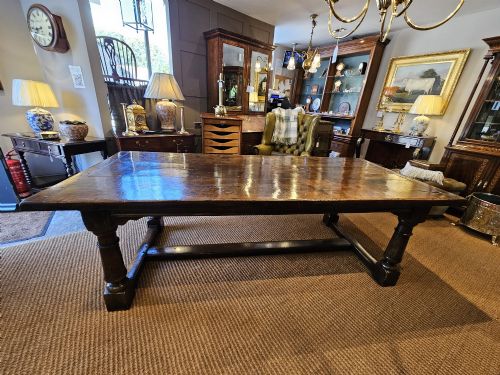
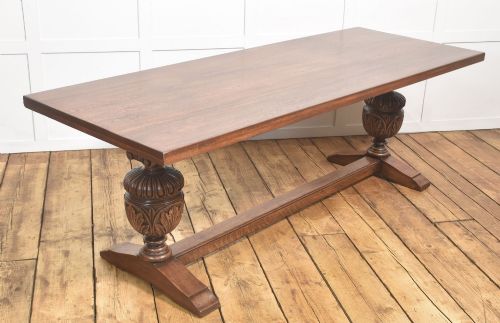
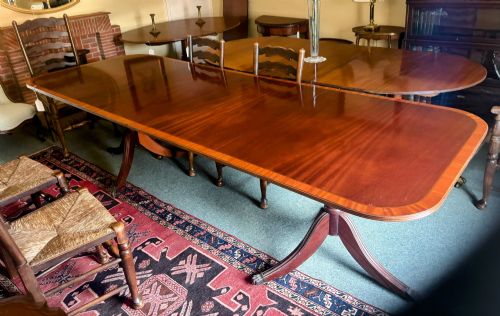
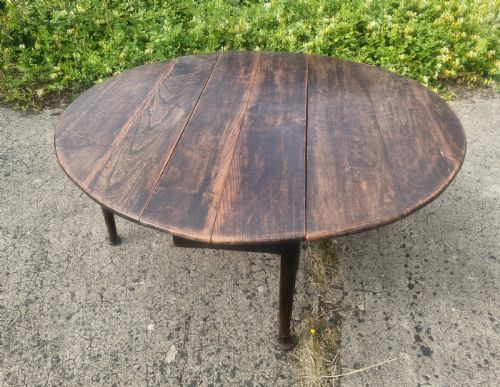
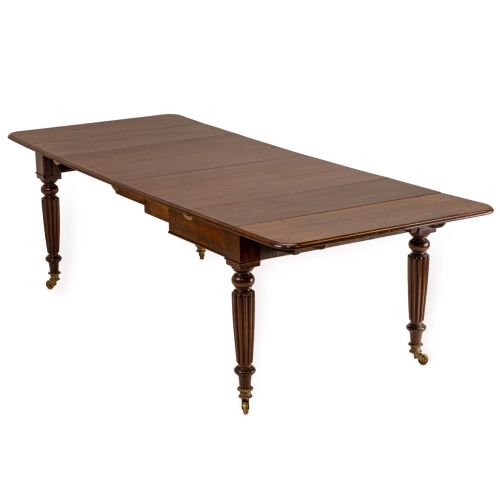
An eight seater table provides ample surface area for large dining rooms and kitchens, appearing in diverse forms across the listings. Buyers encounter heavy refectory formats alongside extending wind out designs and traditional gateleg constructions.
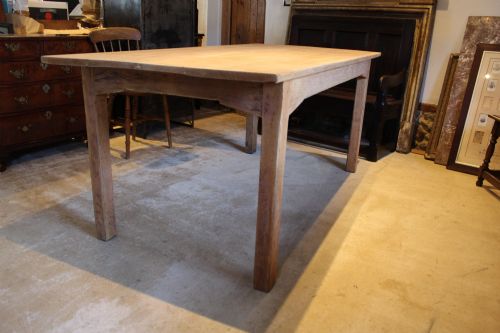
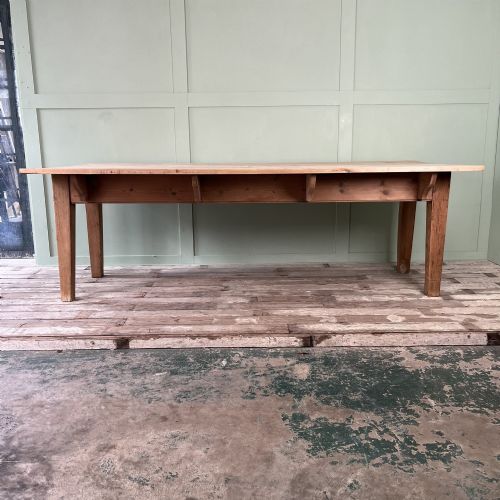
The selection ranges from robust rustic farmhouse boards in oak and pine to refined mahogany and burr walnut pedestal pieces. These forms reflect the changing social habits of domestic dining from the Georgian period through to the early twentieth century.
Makers adapted the dining requirement to various domestic settings, producing drop leaf versions for smaller rooms alongside long refectory formats intended for communal halls.
How they were made
Carpenters utilised solid timbers like oak, mahogany, and elm for structural integrity, shaping refectory legs and gateleg frames to support substantial loads. Joinery relied on traditional pegged tenons and sturdy framing techniques suited to daily heavy use.
Finishing involved careful timber selection, incorporating marquetry inlay, parcel-gilt wood details, and polished mahogany surfaces. Extending mechanisms utilised wooden runners and brass fittings to allow smooth operation when adding leaves.
What varies in quality
The grade of timber and the precision of the joinery dictate the distinction between standard utilitarian items and masterworks. Fine figuring in burr walnut veneer and delicate marquetry inlay separate decorative reception pieces from plain utility boards.
Structural complexity also alters the tier, with sophisticated mechanical wind out actions representing greater manufacturing skill than simple drop leaf or fixed refectory joints.
Charles Walker of Harrogate
The Eight Seater Table Glossary
- Refectory table
- A long narrow dining table originally used in monastic dining halls, characterised by sturdy wooden legs connected by a central floor stretcher.
- Wind out table
- An extending dining table operated by a mechanical handle that separates the top to insert additional leaves.
- Gateleg table
- A table with hinged leaves supported by swing-out legs that resemble a swinging gate.
- Marquetry inlay
- Decorative patterns formed by fitting small pieces of contrasting veneer into prepared recesses on the table surface.
- Pedestal table
- A central pillar support resting on feet, holding the tabletop without corner legs.
Eight Seater Table: Frequently Asked Questions
How do I measure for an eight seater table?
Allow sufficient clearance around the perimeter of the room so chairs pull out comfortably without hitting walls. Measure the overall length of the timber top and verify that the leg placement permits eight seats.
Consider the presence of pedestals or refectory stretchers which may restrict legroom for diners seated along the sides.
What is the difference between refectory and wind out tables?
Refectory boards use a fixed length supported by stretcher frames, offering a rustic or formal stationary surface. Wind out designs incorporate internal mechanisms to expand the surface area using loose leaves.
Wind out mechanisms provide flexibility for varying numbers of guests, whereas refectory formats maintain a permanent footprint.
How do I care for antique timber surfaces?
Apply traditional beeswax periodically to nourish the grain and protect against moisture and daily wear. Avoid placing wooden surfaces near direct heat sources or strong sunlight to prevent timber warping.
Use coasters and placemats to shield polished mahogany and oak from liquid rings and thermal damage.
How do I identify the period of a dining table?
Examine the timber species, construction joints, and leg styles against historical design eras such as Georgian, Victorian, or Edwardian. Hand-cut joinery and aged patination indicate older periods.
Hardware such as brass pull-out mechanisms and castor fixings also help date extending models from the nineteenth century onward.