
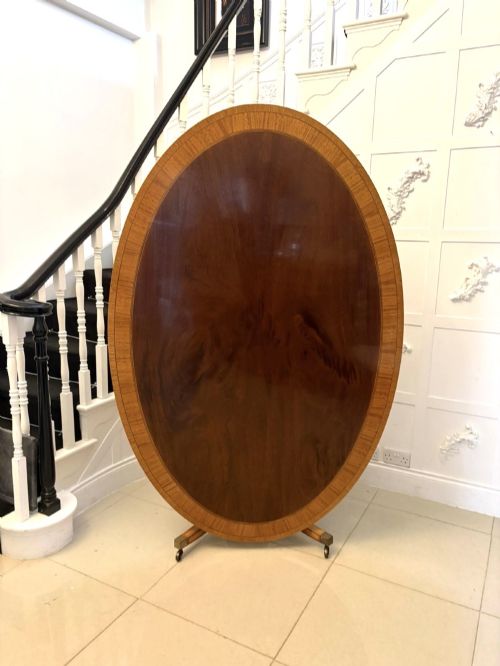
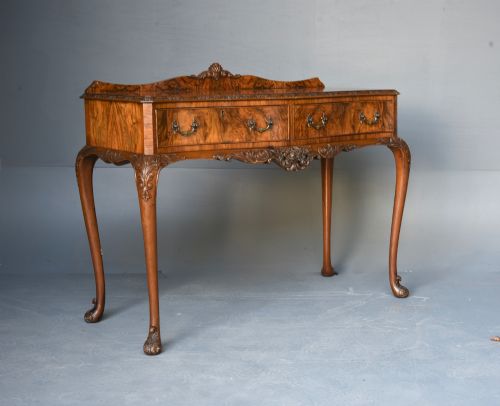
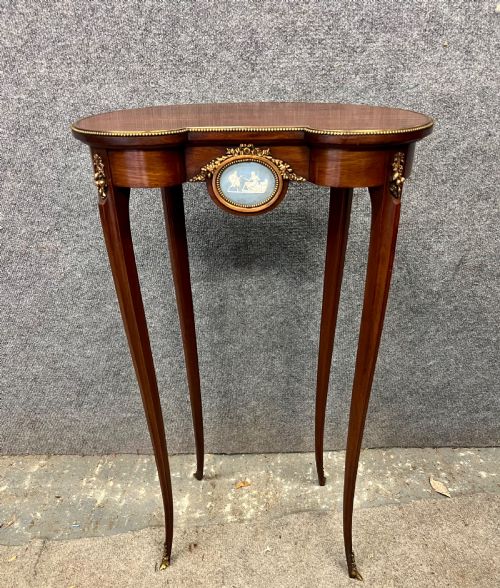
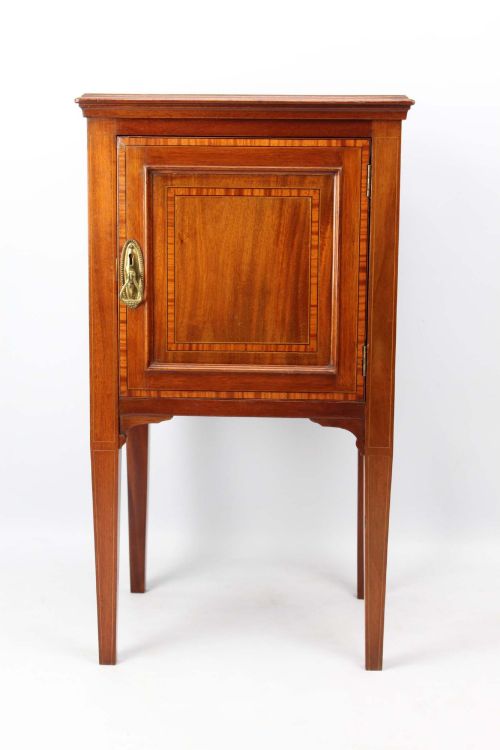
Edwardian Style Table
These edwardian style table pieces bring lighter proportions and graceful inlay to sitting rooms and libraries, offering practical surfaces for daily use.
Edwardian Style Table
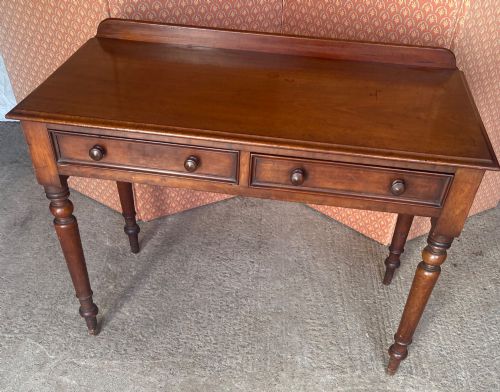
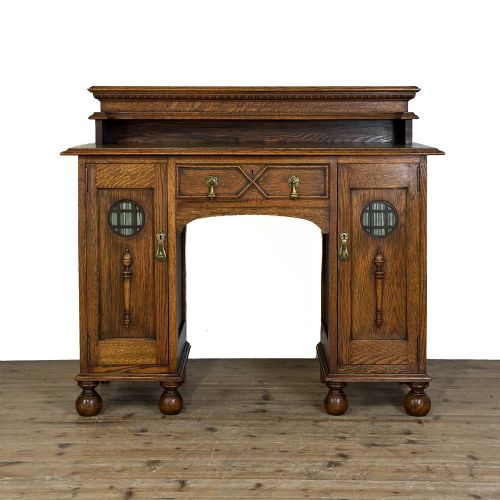
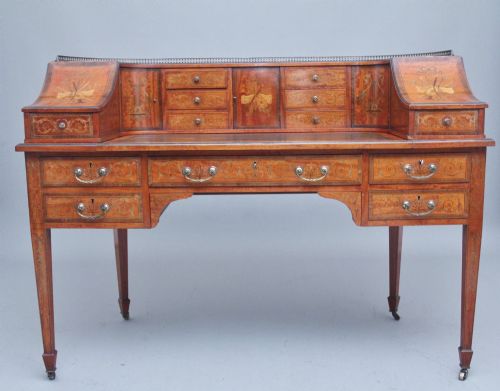
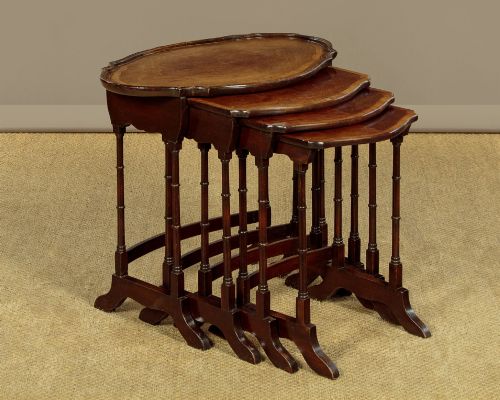
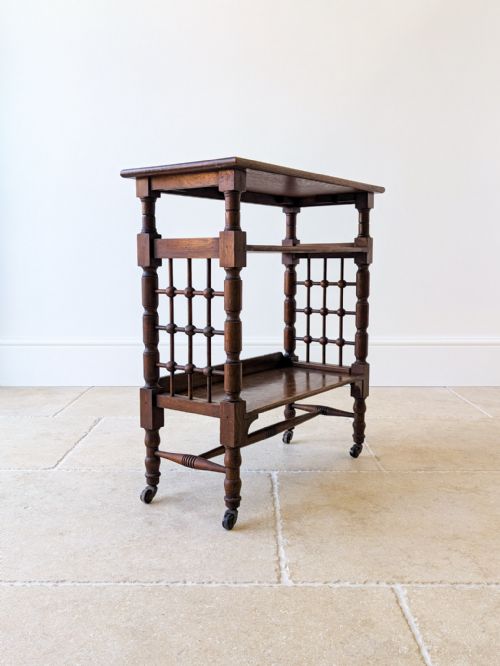
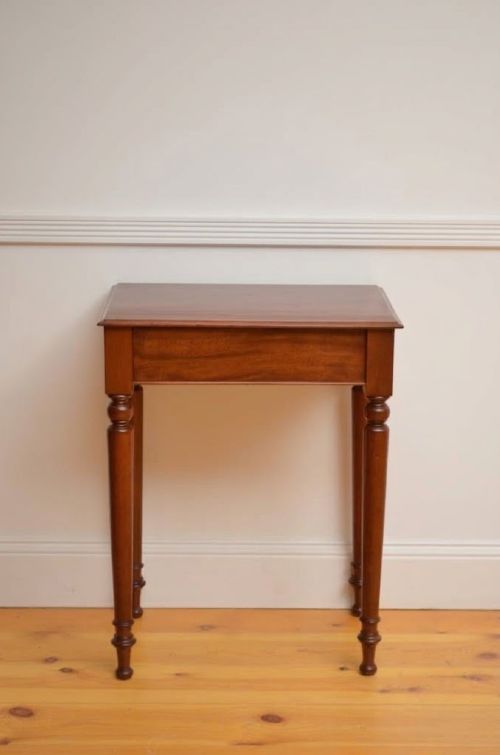
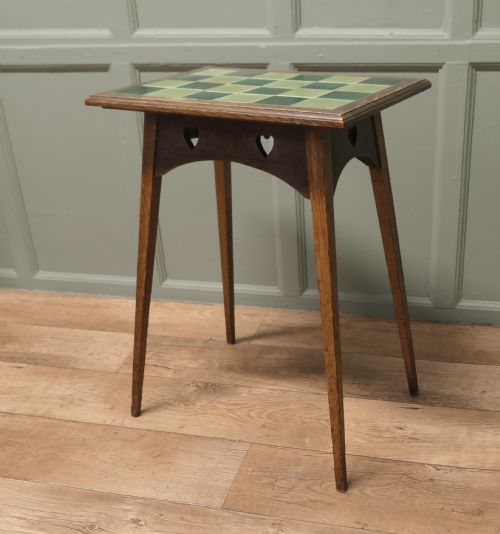
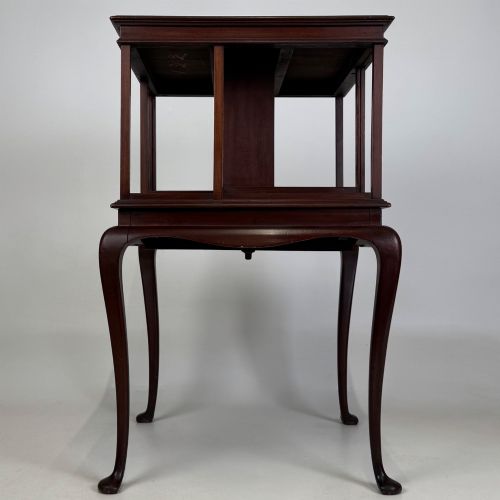
When you search for an edwardian style table, you encounter domestic items designed for specific functions, such as occasional tables, writing desks, side tables, and nests of tables. The selection ranges from authentic pieces made during the Edwardian period to revival pieces influenced by Sheraton and Queen Anne designs, alongside Arts and Crafts oak furniture.
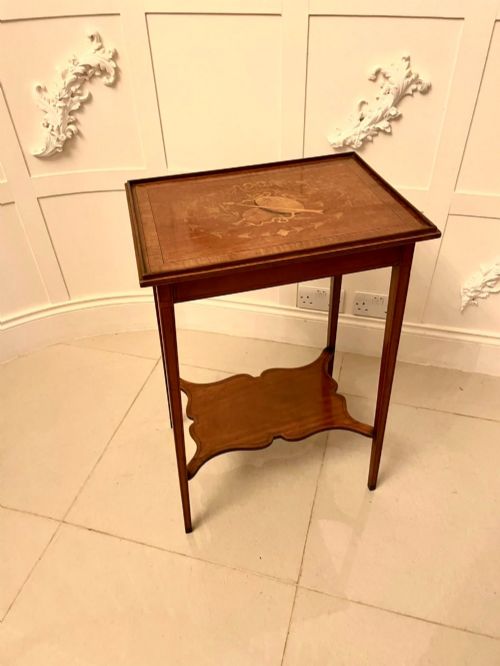
You are most likely to meet occasional tables and side tables fashioned in mahogany, frequently decorated with satinwood inlay or crossbanding. These pieces reflect a shift away from heavier Victorian forms toward domestic furniture that felt lighter and more adaptable to the home.
The objects also encompass dining tables and smaller pieces like quartetto nests, reflecting the versatile output of workshops operating around the turn of the twentieth century. Their forms draw upon earlier Georgian and Regency traditions while maintaining the characteristic restraint of the era.
Materials and Technique
Makers relied heavily on mahogany as a primary timber, frequently pairing it with contrasting satinwood for delicate stringing and marquetry panels. Burr walnut and oak also appear regularly, lending distinct grain patterns to occasional tables and desks.
Construction techniques balanced traditional joinery with decorative veneering, particularly in Sheraton Revival pieces where crossbanding frames the principal timber. Brass fittings and occasional ormolu mounts provide structural accents on writing tables and side tables.
The surface finishes preserve the natural figure of the wood, whether through polished mahogany or fumed oak typical of the Arts and Crafts tradition. This reliance on quality timber and precise inlay work defines the physical construction of these tables.
Folding campaign tables appear alongside elegant satinwood cabinets, proving that even polite Edwardians needed packable furniture.
Gradations in Quality
The standard of an edwardian style table rests upon the selection of timber and the precision of its decorative inlay. Finer examples display carefully matched figured mahogany or burr walnut, whereas simpler pieces utilise plain secondary woods with minimal banding.
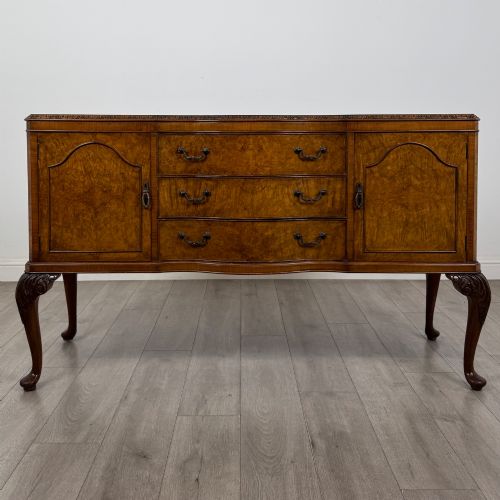
Detailing in the cabinet work distinguishes workshops, evident in the crispness of edge mouldings, the snugness of drawer joints, and the integration of brass hardware. Tables produced by documented makers show an attention to proportion and structural stability that elevates them above standard commercial output.
Gillows·Liberty and Co·Druce and Co
The Edwardian Style Table Glossary
- Satinwood
- A pale, lustrous timber imported from tropical regions, used extensively for banding and inlay on mahogany furniture. It provides a sharp visual contrast to darker woods.
- Crossbanding
- A decorative technique where a border of veneer is laid around the perimeter of a table top so that the grain runs at right angles to the central panel. This frames the primary timber.
- Quartetto
- A set of four graduating tables designed to slide one beneath another when not in use. They became particularly popular during the Edwardian period for entertaining.
- Marquetry
- The art of applying pieces of veneer to a structure to form decorative patterns or pictorial designs. It requires high precision from the cabinet maker.
Edwardian Style Table: Frequently Asked Questions
How do I identify an Edwardian table?
Look for lighter proportions, tapered legs, and subtle satinwood inlay rather than heavy carving. These characteristics distinguish the period from earlier Victorian designs.
Examine the secondary woods used underneath or inside drawers, as these often point toward the manufacturing methods of the early twentieth century.
Were nests of tables common then?
Quartetto nests gained immense popularity during this era because they provided extra surface space for tea or writing without cluttering a room.
They were constructed to slide neatly together, demonstrating the practical ingenuity of furniture makers at the time.
What is Sheraton Revival furniture?
Sheraton Revival pieces borrow the neoclassical motifs, elegant tapering legs, and delicate stringing popularised by Thomas Sheraton in the eighteenth century.
Makers around nineteen hundred reinterpreted these motifs with fresh enthusiasm, producing refined side and occasional tables.
How should I care for polished mahogany?
Keep wooden surfaces away from direct sunlight and sudden temperature changes to prevent the timber from drying out or warping.
Apply a traditional beeswax polish occasionally and buff gently with a soft cloth to maintain the natural lustre of the wood.