



Edwardian Writing Box
These pieces for an edwardian writing box bring compact desktop order and fitted compartments into modern studies.
Edwardian Writing Box
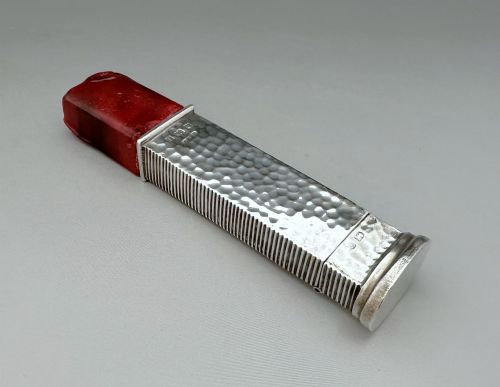
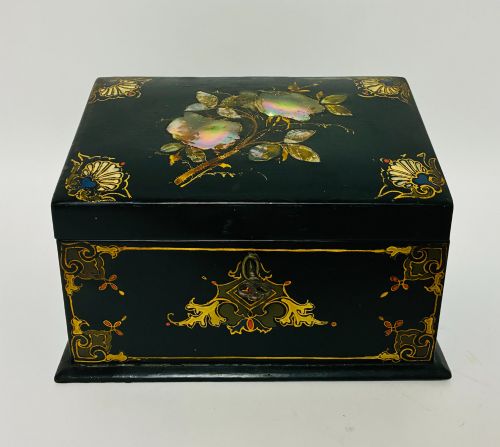
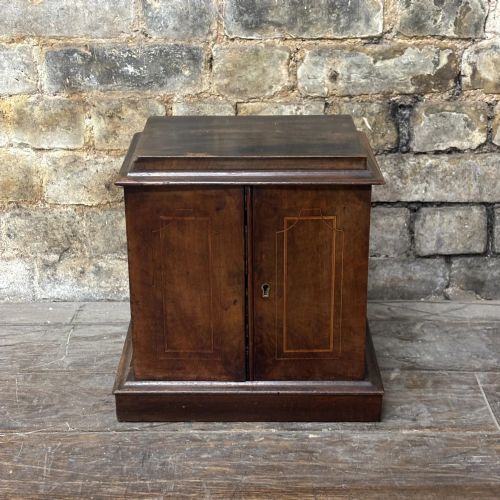
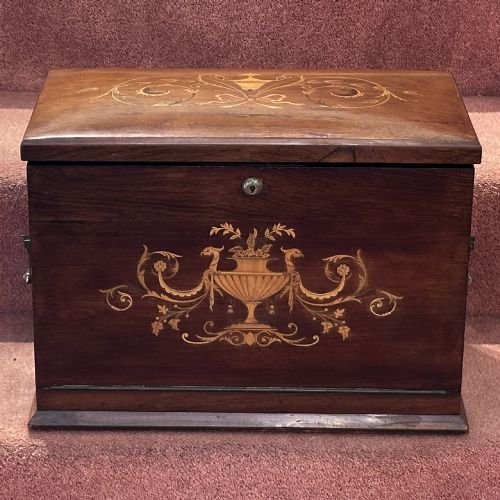
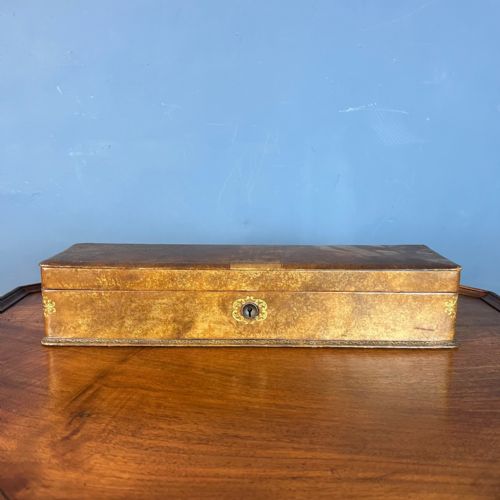
An edwardian writing box brings together compact desktop containers designed for correspondence, stationery, and small desk accessories. The selection on this page leans heavily toward oak and mahogany stationery cabinets, hinged writing slopes, and fitted boxes spanning the Victorian and Edwardian eras.
Buyers encounter everything from simple oak boxes to inlaid mahogany cabinets and brass-bound campaign pieces. Alongside traditional writing slopes, the listings frequently include specialised receptacles such as stamp boxes, inkstands, and letter racks.
How they were made
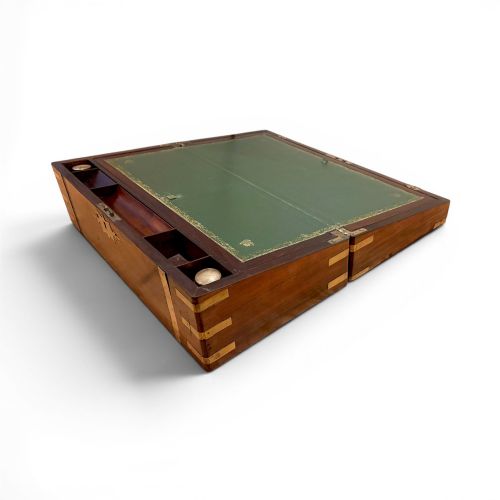
Carpenters utilised sturdy timbers such as oak, mahogany, and walnut, often accentuating the grain with burr walnut veneers, satinwood, or boxwood inlay. Many items incorporate brass for protective corner brackets, hinges, and escutcheons, securing the joints for daily travel and desktop use.
Interiors rely on fitted compartments lined with tooled leather, velvet, or paper, designed to hold inkwells, pens, and paper securely. Glass inkwells with metal collars and fitted drawers with secret compartments complete the construction.
Edwardian Writing Box Retail Price Guide 2026
Typical asking prices for edwardian writing box among the pieces listed under this phrase on Sellingantiques today, from the lower quarter to the upper quarter. They describe what is for sale here now, not the wider market.
The inventory records pieces from the Victorian and Edwardian periods, alongside George V items.
What varies in quality
Quality rests in the precision of the cabinet work, the choice of figured veneers, and the integrity of the original brass fittings. Pieces with well-matched timbers, crisp marquetry inlay, and fully operational locks distinguish finer examples from plain utility boxes.
The sophistication of the internal mechanism also sets items apart, from simple lift lids to rotating cases, metamorphic actions, and carefully fitted secret drawers.
The Edwardian Writing Box Glossary
- Writing slope
- A desktop box with a hinged, slanted lid that opens to reveal a writing surface and internal storage compartments. They often feature tooled leather writing panels.
- Stationery cabinet
- An upright desk accessory featuring shelves, slots, and fall-front doors designed to organise paper, envelopes, and letters. These often include built-in date adjustments or ink bottles.
- Campaign box
- A sturdy wooden box reinforced with brass corners and flush handles, built for transport during military travel. These pieces prioritize durability and secure fastening.
- Escutcheon
- A decorative metal plate surrounding a keyhole, utilised to protect the surrounding wood from wear. They appear in brass across many period boxes.
- Marquetry
- The art of applying pieces of veneer to a structure to form decorative patterns and pictures. Edwardian examples frequently employ this technique on mahogany.
Edwardian Writing Box: Frequently Asked Questions
What is an edwardian writing box used for?
These boxes provided a portable or desktop station for holding paper, envelopes, ink, and pens before the widespread use of ballpoint pens and email. They kept correspondence organised in the home or during travel.
Today, they serve as decorative desktop storage for modern letters, stationery, and small personal items while adding period character to a room.
How do I tell Victorian from Edwardian boxes?
Victorian boxes often feature heavier timbers, deep brass binding, rosewood, and elaborate walnut veneers with a darker finish. They tend toward robust construction and campaign styles.
Edwardian pieces frequently display lighter mahogany, oak, boxwood cross-banding, and delicate marquetry inlay reflecting Arts and Crafts or neoclassical influences.
How do I clean and care for wooden boxes?
Maintain the wood and leather interiors with appropriate traditional furniture wax and dry dusting, avoiding harsh chemical cleaners that can strip the finish.
Keep them away from direct sunlight and extreme humidity to preserve the stability of the timber and the delicate veneer work.