



Edwardian Wool Tapestry
These edwardian wool tapestry pieces are textile works spanning several periods, offering buyers rich decorative panels and furnishings.
Edwardian Wool Tapestry
The edwardian wool tapestry items on this page encompass various textile works, framed pictures, and functional furnishings created across the late nineteenth and early twentieth centuries. Buyers encounter framed wall art, folding screens, rugs, and footstools produced in styles ranging from Victorian and Art Nouveau to Arts and Crafts.
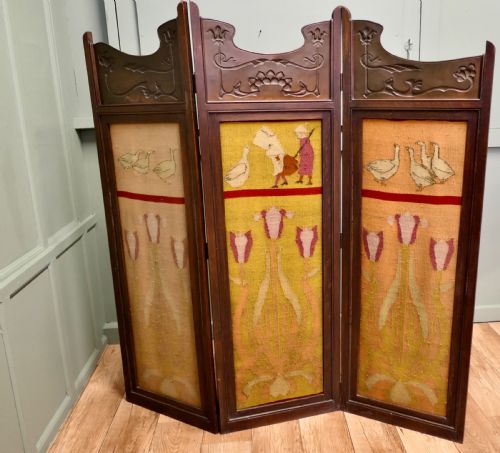
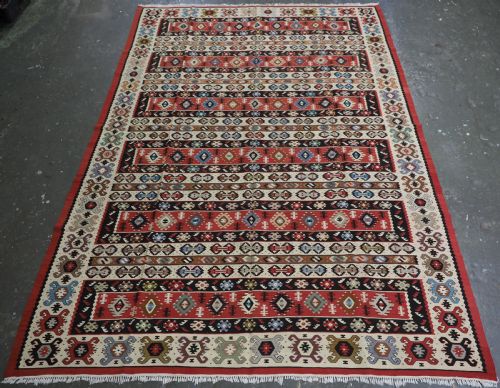
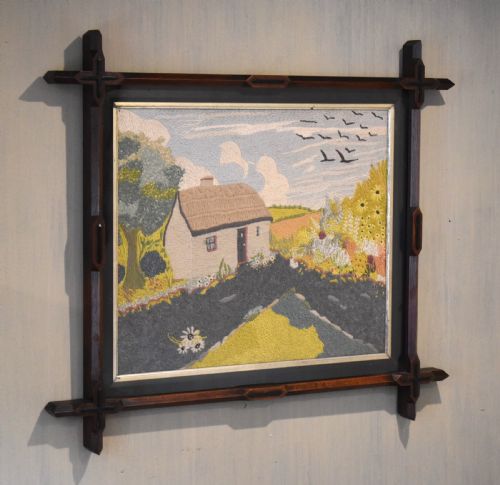
Framed needlework pictures depict subjects such as animals, floral arrangements, and pastoral scenes executed in wool on canvas. Larger domestic pieces include three-fold screens featuring naive wool panels set in wood frames, alongside occasional flatweave rugs and upholstered footstools.
The objects span multiple eras including the nineteenth century, the nineteen-hundreds, and nineteen-twenty, reflecting diverse aesthetic movements from Victorian botanical works to Balkan folk art. This selection provides collectors with both wall-hung textile art and practical antique furnishings.
How they were made
Makers utilised wool yarn worked onto canvas grounds, employing techniques such as gros and petit point to build detailed pictorial and geometric surfaces. Many textile panels were then mounted into wooden frames made from mahogany, oak, rosewood, or burr maple.
Functional pieces incorporate structural elements of wood, glass for picture protection, and copper panels within folding screen designs. Flatweave kilims utilise traditional banded wool construction methods originating from specific regional workshops.
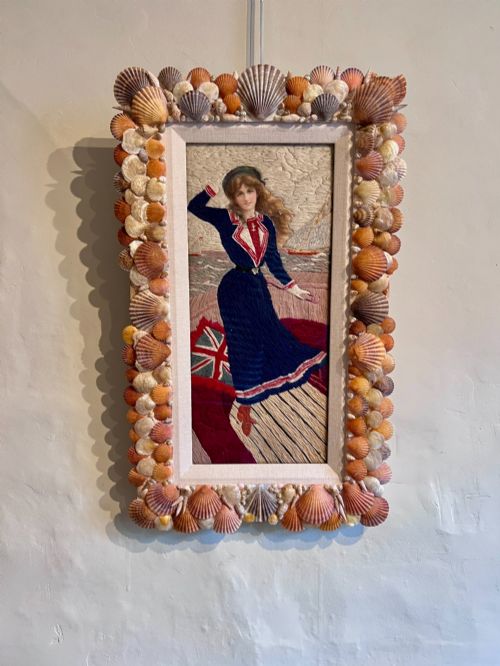
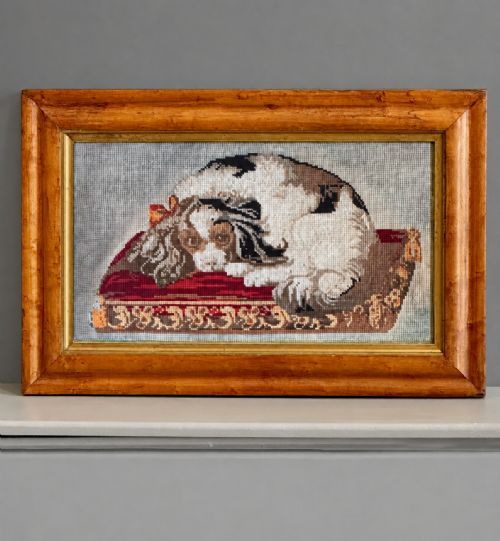
King Charles spaniels and sailor girls gaze out from nineteenth-century woolwork.
What varies in quality
Quality differences emerge in the fineness of the needlework execution, where denser stitches and nuanced colour shading create greater pictorial depth. The skill of the maker dictates whether a floral study or figure possesses balanced proportions and lifelike detail.
The supporting frame contributes significantly to the overall merit of the piece, with original timbers such as burr maple or rosewood holding greater distinction than later replacements. Structural integrity in items like folding screens and footstools also determines physical endurance.
The Edwardian Wool Tapestry Glossary
- Berlin work
- A style of needlepoint popular in the nineteenth century that used charted designs and brightly coloured wools. It allowed makers to produce elaborate pictorial scenes and floral motifs.
- Gros point
- A coarse needlepoint stitch used for the foundational areas of a wool tapestry. It provides durability and texture to larger furnishings and rugs.
- Petit point
- A fine needlepoint stitch worked on a high-count canvas that permits intricate detail in faces and subjects. It appears in the most accomplished framed textile pictures.
- Kilim
- A flatweave textile lacking a pile, produced with banded designs. Examples from regions such as Pirot demonstrate specific regional weaving traditions.
Edwardian Wool Tapestry: Frequently Asked Questions
What periods do these textiles cover?
The listings include items originating from the nineteenth century, the early nineteen-hundreds, and the nineteen-twenties. Styles range from Victorian folk art and botanical studies to Art Nouveau and Arts and Crafts.
Makers worked across these decades producing both framed wall art and functional items like screens and footstools. Each piece reflects the aesthetic preferences of its specific production era.
How were these wool panels framed?
Many textile panels are mounted in wooden frames constructed from timber species such as mahogany, oak, rosewood, and burr maple. Some frames incorporate protective glass over the needlework.
Larger items like folding screens integrate textile panels directly into wooden framework structures, sometimes combined with other materials such as copper.
What subjects appear in the pictures?
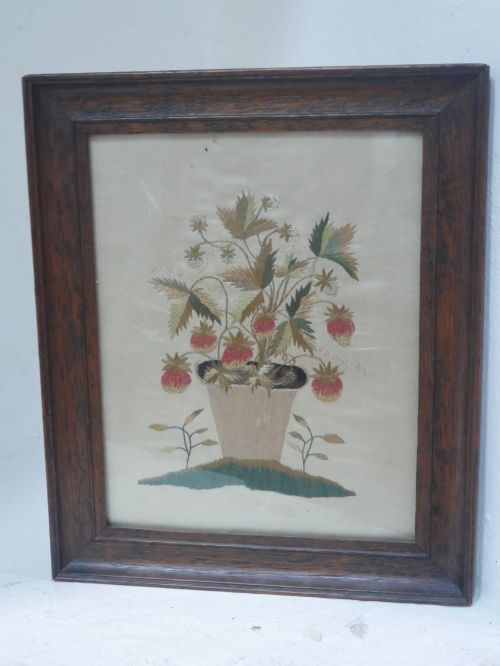
Framed needlework depicts a variety of subjects including animals, botanical studies like strawberries, figures, and pastoral landscapes. Certain works reproduce known paintings using wool yarn on canvas.
Other textiles feature abstract or banded geometric patterns typical of regional flatweave kilims and folk art traditions.
How do I care for wool textiles?
Keep textile art away from direct sunlight to prevent wool fibres and dyed colours from fading over time. Gentle dusting with a soft brush helps maintain the surface without damaging the stitches.
Ensure framed pieces hang in environments with stable humidity levels to protect both the canvas ground and the surrounding wooden frames.