
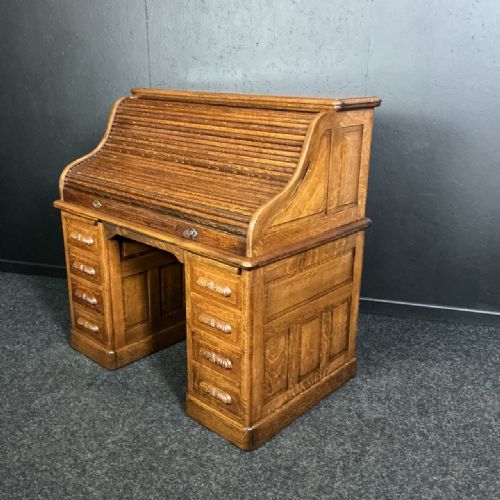


Edwardian Wooden Roll Desk
An edwardian wooden roll desk is a sturdy office workspace with a slatted tambour shutter, built to conceal paperwork at the end of the day.
Edwardian Wooden Roll Desk
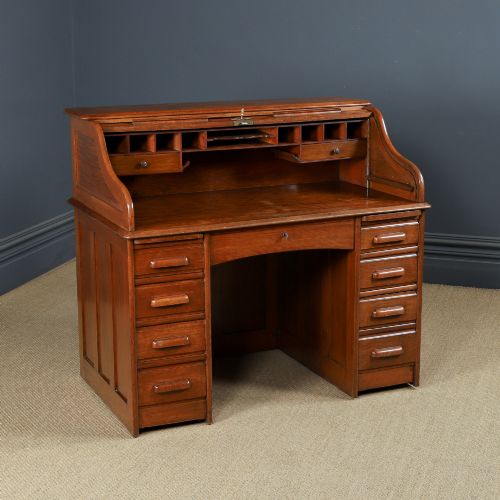
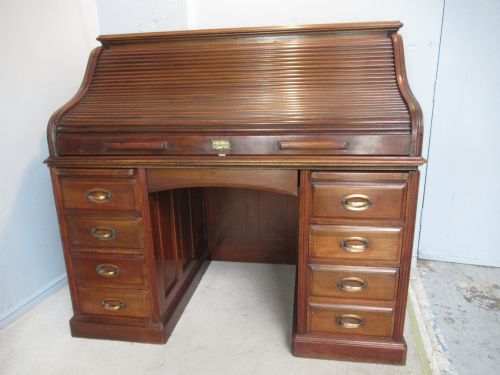
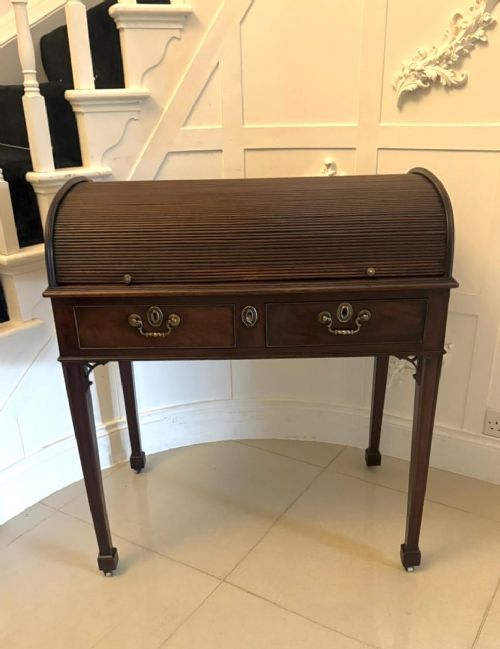
The edwardian wooden roll desk is fundamentally a pedestal workspace featuring a flexible tambour shutter that draws down to secure the writing surface. These pieces emerge predominantly from the Edwardian period and the early twentieth century, though older nineteenth-century variants also appear.
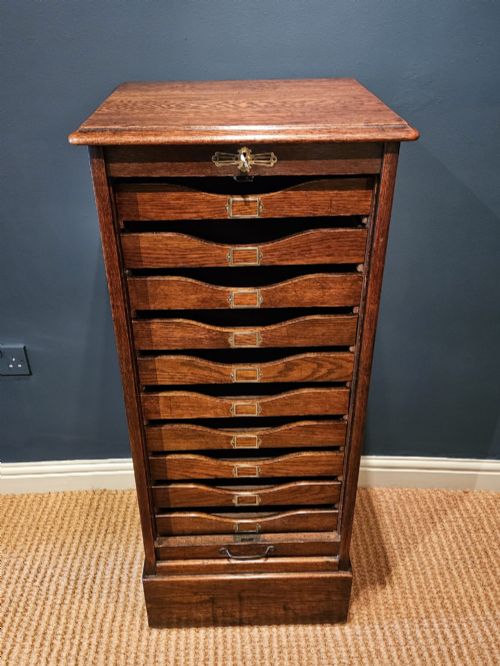
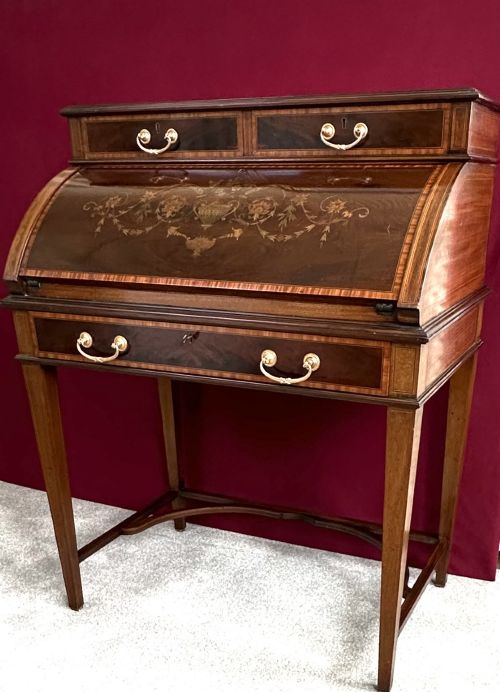
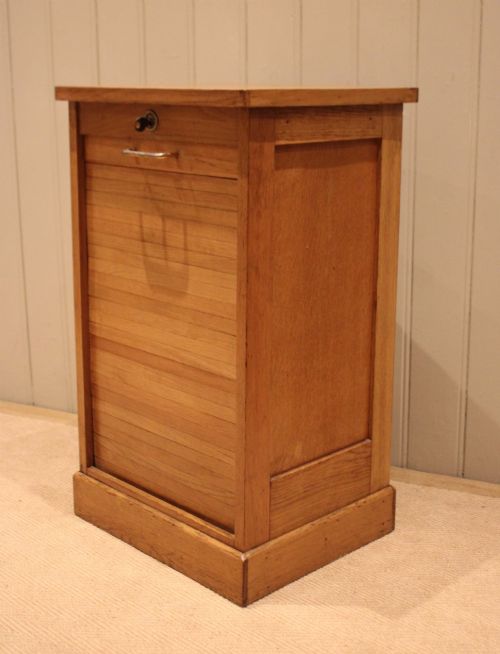
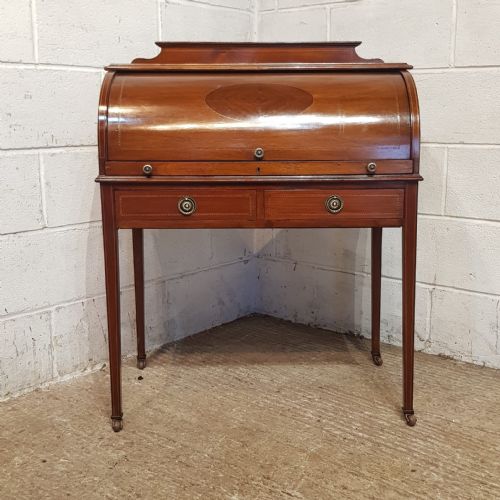
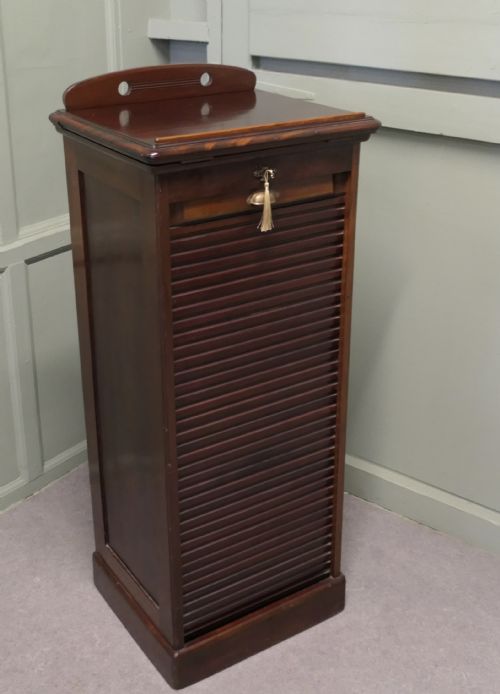
Most examples found here utilise oak or mahogany, often constructed as large pedestal forms with internal pigeonholes and drawers. Alongside standard rolltops, variations include barrel-fronted desks, cylinder desks, and tall tambour-front filing cabinets designed for office use.
How they were made
Cabinet makers constructed the curved shutter mechanism using narrow wooden slats glued to a canvas or leather backing, allowing the tambour to slide smoothly within concealed vertical tracks. Solid timber and panelled construction defined the main body, ensuring durability for heavy daily administration.
Secondary materials such as brass fittings, leather writing surfaces, and satinwood or walnut banding added functional detail and visual contrast. These construction methods allowed workshops to produce both modest home office furniture and impressive commercial pedestal desks.
Several cabinets include built-in adjustable date stamps right on the stationery rack, ready for an office that stopped keeping time a century ago.
What varies in quality
The distinction between standard office utility pieces and finer examples lies in the selection of timber and the precision of the tambour mechanism. Superior pieces feature well-figured oak or mahogany, tight slat alignment, and sophisticated internal drawer arrangements rather than basic pine linings.
The complexity of the superstructure also signals quality, with larger S-shaped rolltops and inlaid cylinder desks demanding greater joinery skill. Fitted interiors with panelled backing and integrated stationery compartments demonstrate a higher standard of original commission.
The Edwardian Wooden Roll Desk Glossary
- Tambour
- A flexible shutter made from narrow wooden strips affixed to a fabric backing. This allows the curtain to slide around a curved track to enclose the desk surface.
- Pedestal desk
- A heavy freestanding writing table supported by two banks of small drawers. The desktop rests directly on top of these pedestals.
- Cylinder desk
- A writing desk featuring a solid, quarter-circle rolling cylinder instead of slat-based tambour. It serves a similar function to conceal the working area.
- Stationery cabinet
- A tabletop or standalone wooden box fitted with small compartments, pigeonholes, and a door or shutter for letters and paper. They often match the timber of the main desk.
Edwardian Wooden Roll Desk: Frequently Asked Questions
How do I maintain the tambour shutter?
Keep the wooden tracks clean and free from dust to ensure the slats slide without friction.
A light application of appropriate furniture wax helps preserve the movement of the timber over time.
What is the difference between a tambour and a cylinder desk?
A tambour desk uses many small wooden slats joined together to bend around a curved track.
A cylinder desk uses a single solid curved piece of wood that rotates on a pivot.
Were these desks made for offices or homes?
Many of these pieces were built for commercial offices, banks, and legal practices requiring secure document storage.
Smaller proportions and refined timbers indicate domestic models intended for home writing rooms.
How can I tell an Edwardian desk from a Victorian one?
Edwardian examples tend to display lighter oak finishes and simpler proportions reflecting early twentieth-century tastes.
Victorian pieces often favour darker mahogany, heavier proportions, and more elaborate carved or panelled detailing.