



Edwardian Watercolour Seascape
An edwardian watercolour seascape captures coastal life and maritime scenes on paper, offering buyers a genuine window into early twentieth-century maritime history.
Edwardian Watercolour Seascape
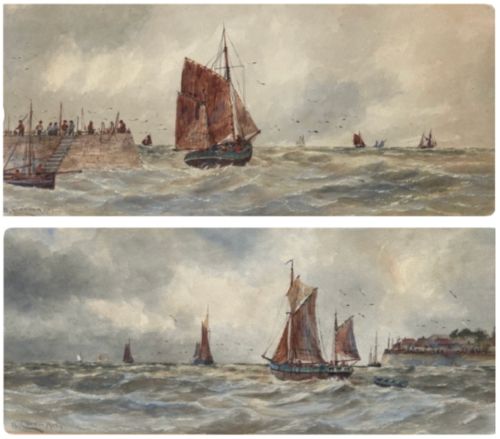
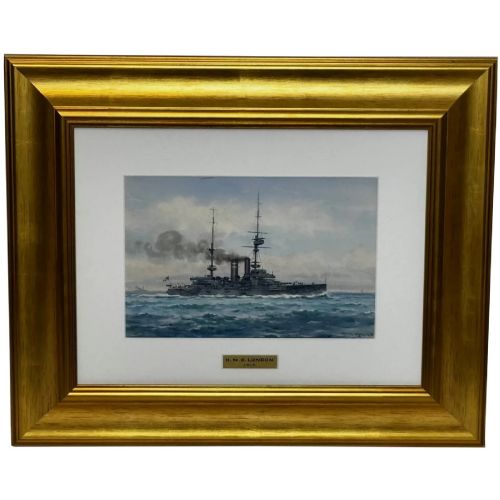
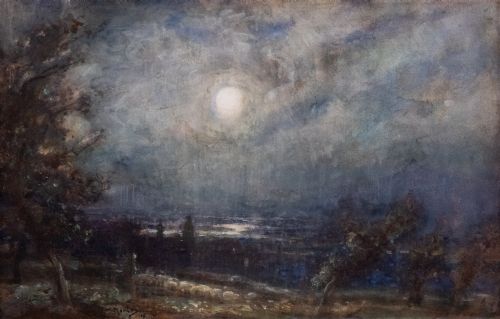
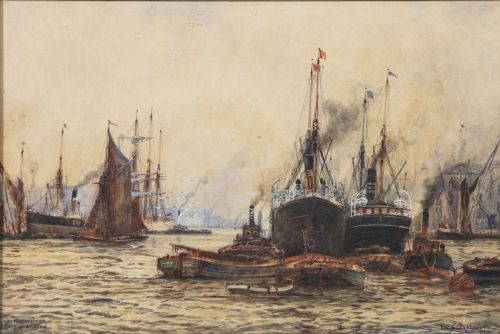
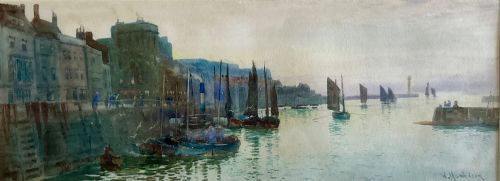
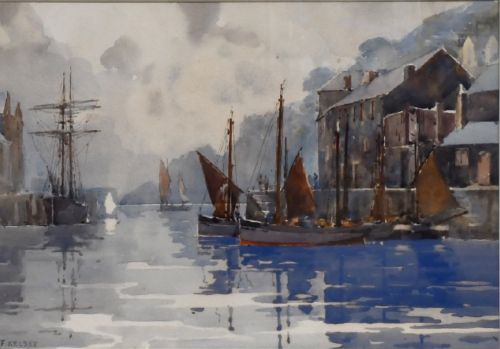
An edwardian watercolour seascape depicts coastal views, harbours, and maritime activities across British and continental shores. These works range from tranquil moonlit coastal landscapes to bustling port scenes filled with fishing boats and tall-masted ships.
The pieces on this page emerge primarily from the Edwardian period alongside adjacent Victorian and early twentieth-century dates up to nineteen thirty. Subjects frequently feature specific coastal locations such as Whitby, St Ives, Cornwall, and Venice.
Buyers encounter framed artwork presented under glass in wood or gilt wood frames, preserving the delicate pigments applied to paper. These paintings serve as wall art documenting local maritime heritage and traditional seafaring trades.
Materials and Technique
Artists executed these works using watercolour pigment and ink applied directly onto paper surfaces. This combination allowed painters to capture translucent effects in water and atmospheric conditions in the sky.
Completed works received protection beneath glass housed within wooden or gilt wood frames. The selection of these framing materials ensured the preservation of works on paper against environmental exposure.
Several artists captured muddy foreshores and seaweed gatherers, proving Edwardian purchasers loved a bracing whiff of low tide.
Distinctions in Quality
Quality rests upon the artist's ability to handle watercolour pigment on paper to convey light, movement in water, and atmospheric depth. Works by named practitioners display confident brushwork and precise topographical or nautical detail.
Preservation of the paper and pigment under glass dictates the visual strength of a piece. Stronger examples maintain vibrant colour tones without excessive fading or paper discolouration.
William Cannon·Frank Watson Wood·Thomas William Morley·Frank William Scarbrough·Hector Caffieri·William Matthison·Frank Kelsey·Richard Harry Carter·Fred Waugh·Ernest F. Hill·Frederick Stuart Richardson·Percy Brooke·William Kay Blacklock·John McDougal·Julian Drummond·Fred Mayor·William Knox·George Stanfield Walters·William Boyce·Henry Wimbush·Samuel Edward Kelly·Harry Wanless·Frances E Nesbitt·Edmund Gouldsmith·Edwin Bagshaw
The Edwardian Watercolour Seascape Glossary
- Watercolour pigment
- A colour medium ground with water-soluble binders. It creates transparent washes on paper.
- Gilt wood
- Wood framing treated with a gold-coloured finish. This material enhances the presentation of framed artworks.
- British Impressionism
- A painting style focusing on light and everyday subjects. Practitioners adopted this approach to render coastal scenes.
- Maritime art
- Artistic works depicting ships and the sea. This genre encompasses coastal landscapes and harbour views.
Edwardian Watercolour Seascape: Frequently Asked Questions
What subjects appear in these watercolours?
These works depict coastal views, fishing boats, and bustling ports across British shores and European waters. Scenes range from calm tidal inlets to choppy seas with tall-masted ships.
Specific locations such as Whitby, Cornwall, and Venice frequently anchor the composition of individual paintings.
How should these framed watercolours be displayed?
Watercolours on paper require protection from direct sunlight to prevent the pigment from fading over time. Hanging them on interior walls away from moisture preserves the paper and framing materials.
The original glass and wood frames often accompany these works, maintaining their historical integrity.
How do I identify an Edwardian piece?
Dating relies upon artist signatures, period framing, and stylistic markers associated with early twentieth-century British art. Many works carry specific dates or stylistic traits from the nineteen hundreds and nineteen tens.
Subject matter often reflects contemporary maritime vessels and working harbour practices of the era.
Are these works original paintings?
Every piece listed represents an original watercolour painting executed by hand on paper. Artists utilised fluid pigments and ink to create singular compositions rather than mechanical reproductions.
Signatures from period artists frequently appear on the face of the artwork.