


Edwardian Watercolour Illustration
These edwardian watercolour illustration pieces combine delicate pigment and paper to record sporting scenes, fairy tales and portraiture from the early twentieth century.
Edwardian Watercolour Illustration
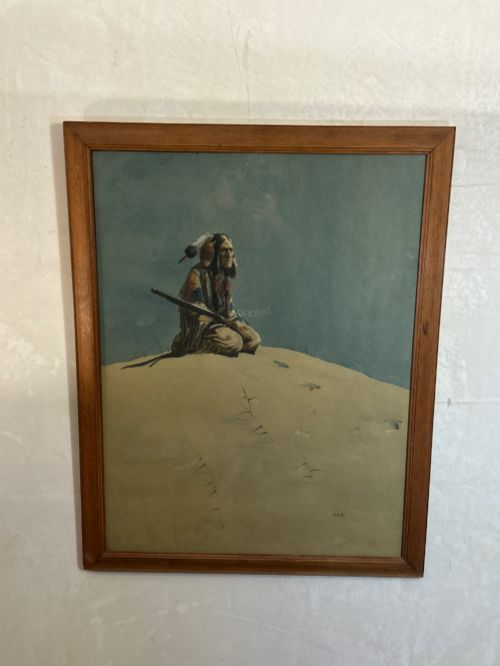
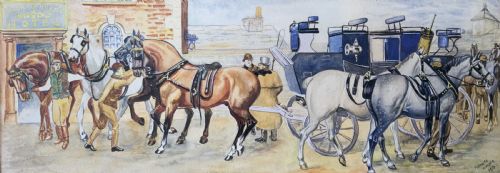
When you search for an edwardian watercolour illustration, you encounter original works on paper spanning maritime subjects, sporting art, botanical still life, and literary narratives. These paintings record the visual culture of the early twentieth century through the hands of contemporary artists and illustrators.
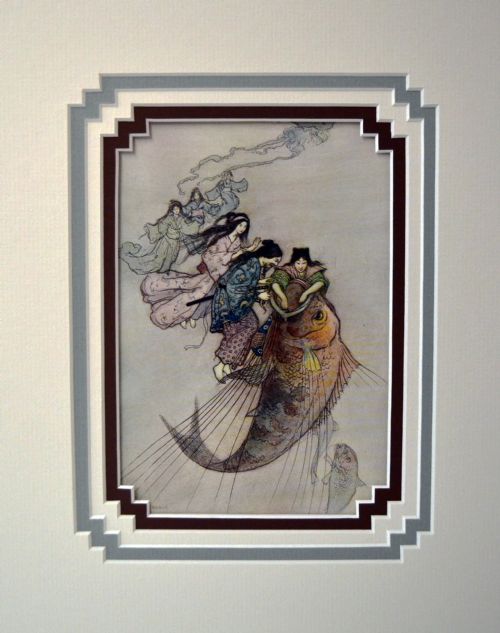
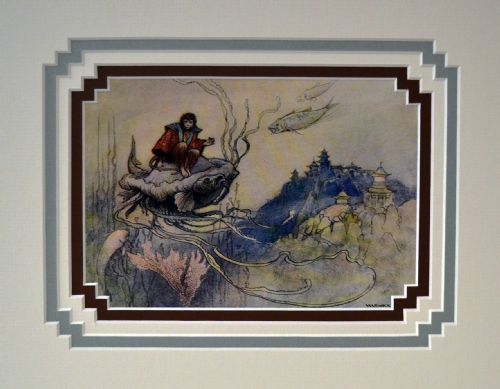
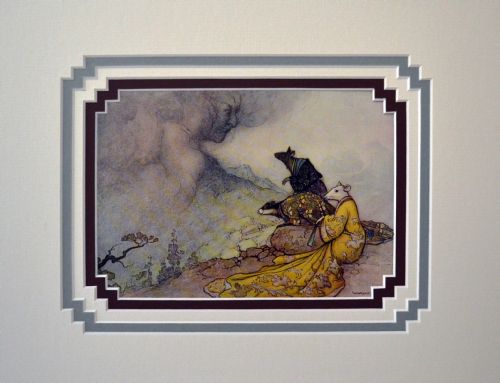
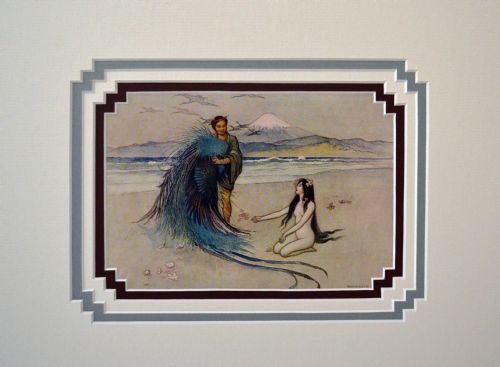
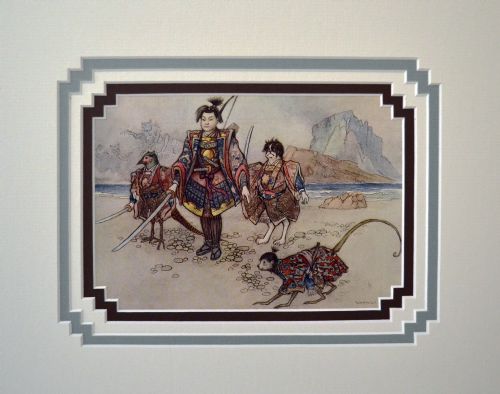
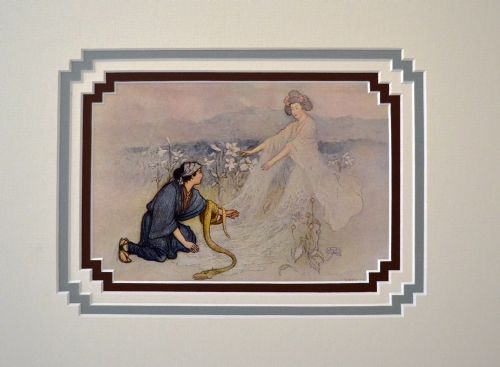
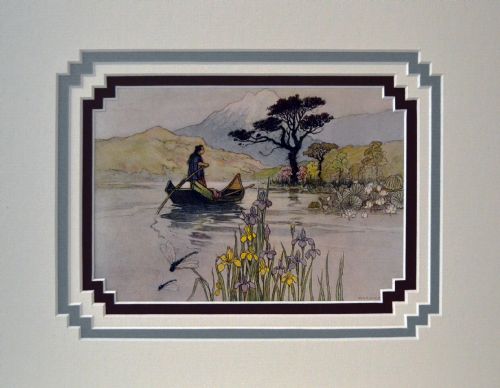
The selections available here range from detailed studies of animals and military subjects to published book prints and caricature. Many pieces retain their period frames of oak or glass, preserving the original presentation intended by the creator.
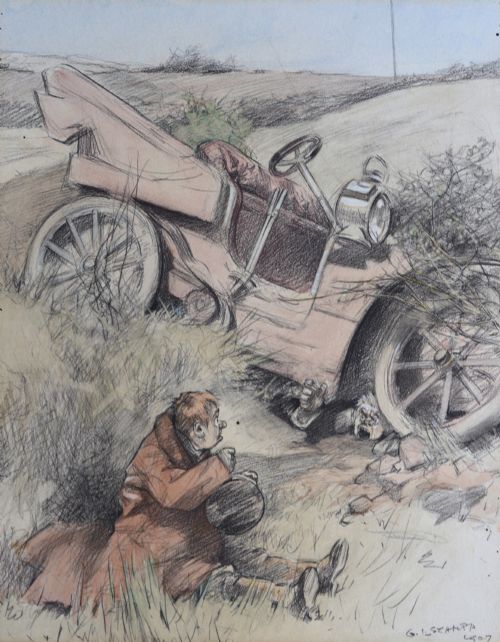
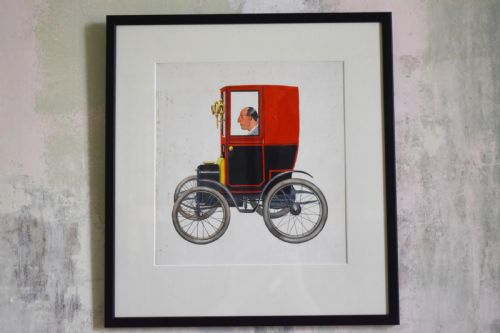
While the core of the selection sits firmly within the Edwardian period, surrounding examples stretch from late Victorian output into the middle decades of the twentieth century. These works frequently capture specific cultural moments, such as vintage motoring or naval tributes, rendered directly onto paper or cardboard support.
Materials and technique
The foundation of an edwardian watercolour illustration is paper or cardboard, upon which artists applied watercolour pigment, bodycolour, and ink. Many works incorporate gouache to build opaque highlights and dense areas of tone.
Framing materials commonly include original wood mouldings, notably oak, paired with protective glass to shield the fragile water-soluble pigments from moisture and light damage over the decades.
The works span the Victorian, Edwardian, and mid-century decades.
Factors that separate examples
The strength of an edwardian watercolour illustration rests on the decisiveness of the brushwork and the clarity of the composition. Works executed by established illustrators for publication demonstrate a sharper narrative sense than anonymous decorative sketches.
Condition plays a primary role in distinguishing examples, particularly the preservation of pigment vibrancy against fading and the absence of heavy acidification in the supporting paper or cardboard. The retention of a period frame further influences the integrity of the piece.
George Lorain Stampa·John Hassall·Warwick Goble·Raoul Millais·Snaffles·Alice Macallan Swan·R Lauritsch·Annie Mary Youngman·Edith Alice Andrews·Montagu Barstow·Arthur H Buckland·Arthur E Gonne·Cuthbert Edmund Swan·Karl Feiertag·Leo Klin·Minnie Smythe
The Edwardian Watercolour Illustration Glossary
- Gouache
- An opaque watercolour paint mixed with a binding agent, producing a heavier, flat finish that contrasts with translucent washes.
- Bodycolour
- Another term for gouache or opaque watercolour pigments used to build highlights in a paper-based painting.
- Illustration
- Artwork created specifically to accompany printed text, magazines, or books, often carrying a narrative or commercial purpose.
- Caricature
- A drawing or painting that distorts characteristics for satirical or humorous effect, frequently seen in early twentieth-century periodicals.
Edwardian Watercolour Illustration: Frequently Asked Questions
What subjects appear in these watercolours?
The subjects range widely across sporting scenes, military tributes, botanical studies of flowers, and fairy tale illustrations. Artists also documented domestic scenes, portraits, and satirical caricatures for magazines.
Many pieces reflect specific contemporary interests, such as vintage motoring, naval vessels, and animal studies, capturing daily life and popular culture before the First World War.
How should I frame and display paper watercolours?
Watercolours require careful framing behind glass with acid-free mounts to prevent the paper from yellowing and the pigments from fading. Keeping them away from direct sunlight preserves the original colours.
Original frames should be retained where possible, provided they offer adequate structural support and protection for the fragile artwork inside.
How do I identify the date of an illustration?
Dates often appear within the artist signature, handwritten inscriptions on the reverse, or contemporary publication records for magazine and book illustrations. Stylistic markers of the Edwardian era also provide reliable clues.
Examining the paper type, framing methods, and known working dates of the artist helps narrow down the period of execution.
Were these pieces made for books or magazines?
Several works functioned directly as magazine illustrations for periodicals like the Idler, or as first edition prints for fairy tale books. Artists produced these to be photographed and reproduced for mass publication.
Other watercolours were standalone finished paintings created independently of any commercial publishing commission.