
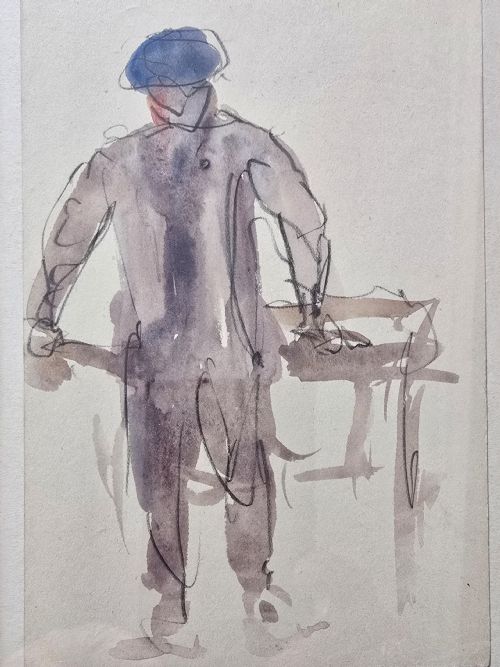


Grey Wash Painting
Grey wash painting works in subtle monochrome tones, offering quiet landscape scenes and characterful portraits that bring understated charm to any room.
Grey Wash Painting
A grey wash painting relies on diluted pigment, ink or watercolour applied to paper to build atmospheric tone and shadow. When looking at grey wash painting on this page, you encounter works spanning from the eighteenth century through to the mid-twentieth century.
The selection ranges from British and Irish landscapes to English caricatures and Chinese portrait painting. Forms include framed artwork and original watercolours created across various periods including the Georgian and Victorian eras.
You are most likely to meet pieces executed on paper using watercolour and ink, often featuring maritime views, rural scenes and topographical subjects. These works capture light and shade through monochrome handling rather than full colour.
How they were made
Artists typically laid down an initial ink sketch on paper before applying washes of diluted watercolour pigment to create tonal depth. This technique allowed painters to build shadows and define forms with precise control over the monochrome palette.
Many surviving examples are preserved within wooden frames and behind glass to protect the delicate paper surface from moisture and light damage. Some pieces incorporate pine framing or original mounts selected to complement the monochrome artwork.
Even a thirsty farmer needs a monochrome moment after a long day in the nineteenth-century countryside.
What varies in quality
The strength of a grey wash painting lies in the confidence of the initial ink line and the subtle graduation of the monochrome wash. Superior works demonstrate a assured handling of light and atmosphere, whereas weaker examples can feel flat and mechanical.
Condition of the paper and the preservation of the delicate pigment layers distinguish finer survivals from damaged pieces. Works that retain their original tonal contrast without excessive fading or discoloration command greater appreciation among collectors.
Michael Healy·Tom Clough·Stanley Orchart·Edward Dayes·Amos Green·Ya Ming·William J Hodgson·Rowland H Hill
The Grey Wash Painting Glossary
- Wash
- A thin, semi-transparent layer of diluted paint or ink applied across paper. This technique creates smooth areas of tone and shadow without visible brushstrokes.
- Monochrome
- Artwork executed in a single colour or varying shades of one hue, such as grey wash. This restricted palette emphasises form, line and tonal contrast.
- Topographical
- Depicting a specific real place accurately rather than an imaginary scene. Many period watercolours focus on identifiable towns, rivers and landscapes.
- Caricature
- A drawing or painting that humorously exaggerates the peculiarities or characteristics of persons. These satirical works often comment on social manners of their time.
Grey Wash Painting: Frequently Asked Questions
What is a grey wash painting?
A grey wash painting is a monochrome artwork created using diluted ink or watercolour pigment on paper. Artists use this method to build subtle tones, shadows and atmospheric depth without relying on full colour.
These pieces range from topographical landscapes to character studies, capturing light and form through careful graduation of grey shades.
How should I hang a watercolour painting?
Watercolour paintings on paper require careful placement away from direct sunlight to prevent the pigments and paper from fading over time. UV-filtering glass and professional framing help protect these delicate works.
Keep them in rooms with stable humidity levels to avoid warping the paper or damaging the surrounding mount and frame.
How do I identify a period watercolour?
Period watercolours often show clues in the style of the paper, the framing materials and the handwriting used for titles or signatures. Georgian and Victorian works frequently employ specific types of handmade paper and iron gall ink.
Comparing the subject matter and artistic conventions of the era helps place an unsigned painting into its correct historical context.
Where were these paintings displayed?
Historically, small watercolours and sketches were kept in portfolios, bound in sketchbooks or framed for domestic interiors. They served as personal records of travels, topographical studies or decorative wall art for parlours and studies.
Today, framing them appropriately allows these intimate works to be enjoyed easily on residential walls.