
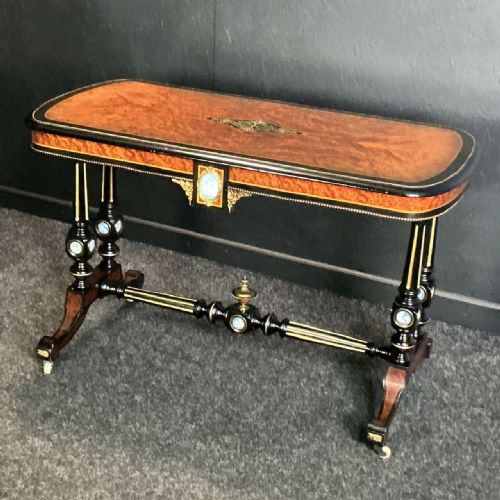
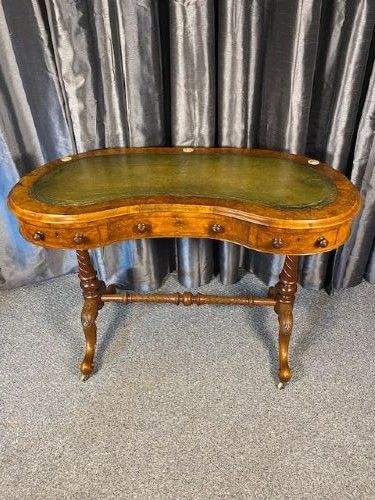
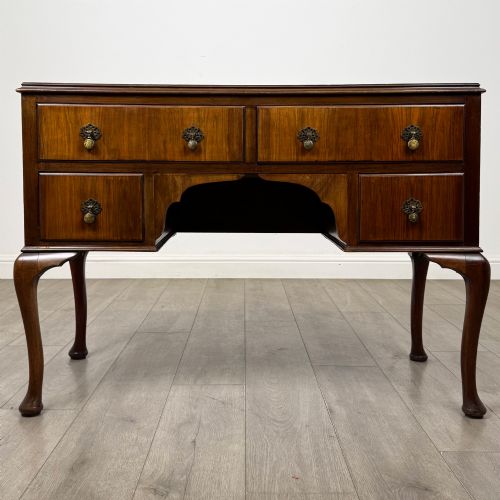
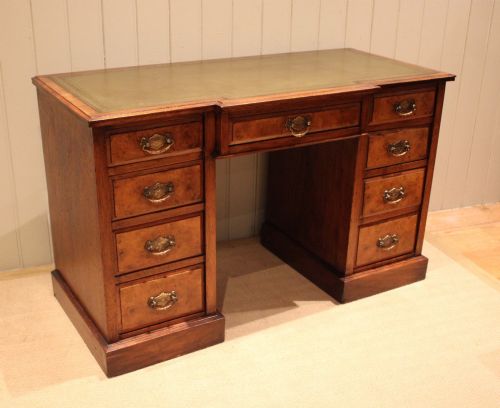
Edwardian Walnut Writing Table
An edwardian walnut writing table brings domestic study spaces a warm figured grain and structured utility.
Edwardian Walnut Writing Table
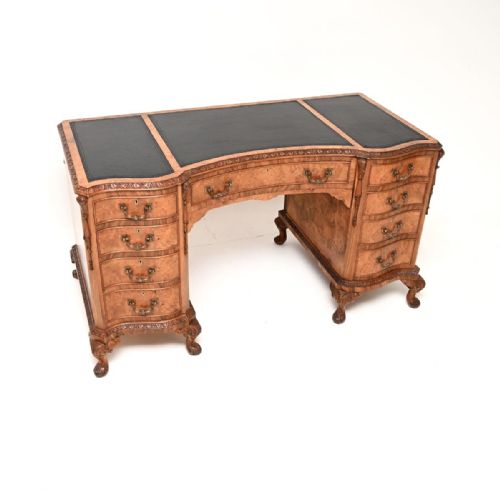
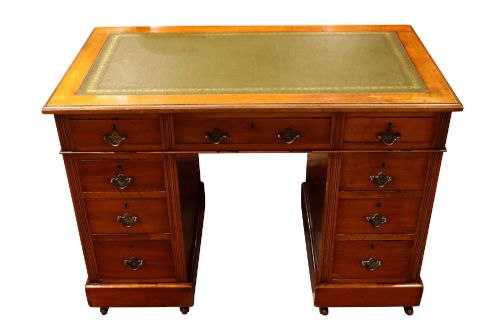
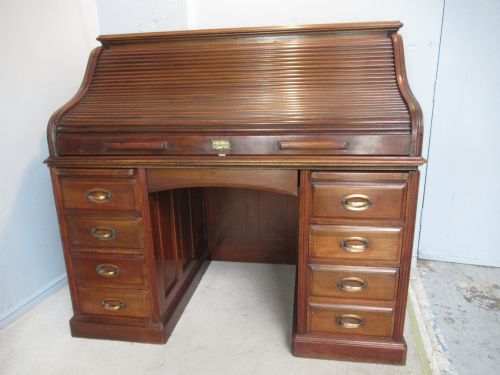
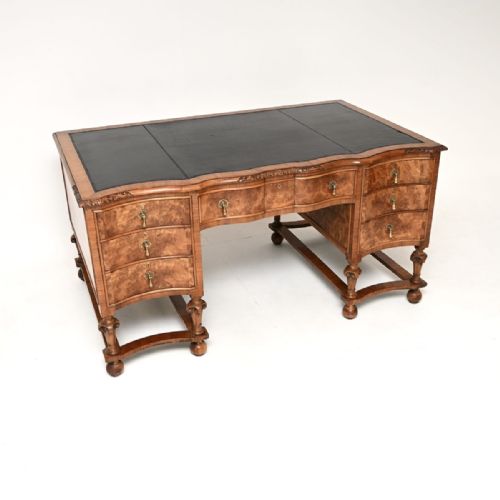
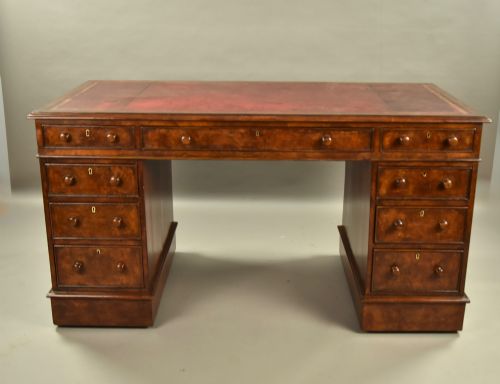
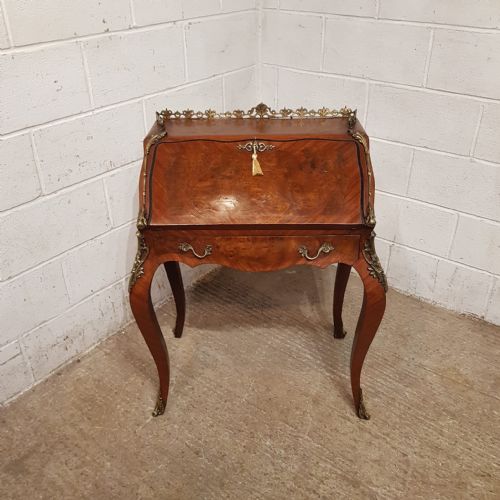
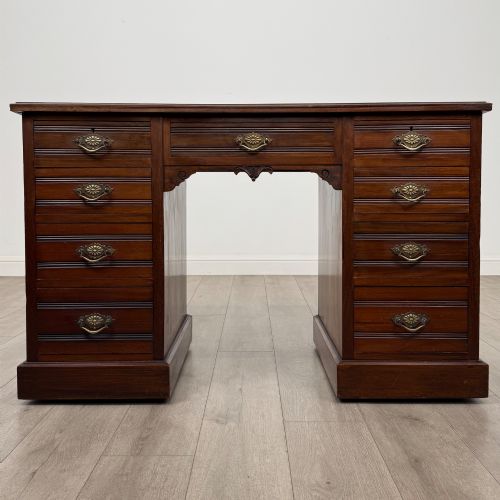
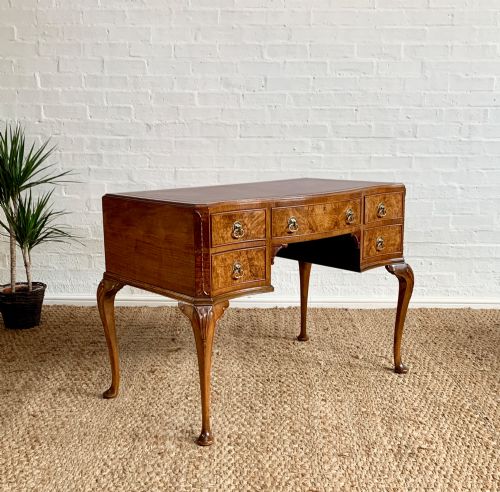
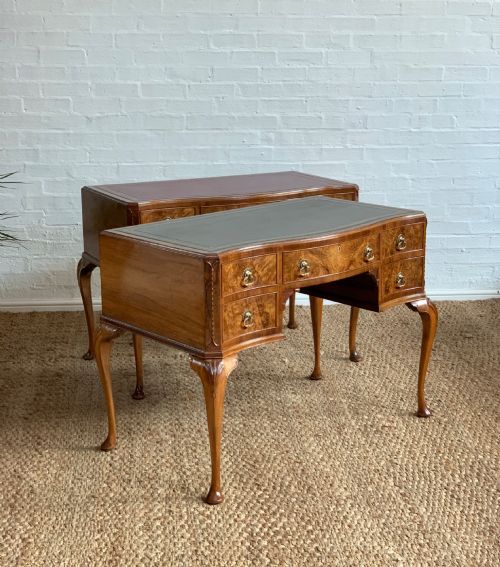
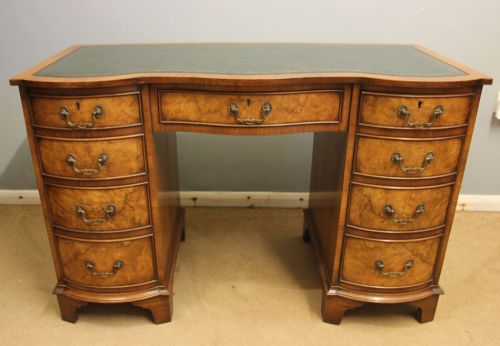
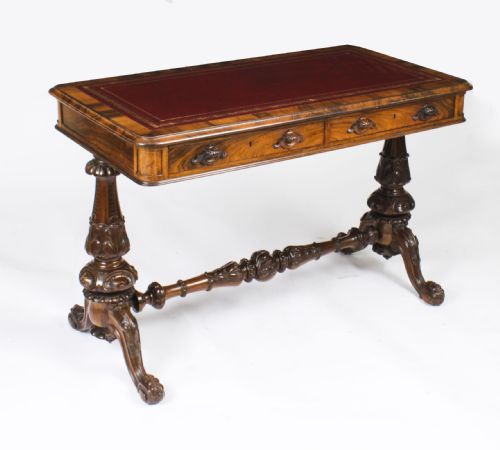
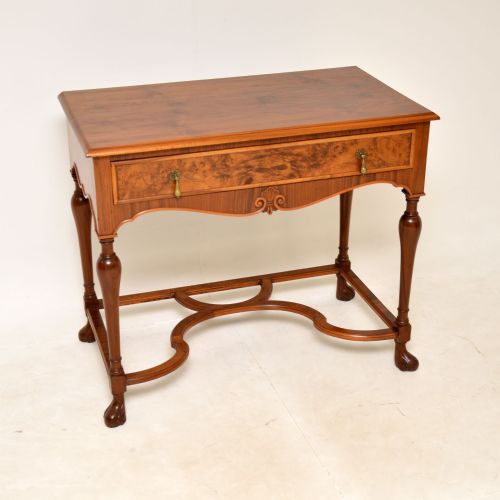
When you search for an edwardian walnut writing table, you encounter compact freestanding writing desks, kneehole variants, and library tables spanning the late nineteenth and early twentieth centuries. These forms reflect the domestic workspace requirements of the period, often incorporating leather inset writing surfaces and banks of small drawers.
The pieces on this page lean heavily into Edwardian production, though Victorian and later revival influences appear across the selection. Makers of the time utilised traditional timber framing alongside revival styles such as Queen Anne and Georgian to satisfy contemporary interior tastes.
How they were made
Cabinet makers constructed these tables using solid walnut frameworks overlaid with burr walnut veneers to create figured top panels. Secondary timbers provide structural stability within the drawer carcasses and internal framing.
Surfaces frequently integrate inset leather writing panels, sometimes complemented by satinwood stringing, brass drawer pulls, or ormolu mounts. Joinery techniques rely on traditional dovetailing for drawers and mortise and tenon connections for the underframes.
Edwardian Walnut Writing Table Retail Price Guide 2026
Typical asking prices for edwardian walnut writing table among the pieces listed under this phrase on Sellingantiques today, from the lower quarter to the upper quarter. They describe what is for sale here now, not the wider market.
Listings incorporate walnut, burr walnut, satinwood, and brass across Edwardian and Victorian periods.
What varies in quality
The visual impact of an edwardian walnut writing table depends heavily on the selection and matching of the burr walnut veneer across the primary surfaces. Finer examples display symmetrical grain patterns and careful timber continuity across multiple drawers.
Execution of decorative details such as marquetry inlay, satinwood stringing, and brass hardware distinguishes standard utility pieces from workshop productions bearing maker attribution. The integrity of the secondary timbers and the crispness of the moulded edges further indicate workshop standard.
Maple and Co·Wylie and Lochhead Glasgow·Edwards and Roberts·Gill and Reigate·W J Mansell
The Edwardian Walnut Writing Table Glossary
- Burr walnut
- Timber harvested from walnut tree growths, producing swirling and mottled grain patterns prized for decorative veneer work. It appears on the primary display surfaces of finer desks.
- Pedestal desk
- A form comprising two banks of drawers supporting a shared writing surface, offering substantial storage capacity. These configurations often feature leather inset tops.
- Kneehole desk
- A compact writing table featuring a central recess for the user's legs, flanked by smaller drawers. This form suits restricted study spaces while maintaining functional storage.
- Partners desk
- A large writing table designed for simultaneous use from both sides, featuring duplicated drawer arrangements. They are typically found in larger library settings.
- Satinwood
- A light yellowish timber utilised for contrasting stringing and inlay details on dark walnut surfaces. It provides crisp linear definition around drawer perimeters.
Edwardian Walnut Writing Table: Frequently Asked Questions
What defines an edwardian walnut writing table?
These tables are compact freestanding desks produced around the turn of the twentieth century, utilising figured walnut veneers and leather writing surfaces.
They reflect the domestic study requirements of the era, combining traditional joinery with revival decorative styles.
How do I care for the leather top?
Leather writing surfaces benefit from occasional gentle cleaning and conditioning to prevent drying and cracking over time.
Avoid excessive moisture and direct sunlight to preserve the gilt tooling and the leather hide.
Are these tables suitable for daily computer work?
Many of these desks provide adequate surface area and knee clearance for modern laptops and writing tasks.
Drawer configurations accommodate contemporary stationery while retaining their period appearance.
How can I identify the wood types?
Burr walnut displays distinctive swirling grain formations, while straight walnut exhibits more uniform linear patterns.
Satinwood appears as a contrasting pale timber used for fine stringing lines and inlay work.