


Veneered Walnut Hall Table
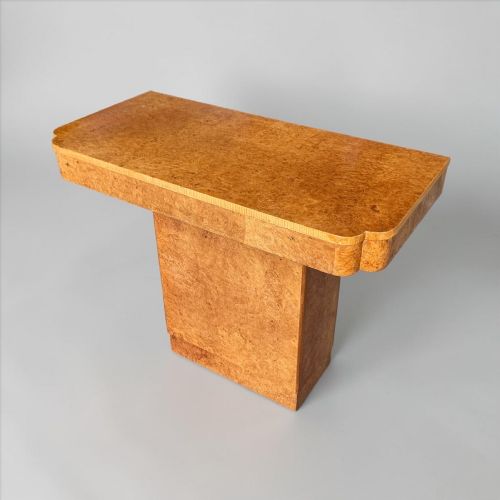
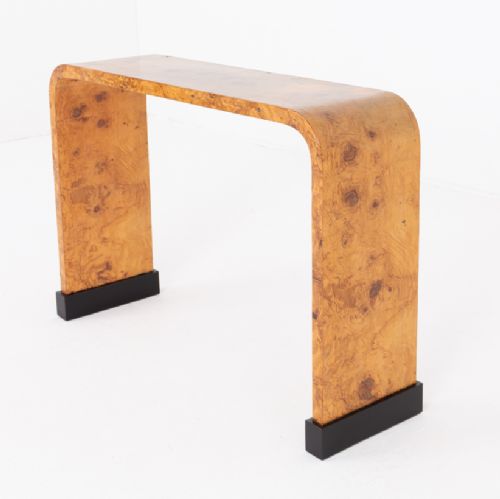
These pieces known as a veneered walnut hall table bring rich timber grain and period form straight into an entranceway.
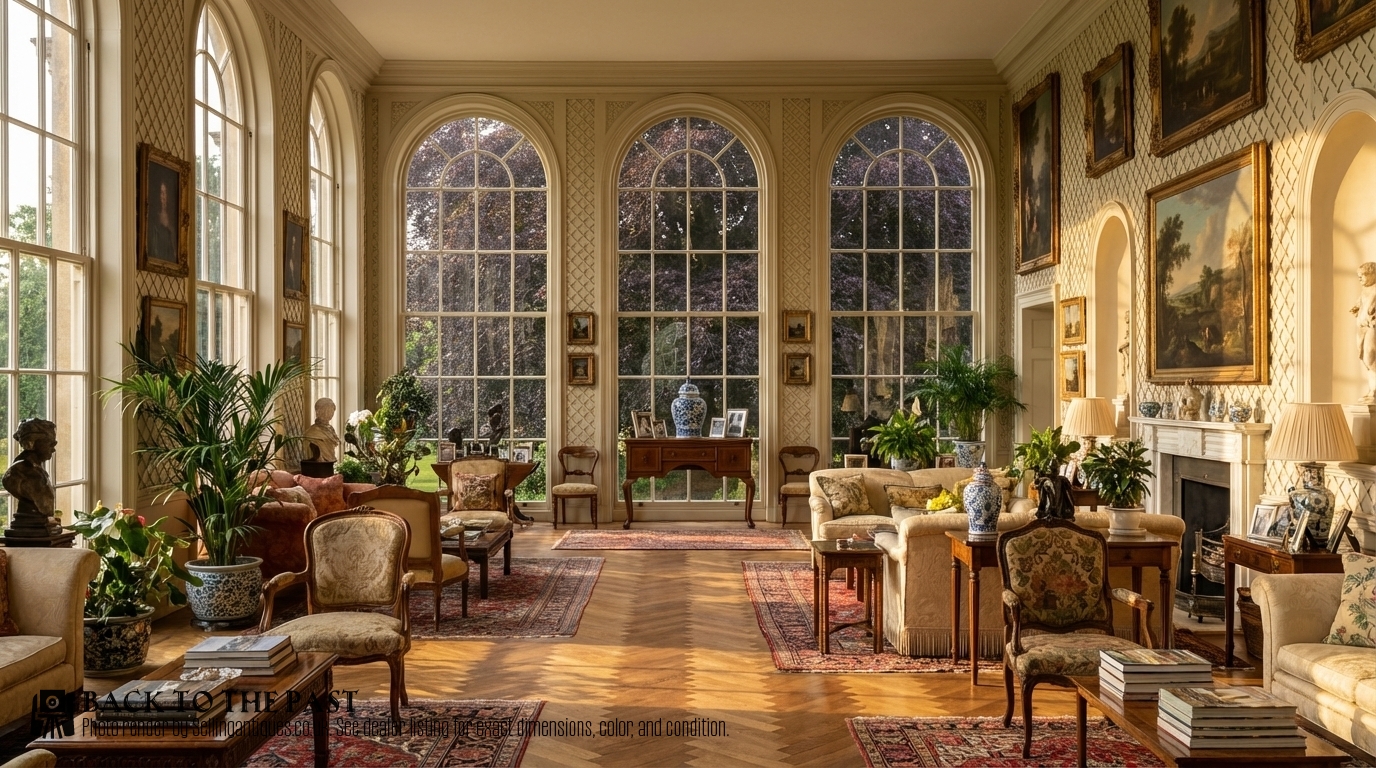
Veneered Walnut Hall Table
A veneered walnut hall table spans centuries of design, from seventeenth-century William and Mary forms to twentieth-century Art Deco interpretations.
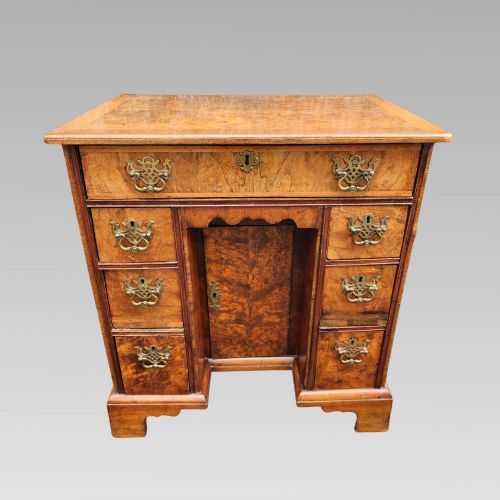
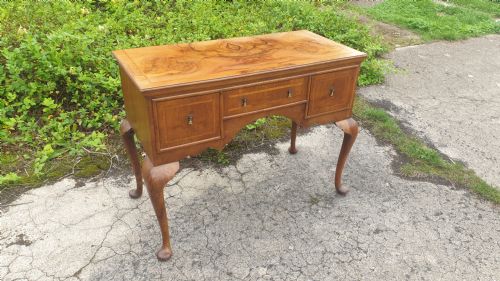
The selection ranges across console tables, centre tables, occasional tables, desks, and lowboys.
Makers utilised walnut, burr walnut, burr birch, and laburnam woods to create distinctive surfaces in entrance spaces.
How they were made
Craftsmen applied thin veneers of walnut and burr walnut onto secondary wood foundations to showcase striking timber figures.
Advanced examples incorporate decorative techniques such as featherbanding and quarter-veneered top arrangements.
Hardware details like brass fixtures complement the timber surfaces across various historical periods.
Listings feature pieces spanning from the seventeenth century to the twentieth century, incorporating Art Deco, Queen Anne, and Georgian styles.
What varies in quality
Excellence lies in the selection and matching of the veneer grain across the primary surface.
The integrity of the underlying timber construction and the subtlety of period details dictate the standard of each piece.
The Veneered Walnut Hall Table Glossary
- Burr walnut
- A growth deformity in the walnut tree that produces intricate, swirling grain patterns. Highly prized by cabinetmakers for decorative table tops.
- Featherbanding
- A delicate inlay technique using small pieces of veneer arranged in a herringbone pattern. Often used to border table tops and drawer fronts.
- Lowboy
- A small table with one or more drawers supported by four legs. Frequently utilised historically as a dressing or side table.
- Quarter-veneered
- Four matched pieces of veneer laid symmetrically to create a mirrored grain pattern. This geometric arrangement highlights the natural beauty of walnut.
Veneered Walnut Hall Table: Frequently Asked Questions
How do I place a hall table?
Position the piece flat against an entrance wall to provide a surface for lamps, correspondence, or decorative objects. Ensure adequate clearance for movement in narrow passageways.
Pair the table with a wall mirror or complementary seating to create a balanced focal point near the entrance.
What periods are available?
The selection spans from the seventeenth century through the eighteenth and nineteenth centuries into early twentieth-century periods.
Styles range from William and Mary and Queen Anne to Georgian, Biedermeier, and Art Deco designs.
How do I care for walnut veneer?
Keep the timber away from direct sunlight and rapid temperature fluctuations to prevent the veneer from drying or lifting. Dust regularly with a soft, dry cloth.
Apply appropriate furniture wax periodically to nourish the wood and maintain the sheen of the historic surface.
What is a lowboy?
A lowboy is a small leg table featuring drawers beneath the surface, originating in earlier centuries for domestic use.
These pieces function effectively in modern hallways as compact storage surfaces.