



Edwardian Walnut Work Table
An Edwardian walnut work table is a functional domestic piece designed for needlework and correspondence, combining practicality with refined domestic elegance.

Edwardian Walnut Work Table
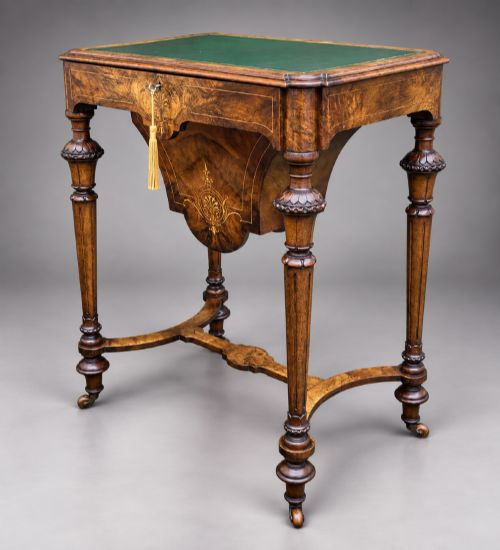
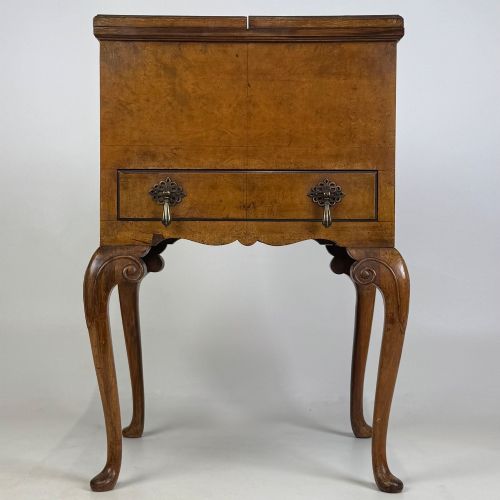
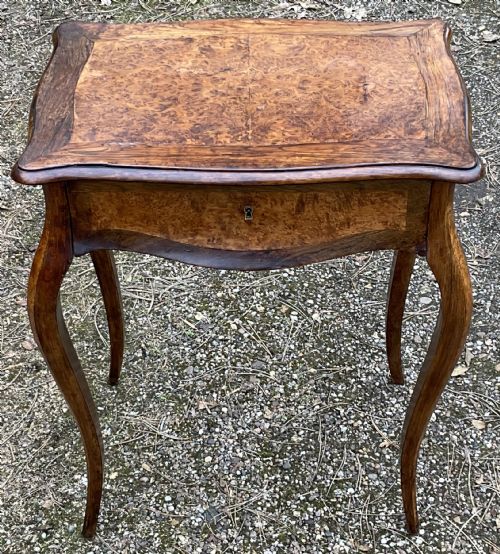
When searching for an edwardian walnut work table, you encounter compact furniture forms intended for sewing, games, and occasional use. The selection spans the Victorian and Edwardian eras, incorporating related forms such as sewing tables, games tables, and workboxes alongside dedicated work tables.
Most examples rely on walnut and burr walnut timbers, often complemented by marquetry or fruitwood inlay and fitted interior compartments. These pieces range from small occasional side tables to multi-functional cabinets designed to house needlework and personal items neatly out of sight.
How they were made
Cabinet makers utilised solid walnut and decorative burr walnut veneers over secondary timbers to achieve rich, figured surfaces. Decorative enrichment frequently involved meticulous fruitwood inlay and marquetry techniques set into the timber tops and lids.
Internal compartments incorporated custom carpentry to organise sewing tools, threads, and correspondence. Brass hardware and fitted fabric elements completed the construction of these functional domestic items.
The listings span the Victorian and Edwardian eras, incorporating materials such as burr walnut, fruitwood inlay, brass, and ceramic elements.
What varies in quality
Quality rests upon the selection and figure of the burr walnut veneer and the precision of the marquetry and fruitwood inlay. Superior examples display seamless timber matching across the surfaces and crisp execution of decorative details.
Internal complexity dictates distinction, particularly in fitted interiors designed for sewing and writing with dedicated compartments. The overall proportion and structural integrity of the table legs and supports further separate standard utility pieces from finer items.
The Edwardian Walnut Work Table Glossary
- Burr walnut
- A wood veneer showing swirling, knotty grain patterns harvested from tree growths, highly prized for decorative furniture surfaces. It creates distinctive patterned surfaces on table tops and lids.
- Marquetry
- The art of applying decorative veneer pieces in geometric or pictorial patterns onto a timber base. This technique adorns the tops of many tables and workboxes.
- Work table
- A small table equipped with drawers, compartments, or hanging bags intended for sewing and needlecraft. These pieces served domestic tasks in sitting rooms and parlours.
- Fruitwood inlay
- Contrasting light wood inserted into recesses within a darker walnut surface to form delicate outlines or motifs. It adds subtle detail to table borders and panels.
Edwardian Walnut Work Table: Frequently Asked Questions
What is an edwardian walnut work table used for?
These tables served primarily as compact stations for sewing, needlework, and writing in the home. Fitted interiors kept threads, needles, and correspondence organised and concealed beneath lidded tops.
Today, they function well as decorative side tables or lamp tables in living spaces, offering discreet storage for small household items.
How do I distinguish between Victorian and Edwardian examples?
Victorian versions often display heavier proportions, darker finishes, and elaborate marquetry or games boards integrated into the top. Rococo revival influences and rich burr walnut veneers frequently characterise mid-to-late 19th-century pieces.
Edwardian interpretations tend toward lighter structures, simpler satin walnut or inlaid accents, and refined proportions suited for less formal interiors.
Are these tables suitable for modern living rooms?
Their compact scale allows them to fit easily beside armchairs or sofas as functional occasional tables. The lidded compartments provide practical enclosed storage for modern miscellany while maintaining a tidy surface.
Their varied timber tones and inlaid details blend smoothly with both traditional and contemporary interior schemes.
What interior fittings do these tables usually contain?
Many examples feature shallow wooden trays divided into small compartments for holding spools, thimbles, and pins. Some incorporate fabric work bags suspended beneath the table top to hold ongoing needlework projects.
Others include fold-over tops that reveal green baize surfaces for card games or chess alongside writing compartments.