


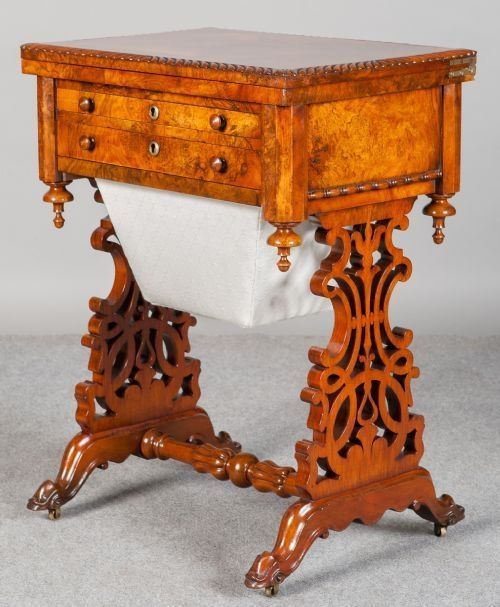
Vintage Sewing Table Basket
These vintage sewing table basket designs combine practical work storage with refined timber craftsmanship, offering an elegant occasional piece for any room.

Vintage Sewing Table Basket
A vintage sewing table basket is a multi-purpose occasional piece designed for needlework and domestic crafts, frequently appearing in Edwardian and 19th Century iterations. These items function equally well as side tables or lamp tables while concealing storage compartments beneath their tops.
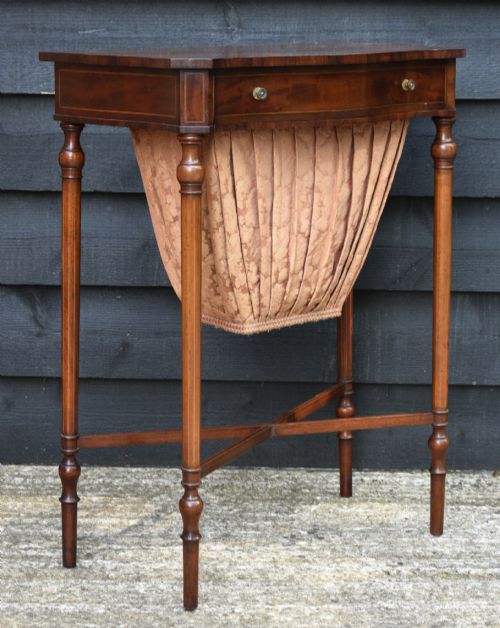
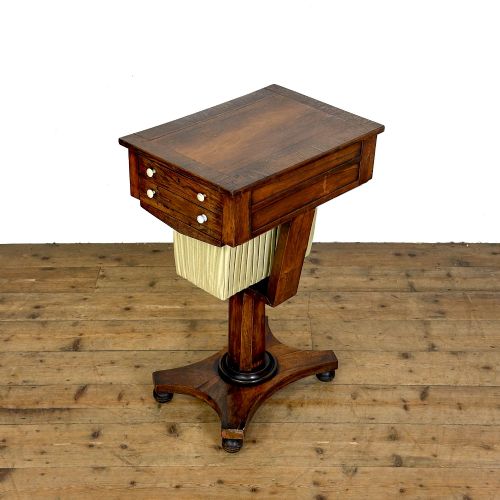
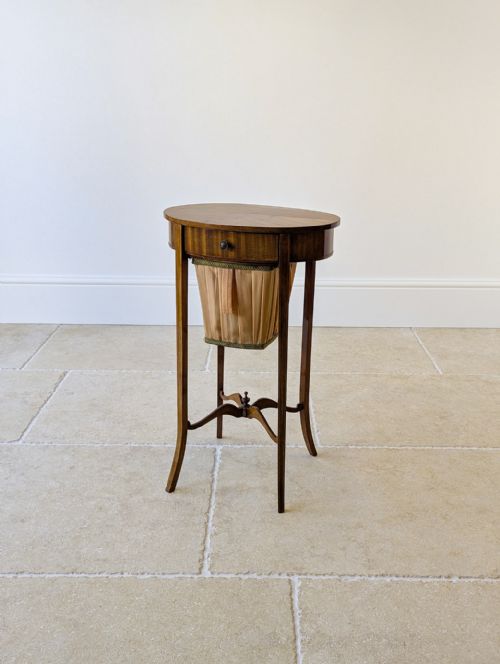
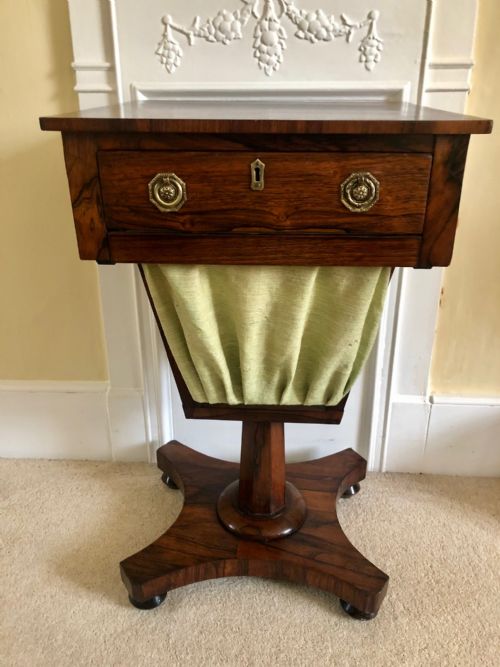
The most common forms seen on this page include mahogany and rosewood work tables alongside octagonal and serpentine Edwardian variants. Many incorporate suspended silk or fabric baskets beneath the main surface to hold threads, needles, and ongoing projects.
Origins span the Regency, William IV, Victorian, and Edwardian eras, demonstrating how needlework furniture evolved from formal parlour accessories into lighter, inlaid display pieces. Buyers will encounter both simple timber boxes and fold-over games tables adapted for sewing and domestic leisure.
Materials and construction methods
Construction relies heavily on dense cabinet timbers such as mahogany, rosewood, burr walnut, and satinwood, frequently enhanced by decorative stringing or marquetry inlay. These hardwoods provide the structural stability required for hinged lids and folding surfaces.
Fabric and silk components are integrated directly into the hanging baskets and fitted interiors, contrasting sharply with the polished wooden frames. Brass castors, hinges, and handles are common metal fittings utilised to aid mobility and secure compartments.
Listings feature items spanning the 1860s through the Edwardian period, constructed from mahogany, rosewood, and burr walnut.
Assessing quality in period work tables
Quality is determined by the selection of figured timber veneers, the crispness of any inlaid woodwork, and the structural integrity of the internal compartments. Pieces featuring richly grained burr walnut or figured satinwood sit at the upper end of the scale.
The condition and authenticity of the hanging fabric basket or silk lining heavily influence the overall integrity of the piece. Refined details like lyre-ended supports and well-fitted folding mechanisms distinguish finer workshop production from standard utility items.
The Vintage Sewing Table Basket Glossary
- Work table
- A small occasional table equipped with drawers or compartments specifically designed for holding sewing and needlework supplies. These pieces were essential items for Victorian and Edwardian parlours.
- Lyre-ended
- A furniture support shaped like an ancient Greek lyre instrument, frequently seen on Regency and William IV pedestals. This decorative scrollwork adds architectural flair to the base.
- Inlay
- A decorative technique where contrasting woods or materials are set into the surface of a primary timber to create patterns. Edwardian examples often display delicate floral or geometric motifs.
- Serpentine
- A furniture edge or front line that curves inward centrally and outward at the ends, resembling a snake's movement. This undulating shape requires high skill from the cabinetmaker.
- Burr walnut
- Timber obtained from the gnarled growths on walnut trees, prized for its swirling, highly decorative grain patterns. It creates a striking visual texture on Victorian tabletops.
Vintage Sewing Table Basket: Frequently Asked Questions
What is a vintage sewing table basket used for?
These tables served as dedicated workstations for domestic needlecraft, keeping threads, needles, and fabrics organised in built-in compartments or suspended fabric bags. The main surface also doubled as a convenient spot for lamps or writing.
Today, they function brilliantly as compact side tables in living rooms or bedrooms, offering hidden storage for modern clutter while retaining their historical charm.
How do I date a vintage sewing table basket?
Dating relies on identifying the prevailing timber choices, hardware, and stylistic details associated with specific 19th Century and Edwardian periods. Regency pieces often feature bold mahogany and lyre supports, whereas Edwardian versions frequently showcase lighter satinwood and delicate inlay.
Examining the construction methods inside the drawers and compartments also reveals the manufacturing era. Hand-cut dovetails and traditional fixings point firmly towards nineteenth-century craftsmanship.
Can these tables be used as normal side tables?
They make exceptional side tables because their compact proportions and flat tops accommodate lamps, books, or decorative objects with ease. The internal compartments remain useful for storing everyday items out of sight.
Placing one beside a sofa or armchair brings both historical character and practical surface space to the room. The integrated baskets can hold magazines or modern throws instead of sewing materials.
Are the fabric baskets original?
Silk and fabric baskets experienced significant wear during active use, meaning many surviving examples have been reupholstered or replaced over time. Examining the fabric helps determine whether it reflects period-appropriate textiles or modern restoration.
A replacement liner does not diminish the utility of the table as long as the supporting wooden framework remains authentic. Many collectors appreciate clean, sympathetic fabric renewals that allow the piece to be used immediately.