
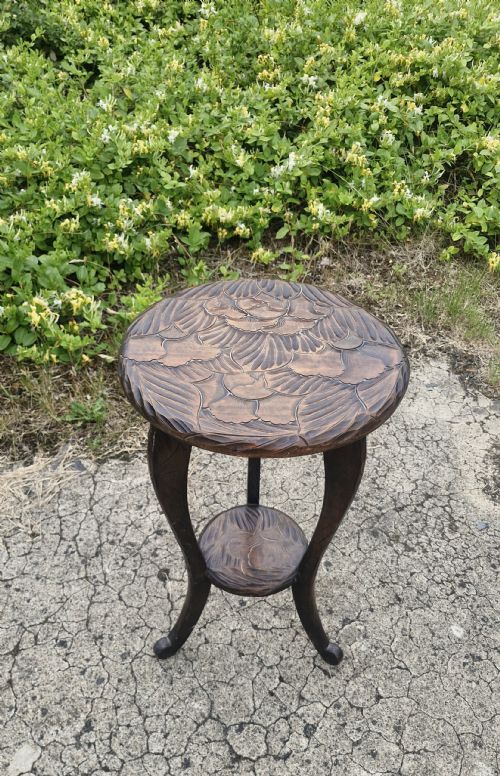
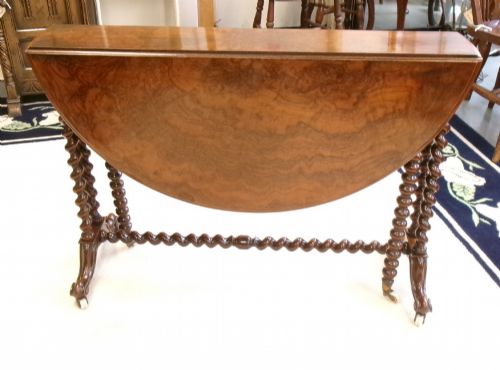
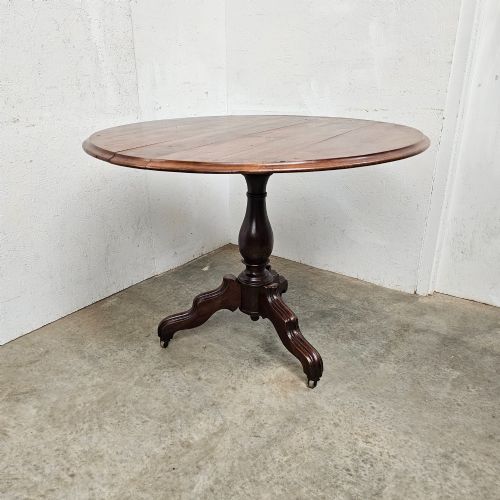


Edwardian Walnut Tea Table
An edwardian walnut tea table brings refined timber grain and folding utility to a reception room, offering a functional surface that tucks away neatly.
Edwardian Walnut Tea Table
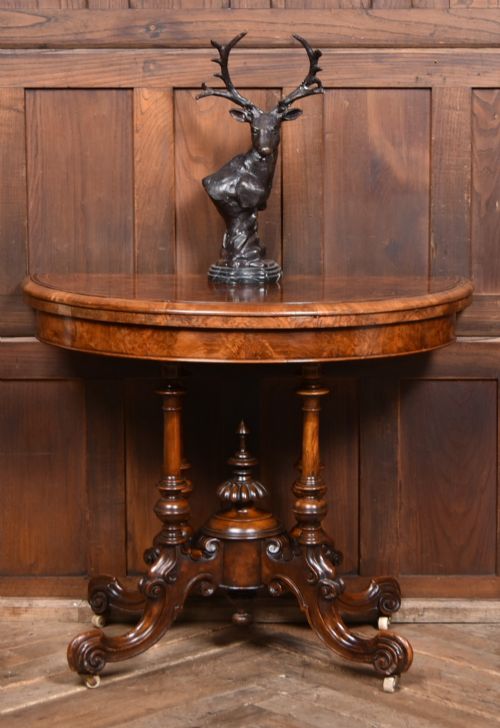
When you search for an edwardian walnut tea table, you encounter practical folding furniture designed for formal entertaining. The archive and current selections show variants such as gateleg frames, demi-lune shapes, and serving trays on stands.
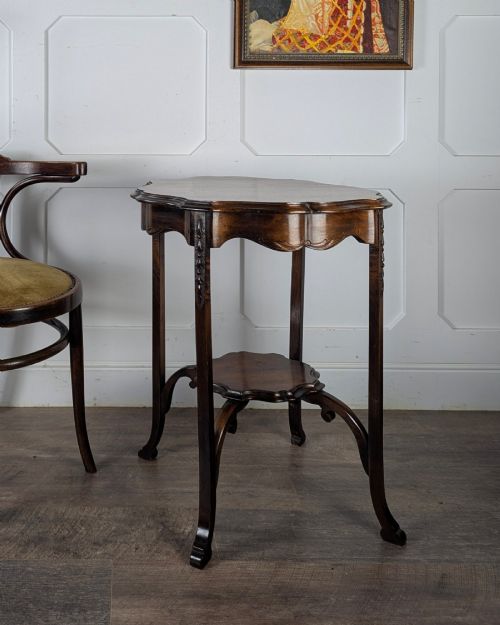
While the label points to the Edwardian era, the pieces on this page span related periods like the 19th Century and the 1920s, incorporating styles from Queen Anne Revival to Arts and Crafts. Occasional, side, and card tables frequently share the same domestic footprint.
Makers such as Holland & Sons, Edwards & Roberts, and Howard & Sons Ltd represent the higher tier of production found in these listings. Buyers often choose between a fixed occasional table and a fold-over format suited to serving guests.
What varies in quality
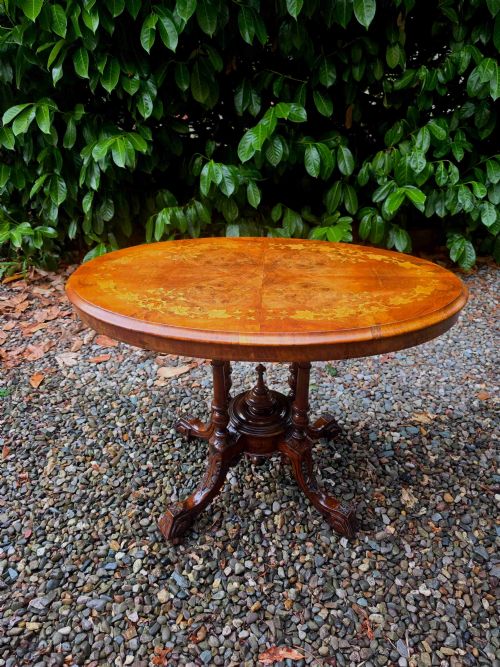
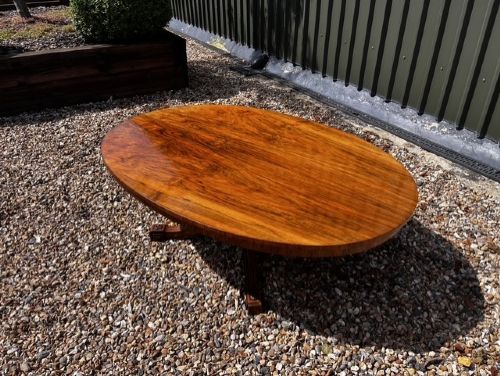
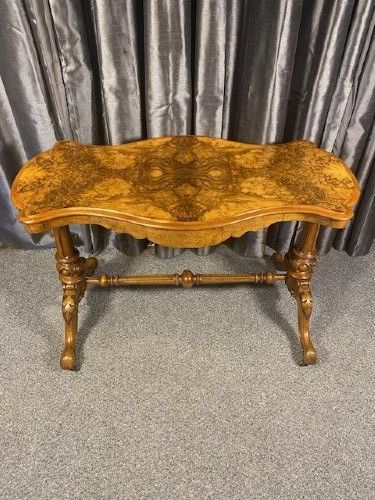
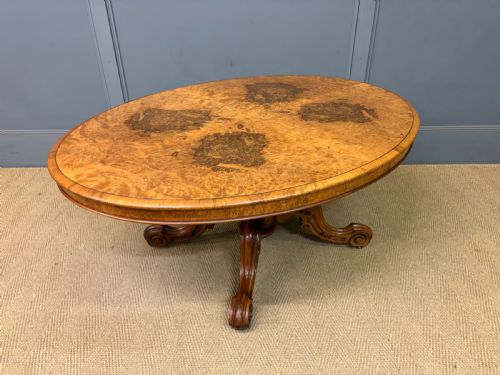
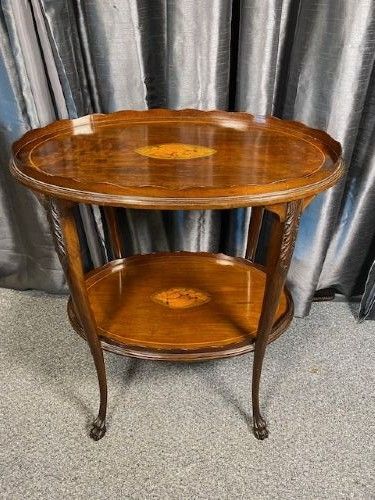
The choice of timber veneer dictates much of the visual impact, with figured burr walnut commanding attention through complex grain patterns. Finer examples display meticulous marquetry and crisp carving along the edges and friezes.
Structural integrity in the folding mechanisms and legs separates standard workshop output from pieces bearing the stamps of prominent London makers. Timber selection, stability in the joints, and the precision of the inlay define the upper tier.
Some tables double as butlers' serving trays, proving that Victorians and Edwardians liked breakfast in bed just as much as we do.
Holland & Sons·Edwards & Roberts·Howard & Sons Ltd·Liberty's
The Edwardian Walnut Tea Table Glossary
- Burr Walnut
- A timber derived from the abnormal growth of a walnut tree, producing highly prized swirling grain patterns. It was frequently used for veneering table tops.
- Demi-Lune
- A half-moon shape commonly found in the design of folding card and tea tables. This form allows the piece to sit flat against a wall when closed.
- Gateleg Table
- A table with hinged leaves supported by swing-out legs that resemble a gate. This mechanism provides extended surface area while maintaining a compact closed profile.
- Pie Crust Edge
- A carved, raised decorative border resembling the crimped edge of a pastry crust. It is typically worked into the solid walnut rim of round occasional tables.
Edwardian Walnut Tea Table: Frequently Asked Questions
How do I use a folding tea table today?
These tables function well as side surfaces for holding drinks or display items during everyday use. When guests arrive, the leaves unfold to provide extra space for serving afternoon tea.
Purchased variations like gateleg or demi-lune designs fold flat against a wall when not in use, making them practical for smaller rooms.
What is the difference between an occasional table and a tea table?
An occasional table is a general-purpose piece designed to be moved around a room as needed for lamps or decorative objects. A tea table specifically incorporates folding leaves or serving trays intended for hospitality.
Many examples share similar walnut construction and Edwardian or Victorian proportions, blurring the line between the two forms.
How do I care for walnut veneer?
Keep walnut furniture away from direct sunlight and heat sources to prevent the timber veneer from drying out or splitting. Dust the surface regularly with a dry cloth and avoid harsh chemical polishes.
Applying a traditional beeswax occasionally helps nourish the wood grain and maintain the natural lustre of the finish.
How can I tell Edwardian pieces from Victorian ones?
Edwardian furniture generally exhibits lighter proportions and simpler lines influenced by Sheraton and revival styles. Victorian pieces tend to be heavier in construction, often featuring deeper burr walnut veneers and darker finishes.
Stylistic crossovers like Edwardian Revival or Arts and Crafts details appear across both periods in these listings.