

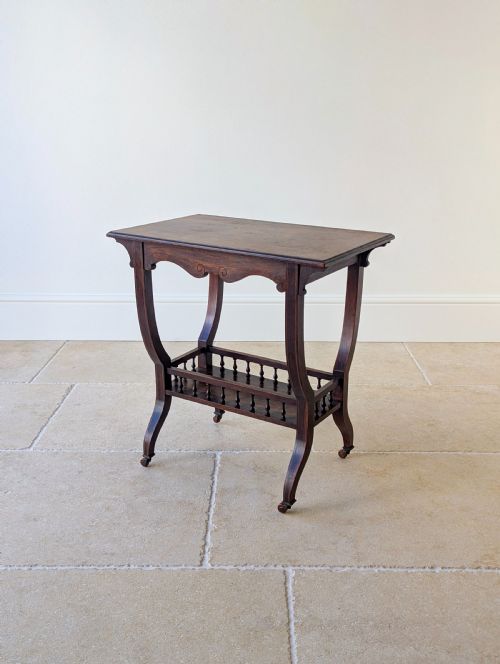
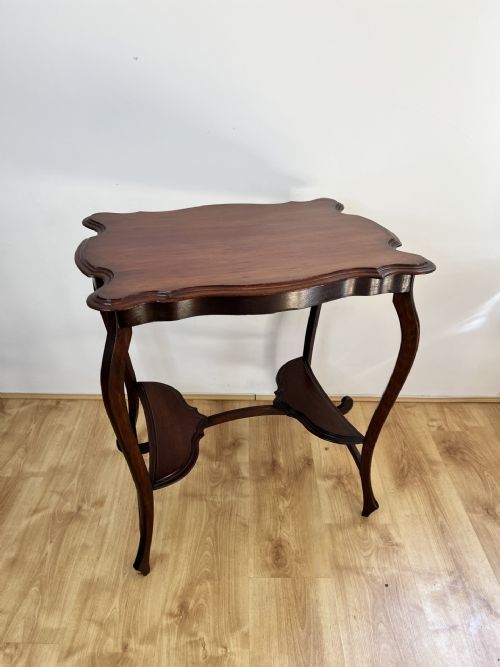


Edwardian Undertier Table
An edwardian undertier table brings a secondary display shelf to domestic spaces, offering useful surface area and period charm in equal measure.
Edwardian Undertier Table
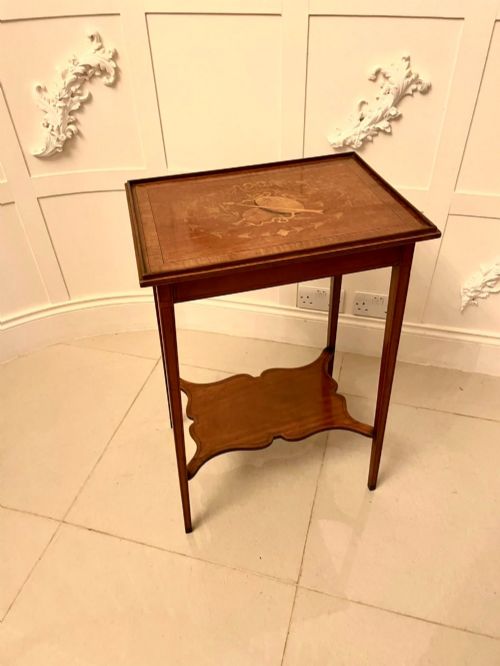
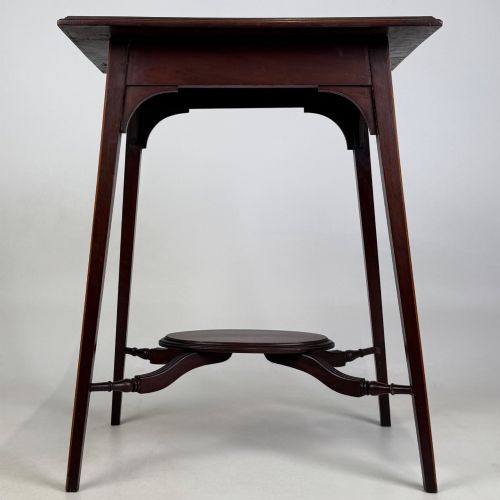
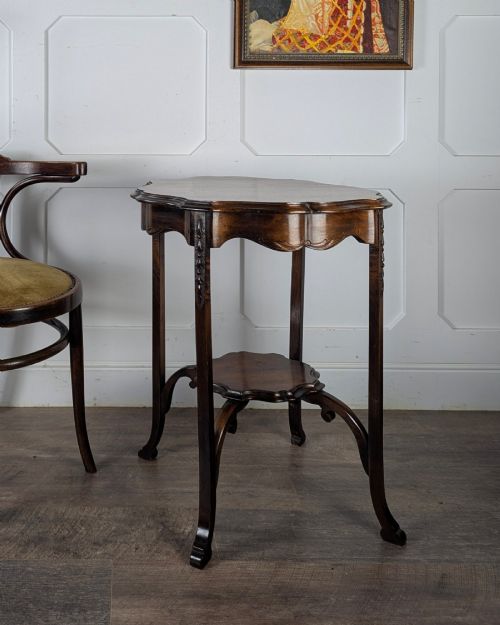
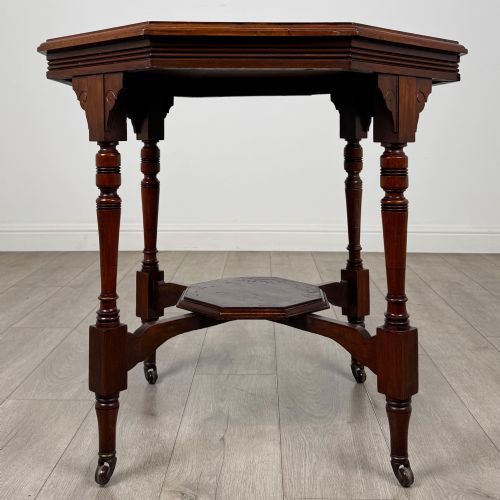
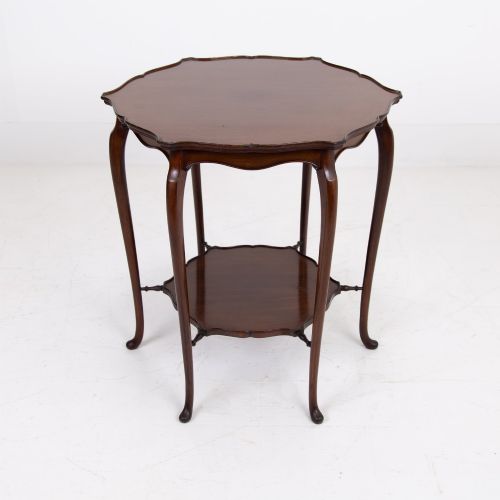
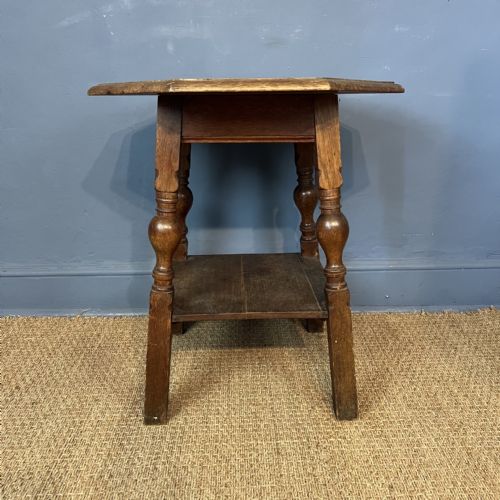
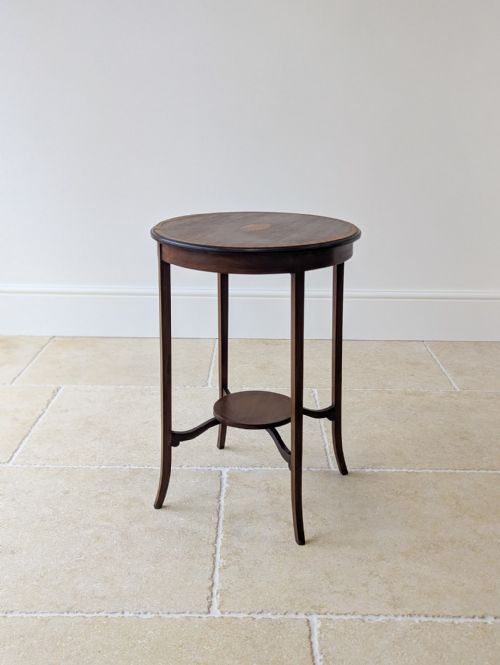
An edwardian undertier table typically manifests as an occasional, side, or lamp table featuring a lower shelf positioned between the legs below the main surface. The selection ranges from circular and octagonal tops to oval and rectangular forms built during the Edwardian period and the surrounding decades.
Most examples you encounter on this page date from around nineteen hundred to nineteen ten, constructed in mahogany, rosewood, or oak. These pieces function as versatile furniture items designed to hold lamps, books, or decorative objects while occupying minimal floor space.
How they were made
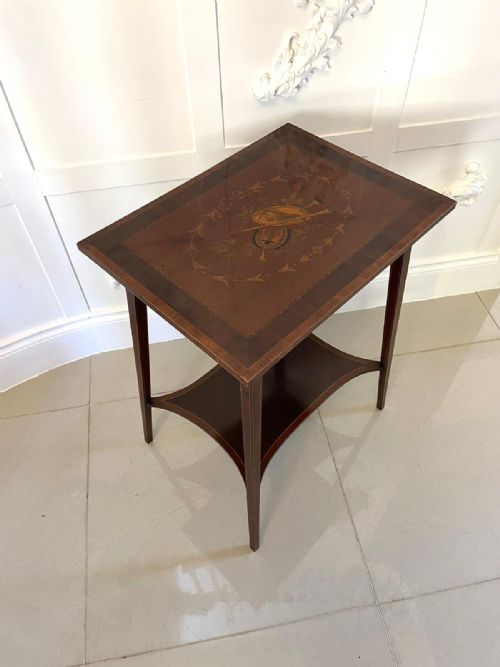
Cabinet makers utilised dense hardwoods such as mahogany, walnut, and rosewood, often pairing them with contrasting timbers like boxwood and satinwood for inlay work. Turned legs provide structural support while brass details and painted decorations appear on select specimens.
Joinery techniques from the period ensured stability across multi-tiered designs, connecting the undertier firmly to the upright legs. Artisans applied polished finishes to highlight the natural grain of the timber and the precision of any decorative inlay.
You can find tables explicitly built for playing games, or sporting a gypsy style with draped fabric charm.
What varies in quality
The degree of refinement in the timber selection and inlay work defines the upper tier of these tables. Finely figured mahogany or rosewood paired with intricate boxwood and satinwood stringing distinguishes superior examples from plain utility pieces.
Proportion and structural crispness also separate standard production from exceptional pieces. Sharply turned legs, secure undertier joinery, and balanced proportions indicate careful craftsmanship by skilled makers.
Liberty and Co·Liberty of London·Howard and Sons
The Edwardian Undertier Table Glossary
- Undertier
- A lower shelf positioned beneath the main top of a table, providing additional surface space for storage or display. This secondary shelf is characteristic of many occasional and side tables from the period.
- Occasional table
- A small, light table designed to be moved easily and used for specific tasks as needed. These pieces serve multiple functions in a room.
- Sheraton Revival
- A late nineteenth and early twentieth century style that reinterprets the classical, elegant furniture designs of eighteenth-century designer Thomas Sheraton. It frequently incorporates satinwood and delicate inlay.
- Satinwood
- A lustrous, hard timber native to Ceylon and India with a yellowish colour and a satiny sheen. It is often used for veneers and decorative stringing.
- Inlay
- A technique where pieces of contrasting wood, metal, or shell are fitted into depressions within a solid timber surface to create decorative patterns.
Edwardian Undertier Table: Frequently Asked Questions
What is an undertier table used for?
These tables provide a convenient surface for a lamp or small objects on top, while the lower shelf holds books or magazines. Their compact size makes them adaptable for placement beside chairs or in hallways.
Historically, they filled parlours and drawing rooms as versatile furniture items that could be shifted about easily. Today, they serve a similar practical function in modern living spaces.
How do I identify an Edwardian table?
Edwardian tables often feature lighter timbers such as mahogany or rosewood, frequently accented with delicate boxwood or satinwood inlay. Turned legs and the presence of a lower shelf are common characteristics.
Comparing the timber quality and construction methods helps distinguish pieces from this era versus later reproductions. The lighter proportions contrast with heavier Victorian predecessors.
Are these tables sturdy enough for daily use?
Solid hardwood construction and secure joinery make these pieces durable for everyday placement in a home. The lower shelf actually adds rigidity to the leg frame.
Placing them away from direct heat sources and excessive moisture preserves the polished finish and timber integrity over time. Regular dusting keeps the surface in good condition.
What styles appear alongside Edwardian pieces?
Listings frequently include Arts and Crafts designs alongside Sheraton Revival and occasional Victorian pieces. Arts and Crafts examples emphasise plain oak and visible construction.
Revival styles draw on earlier eighteenth-century aesthetics, bringing classical motifs and painted satinwood decoration into the twentieth century.