
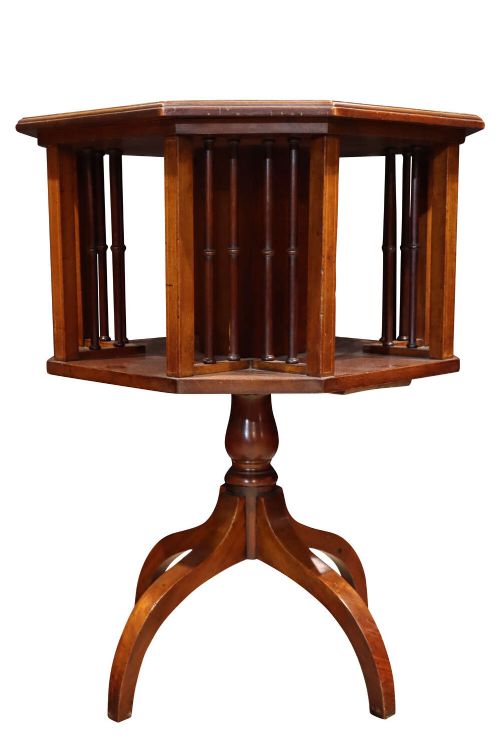
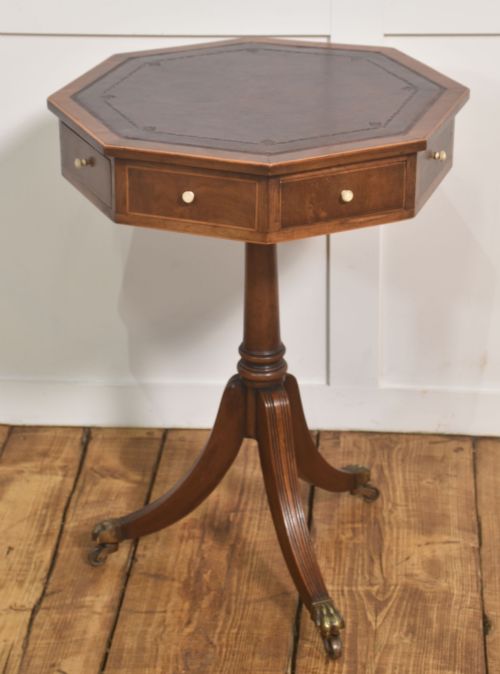
Edwardian Tripod Side Table
An edwardian tripod side table is a light, versatile occasional piece designed to stand beside a chair or in a corner.
Edwardian Tripod Side Table
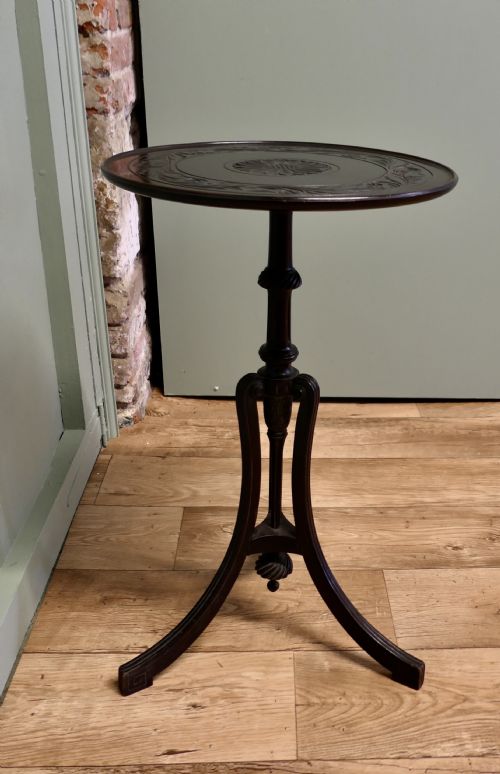
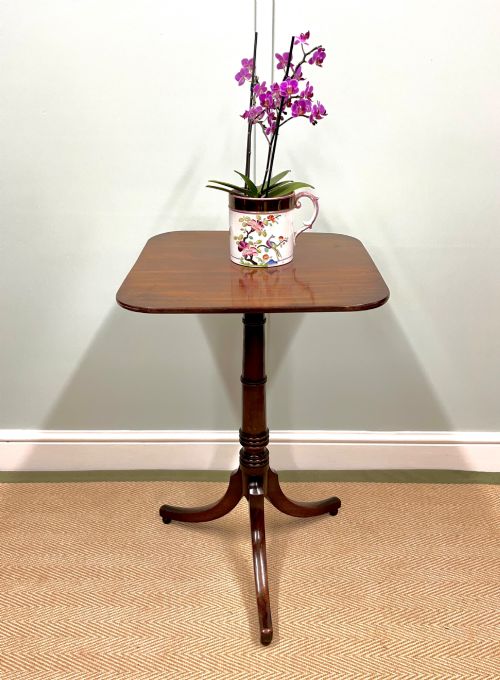
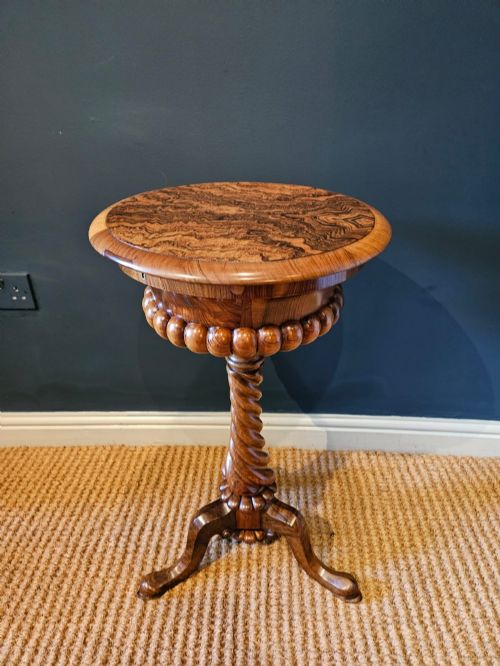
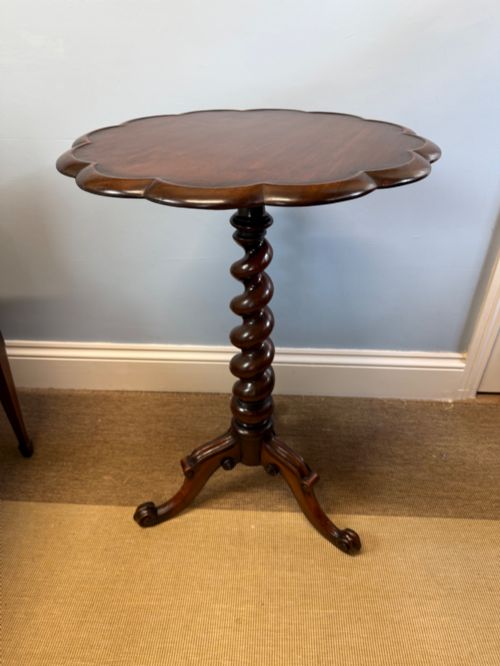
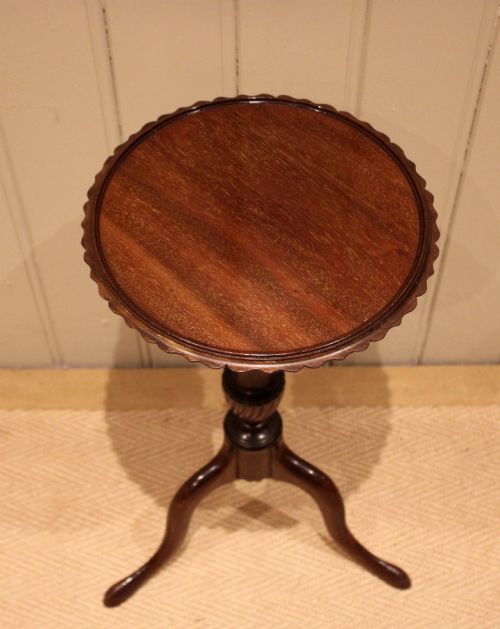
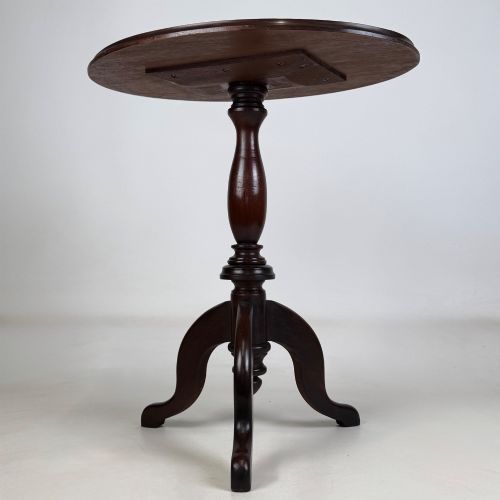
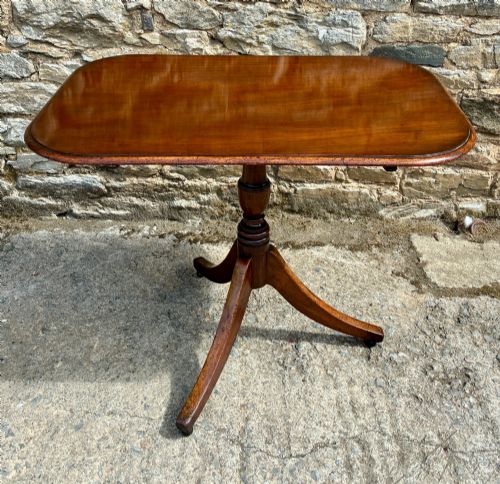
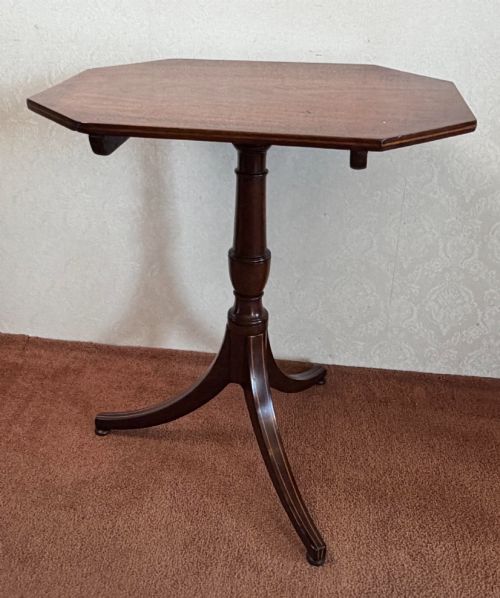
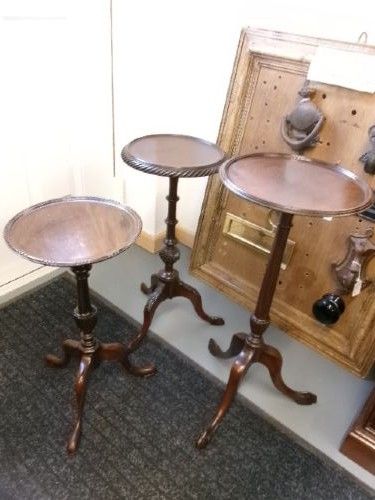
When you examine an edwardian tripod side table, you find a compact circular, oval or shaped top supported by a central pillar on three splayed legs. These tables served multiple domestic purposes, acting as wine tables, lamp stands or small surfaces for reading materials in period homes.
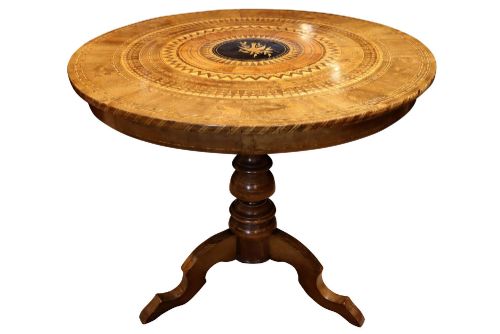
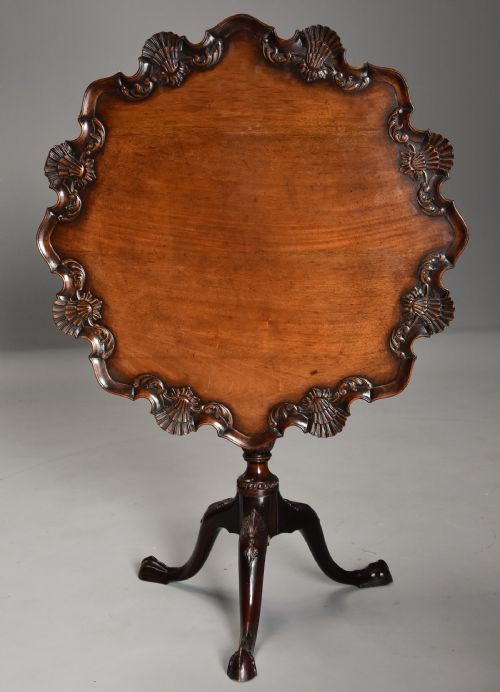
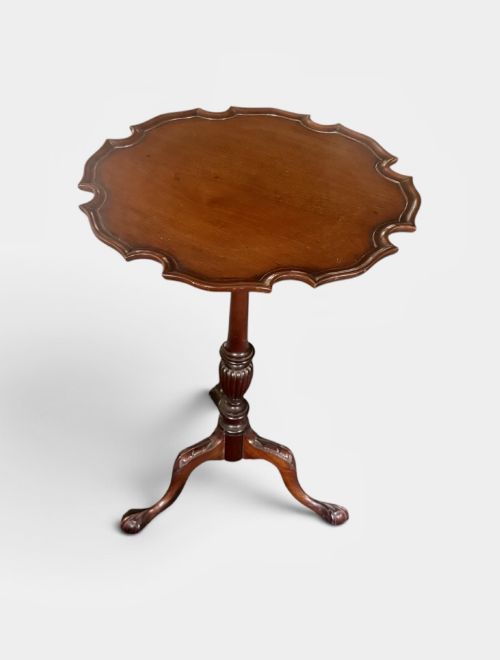
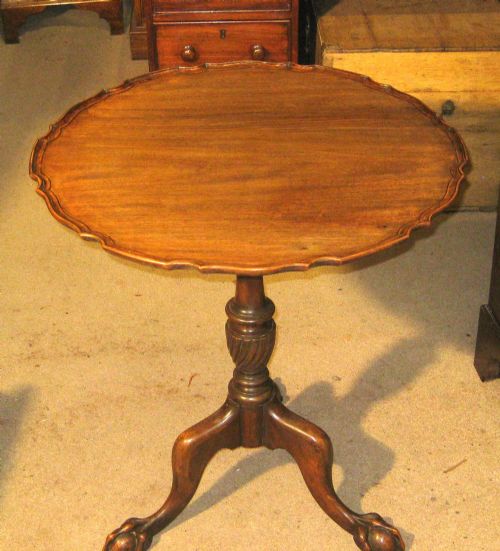
You meet variations spanning the Edwardian era itself, alongside pieces drawing on Victorian proportions and earlier revival styles such as Chippendale and Regency. The form ranges from plain circular timber tops to pie crust edges and detailed marquetry inlay.
Most examples rely on mahogany, walnut or oak, though occasional pieces utilise exotic woods, brass fittings or velvet inserts. The three-legged pillar construction provides stability on uneven floorboards while maintaining a minimal footprint in smaller rooms.
How They Were Made
Cabinet makers constructed these tables primarily from solid or veneered hardwoods like mahogany, walnut and oak, often incorporating contrasting stringing in boxwood or satinwood. Tops were frequently turned on a lathe or hand-carved to create shaped rims, while tilt-top mechanisms utilised pivoted wooden catches and brass fittings.
The central pillar joined the tripod legs using robust tenon joints or dovetailing, ensuring stability despite the slender silhouette. Surface decoration relied on French polishing, marquetry inlay, painted finishes and edge moulding rather than heavy structural ornamentation.
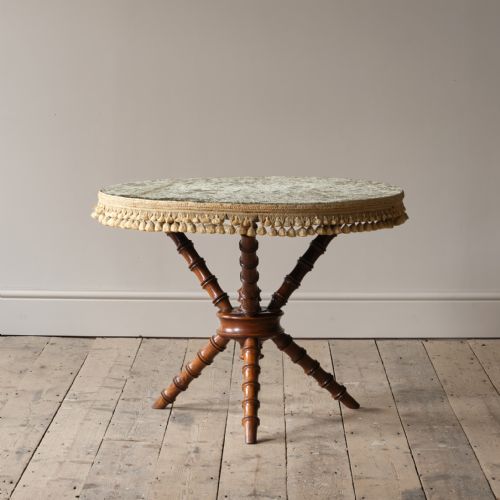
A simulated bamboo Gypsy table proves that Victorian and Edwardian makers loved botanical impersonation just as much as fine mahogany.
What Varies in Quality
The distinction between ordinary and superior pieces rests on timber selection, such as book-matched mahogany or burr walnut, and the crispness of hand-carved details like pie crust rims and claw-and-ball feet. Refined examples display precise boxwood inlay and seamless joints that remain rigid through decades of tilting and movement.
Proportion and balance dictate the architectural success of the piece, separating elegant workshop productions from stiffer, heavy-handed manufacturing. Original tilt mechanisms, well-turned central columns and untouched patination on the timber elevate the standing of an individual table.
The Edwardian Tripod Side Table Glossary
- Tilt top
- A hinged table top that folds vertically to allow the piece to stand flat against a wall when not in use. This clever space-saving mechanism became standard on many nineteenth and early twentieth century tripod tables.
- Pie crust rim
- A raised, scalloped edge carved directly into the solid timber top of a table. The undulating profile mimics pastry work and requires considerable skill from the woodcarver.
- Tripod base
- A support structure consisting of three radiating legs joined to a central vertical pillar. This design ensures the table remains stable on uneven domestic flooring.
- Inlay
- The technique of inserting contrasting pieces of wood, such as boxwood or satinwood, into recesses in the primary timber surface to create decorative patterns.
Edwardian Tripod Side Table: Frequently Asked Questions
Where should I place an edwardian tripod side table?
These compact tables fit naturally beside an armchair or sofa where you need a convenient surface for a book or lamp.
Their narrow footprint also makes them useful in hallways or empty corners that require a decorative accent rather than heavy storage.
Can I use an edwardian tripod side table for a lamp?
Most Edwardian examples easily support a standard table lamp, provided the base fits within the diameter of the circular or shaped top.
Heavier lamps require checking the stability of the three-legged base and the tightness of the central pillar fitting.
How do I distinguish an Edwardian table from a Victorian one?
Edwardian tables generally display lighter proportions, simpler lines and brighter mahogany or inlaid satinwood decoration compared to heavier Victorian pieces.
Victorian iterations often feature darker walnut, deeper carving, and more robust turned columns reflecting mid-nineteenth-century tastes.
What is the purpose of a tilt top table?
The tilting mechanism allowed historical homeowners to fold the surface flat and store the table out of the way against a wall.
Today, this feature lets you display the decorative wood grain of the top when the table is not in active use.