



Edwardian Tribal Wool Rug
An edwardian tribal wool rug brings dense nomadic weaving and rich vegetal colour into domestic interiors.
Edwardian Tribal Wool Rug
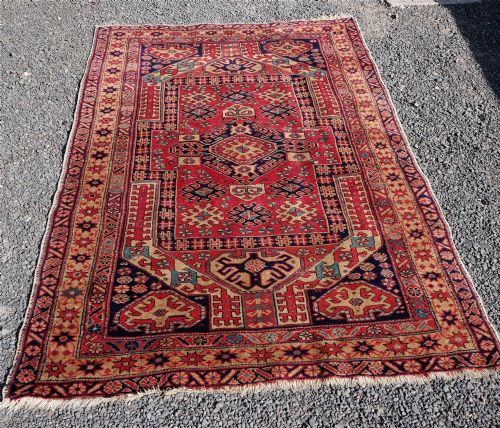
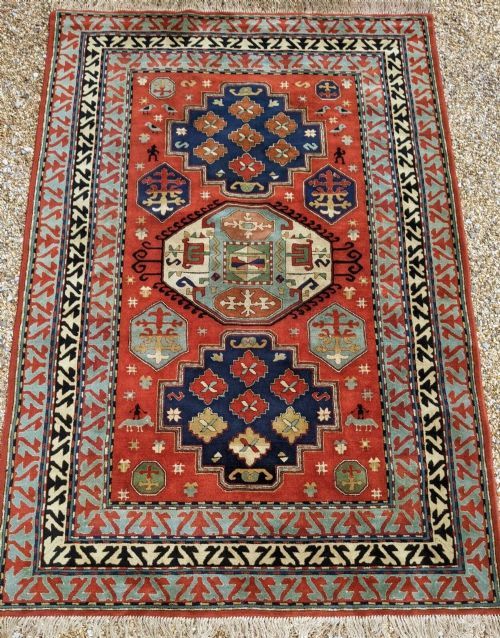
When you search for an edwardian tribal wool rug, you encounter floor coverings woven by nomadic and village communities during the early twentieth century. These pieces encompass regional styles such as Persian tribal, Turkmen tribal, and Caucasian tribal designs, alongside specific formats like runners and prayer rugs.
The versions most commonly met on this page date from the decades surrounding nineteen hundred, reflecting the output of weavers from Heriz, Malayer, Hamadan, and various Turkmen groups. They bridge the gap between utilitarian tribal weaving and formal carpet production.
How they were made
These textiles rely on hand-spun wool foundations and pile, combined with cotton structural elements in specific regional pieces. Weavers deployed natural dyes to achieve deep red, blue, and camel tones that mature gracefully over decades of use.
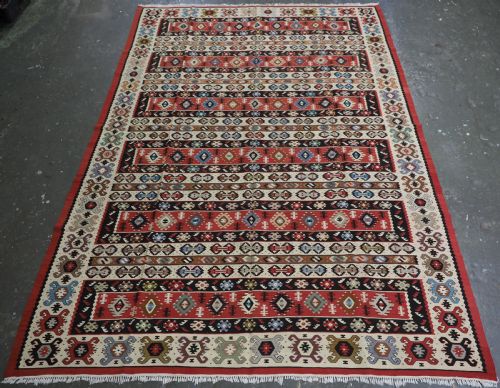
Construction techniques vary from heavy village knotting in Persian districts to fine torba face work and kilim flatweaving among Turkmen and Balkan makers. Each structure dictates the weight, drape, and resilience of the finished textile.
The listings span periods from eighteen seventy to nineteen thirty, with the majority centred on the nineteen hundreds.
What varies in quality
Quality rests upon the purity of the wool, the saturation of the natural dyes, and the crispness of the tribal motifs such as guls, mihrabs, and medallions. Finer knot density and balanced symmetry elevate certain village carpets above standard utilitarian outputs.
The integrity of the original edges and ends distinguishes well-preserved examples from those that have suffered aggressive intervention. Depth of palette and precision in tribal iconography separate standard workshop pieces from superior collector items.
The Edwardian Tribal Wool Rug Glossary
- Gul
- A repeating octagonal or medallion motif used extensively in Turkmen tribal rugs. It often identifies the specific weaving tribe or clan.
- Torba
- A small utilitarian wall-hanging bag or storage sack produced by Turkmen groups. Surviving faces display intricate geometric drawing.
- Chuval
- A large storage bag face woven by Turkmen nomads, prized for its generous display of primary guls. These pieces now function as floor rugs.
- Kilim
- A flatwoven textile produced without a pile by tightly interweaving warp and weft threads. They are known for sharp geometric patterns.
- Mihrab
- A niche design element originating in Islamic architecture and replicated in prayer rugs to indicate the direction of Mecca.
Edwardian Tribal Wool Rug: Frequently Asked Questions
How do I care for an antique wool rug?
Vacuum gently without a rotating brush bar to protect the wool pile from unnecessary friction and fibre loss.
Keep the textile out of direct sunlight to preserve the stability of the natural dyes over time.
Where were these tribal rugs originally woven?
Production centres span the tribal lands of Persia, the Caucasus, Anatolia, and regions inhabited by Turkmen and Kurdish nomads.
Local village workshops and nomadic camps each contributed distinct regional patterns and colour palettes.
What is the difference between a rug and a runner?
Rugs are proportioned as square or rectangular formats designed to anchor furniture groupings in central floor spaces.
Runners feature an elongated, narrow geometry intended specifically for corridors, hallways, and staircases.
How do I identify a prayer rug design?
Prayer rugs feature a prominent architectural mihrab arch at one end, which directs the user during daily devotions.
Compositions often concentrate specific symbolic motifs beneath this niche to guide meditation and ritual use.