

Edwardian Tiered Side Tables
Edwardian tiered side tables combine multi-level display space with compact proportions, offering practical surfaces for lamps, books and plants.
Edwardian Tiered Side Tables
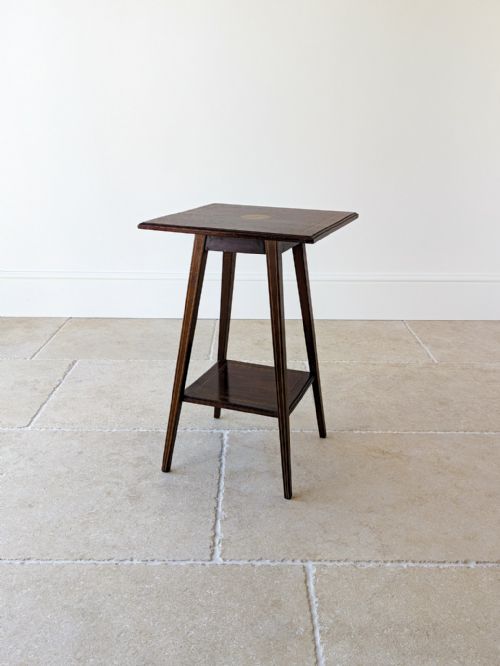
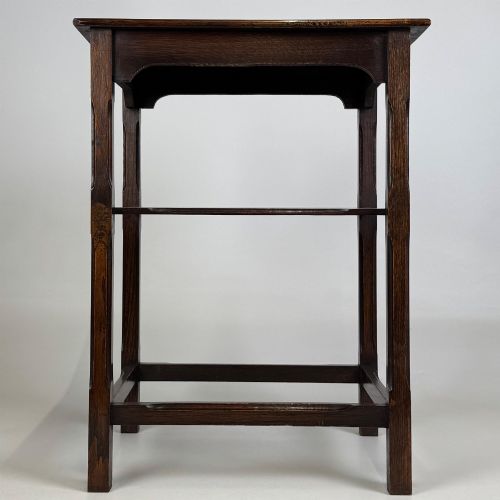
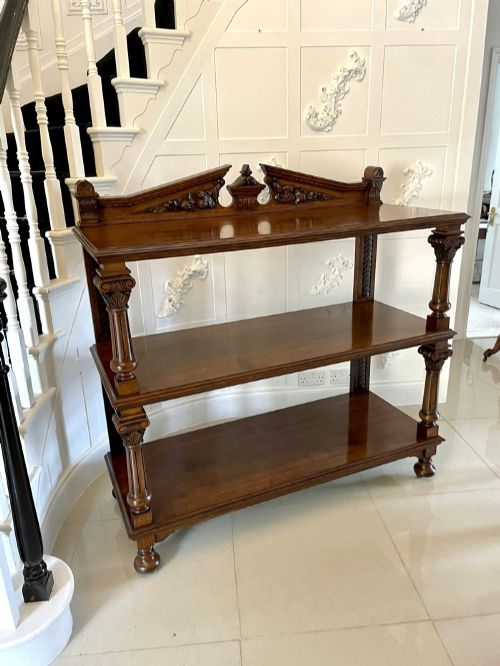
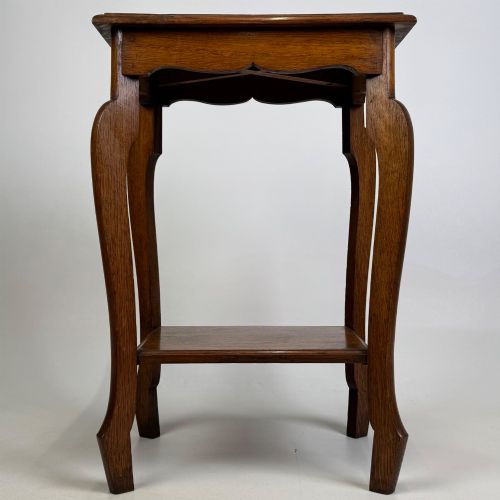
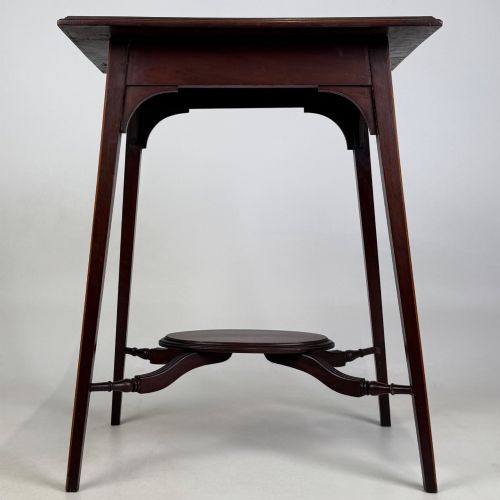
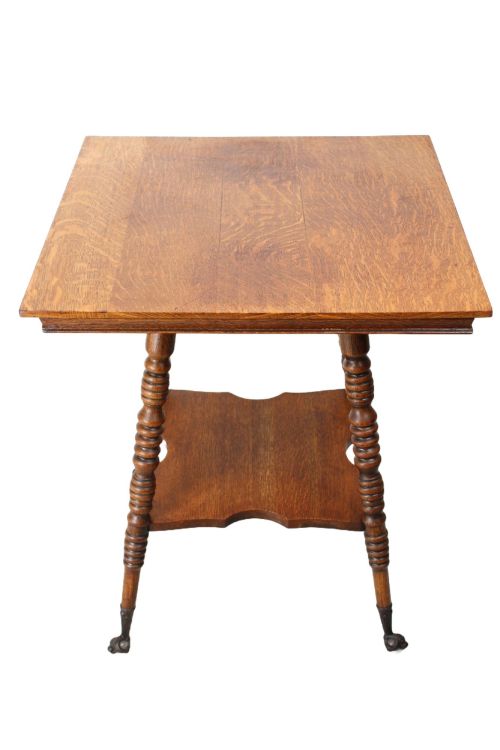
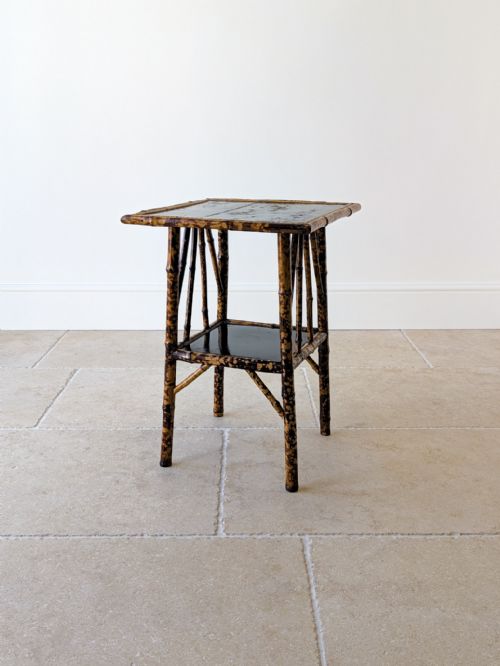
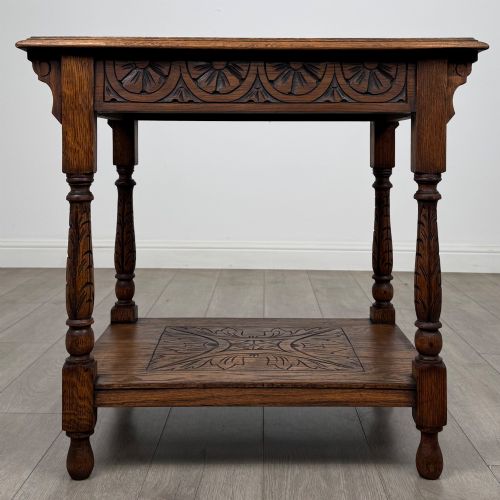
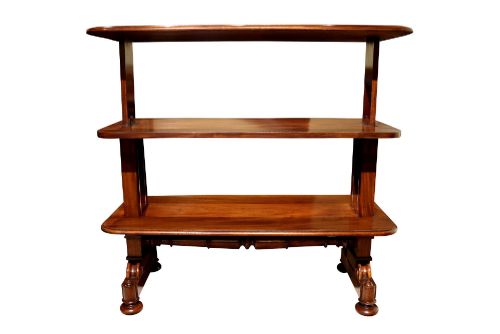
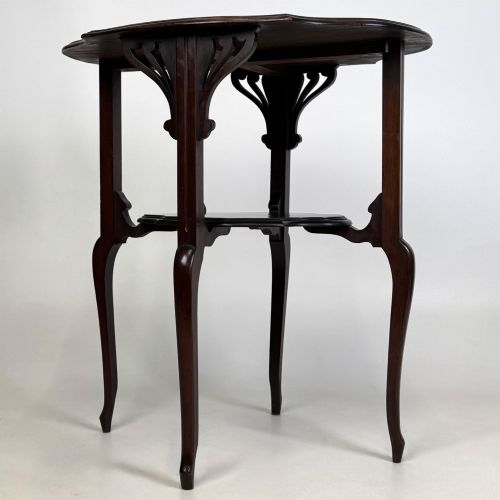
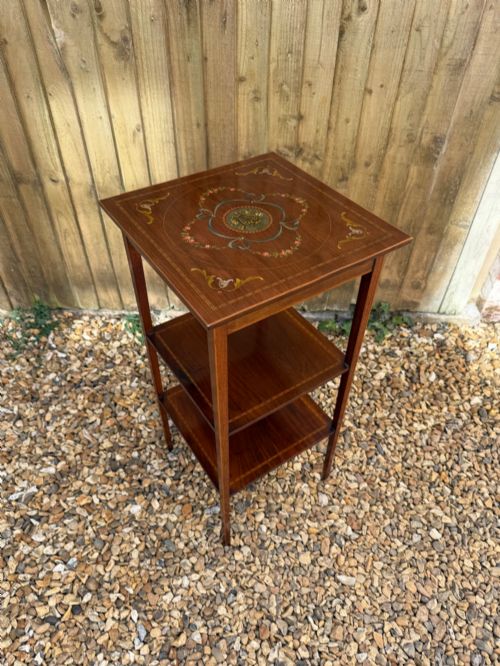
When you search for edwardian tiered side tables, you encounter multi-level surfaces designed for domestic use around the turn of the twentieth century. These pieces primarily take the form of occasional tables, etageres and two-tier stands originating from the Edwardian period and adjacent decades.
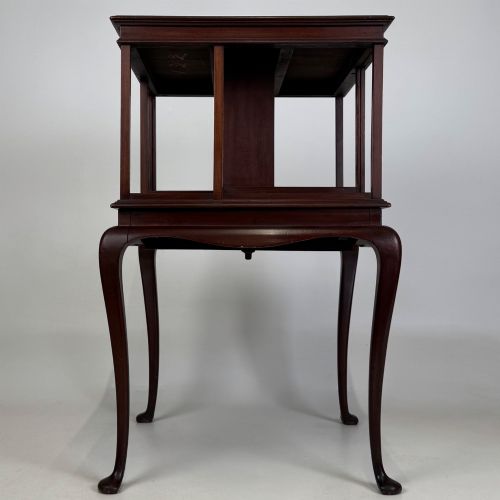
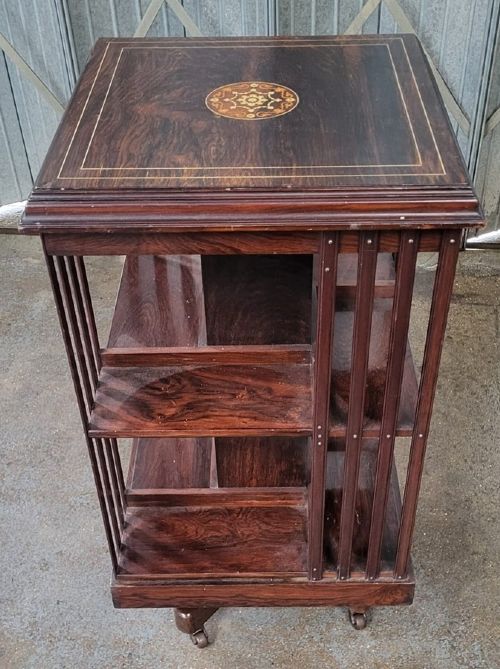
The materials span mahogany, oak and walnut, often enhanced with rosewood, kingwood or boxwood inlay. Alongside standard side tables, related forms such as revolving bookcases, plant stands and tea trolleys appear within the broader category.
Most examples date from the Edwardian era itself, while others stretch back to the late Victorian period or forward into the nineteen-twenties and thirties. The revival styles of the era, including Sheraton Revival and Regency Revival, also influence the design vocabulary of these multi-level surfaces.
Materials and Construction
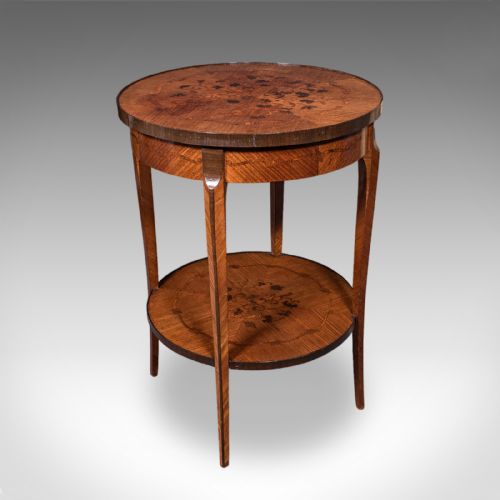
Cabinetmakers utilised hardwoods such as mahogany, oak and walnut for the primary structure and framework of these multi-level tables. Decorative veneers including rosewood, kingwood and contrasting boxwood inlay provide surface pattern and detail.
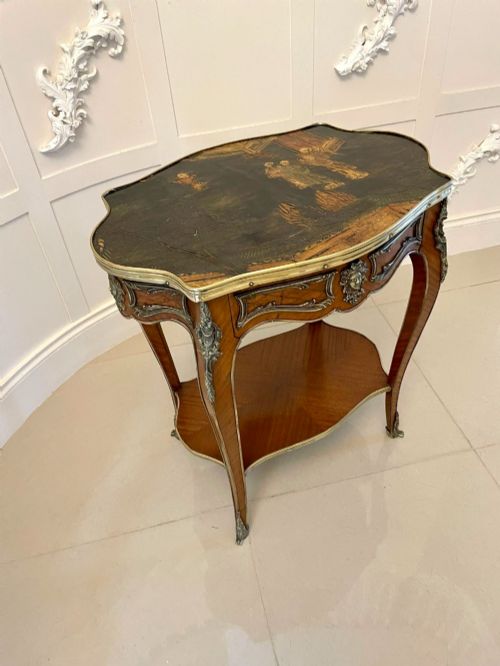
Metal elements like brass fittings, castors and ormolu mounts appear on specific pieces to accent the woodwork and facilitate movement. Joinery techniques connect the multiple tiers securely to support lamps, books and decorative objects.
One piece even includes bobbin legs, proving that Victorian turners could not resist adding a few wooden spools to an occasional table.
Standards of Craftsmanship
The refinement of the timber selection and the precision of the inlay work largely determine the standing of an individual table. Finer pieces display carefully chosen wood grain and intricate boxwood stringing rather than plain surfaces.
Structural integrity across multiple tiers separates standard utility pieces from more ambitious cabinetmaking. The stability of the joints and the finish applied to the wood surfaces indicate the level of care invested in the construction.
Liberty of London
The Edwardian Tiered Side Tables Glossary
- Tiered side table
- A domestic table featuring more than one horizontal surface arranged vertically. This design increases display capacity without occupying additional floor space.
- Etagere
- A piece of furniture consisting of a set of open shelves for displaying small objects. These tiers graduate or remain uniform depending on the specific model.
- Inlay
- A technique where contrasting materials are inserted into recessed portions of the base wood. Boxwood is frequently utilised for linear stringing and geometric patterns.
- Occasional table
- A small, light table intended to be moved about a room as needed. These serve various functions including lamp stands and small display surfaces.
Edwardian Tiered Side Tables: Frequently Asked Questions
What is an edwardian tiered side table used for?
These tables were originally placed beside seating or in hallways to hold lamps, reading material and decorative items. The extra tiers provided additional surface area without requiring a larger footprint in the room.
Today they function similarly in modern interiors, fitting easily beside sofas or in corners where vertical display space is useful.
How do I identify an edwardian tiered side table?
Look for characteristic construction methods, timber choices such as mahogany or oak, and decorative details like boxwood inlay or brass fittings. The proportions typically remain light and upright, reflecting the domestic tastes of the early twentieth century.
Compare the overall design against related styles like Arts and Crafts or Sheraton Revival to understand the specific aesthetic lineage of the piece.
Are these tables sturdy enough for daily use?
Most pieces were built for practical household service, utilising solid hardwoods and secure multi-tier joinery. They easily support standard lamps, books and decorative objects when placed on a flat surface.
Care should be taken not to overload upper shelves beyond their original intended capacity to preserve the stability of the frame.
What woods were commonly used?
Mahogany, oak and walnut form the primary structural timbers across the available selection. Cabinetmakers frequently paired these with decorative veneers like rosewood and kingwood.
Boxwood inlay and brass mounts often provided contrasting detail against the darker base woods.