
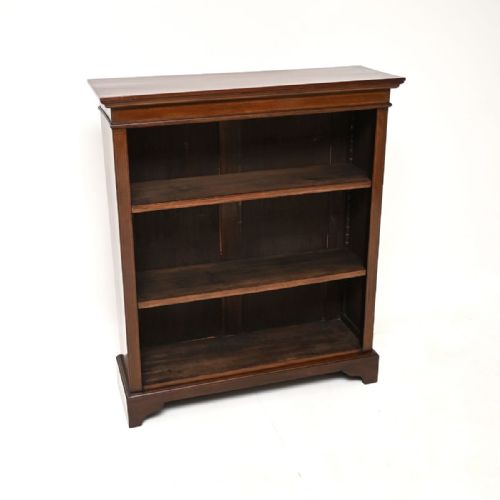
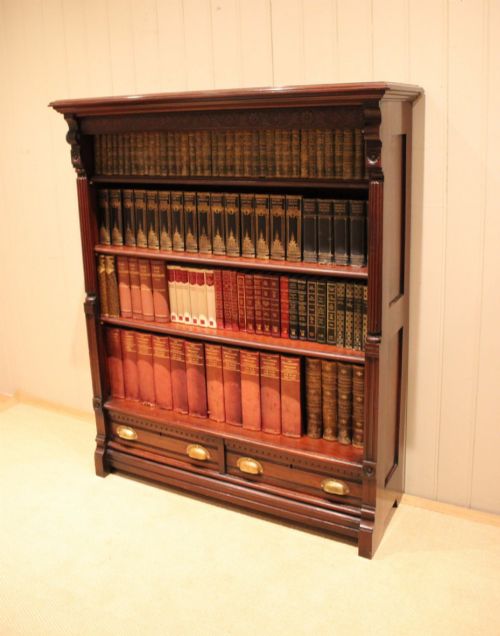
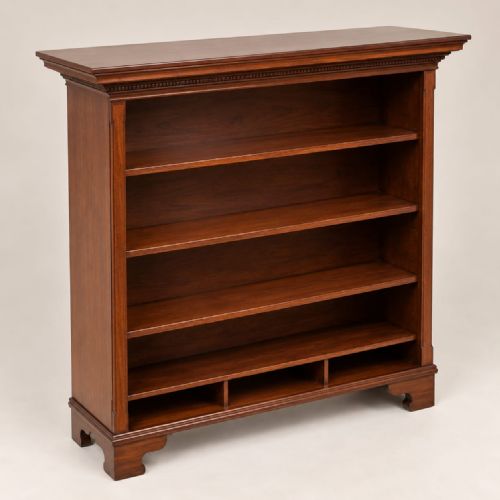
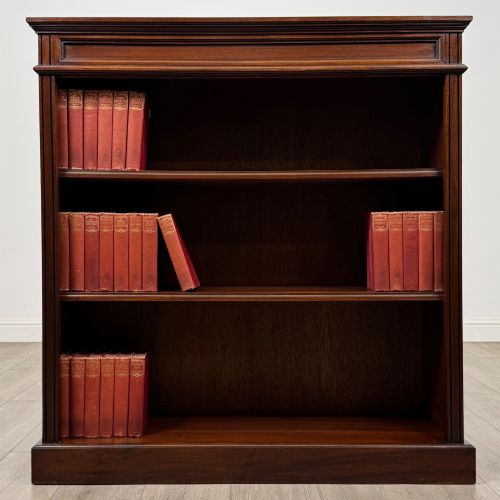
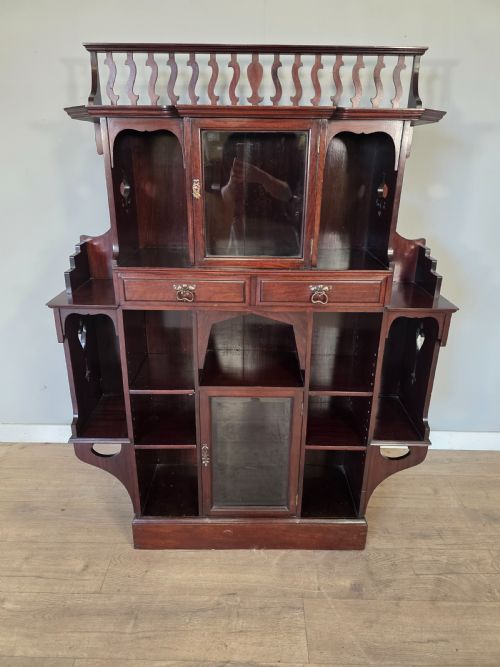
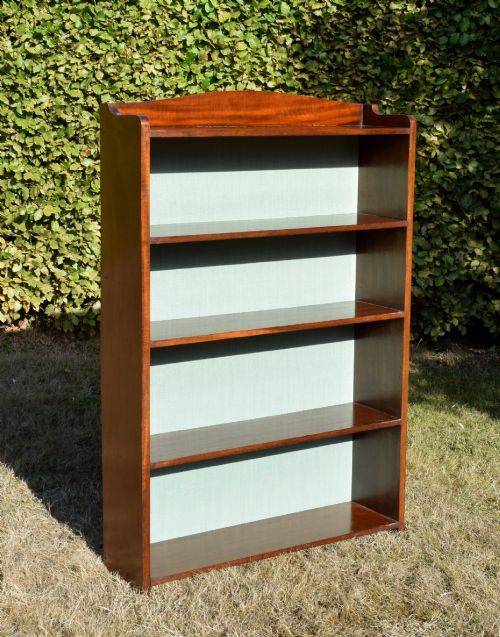
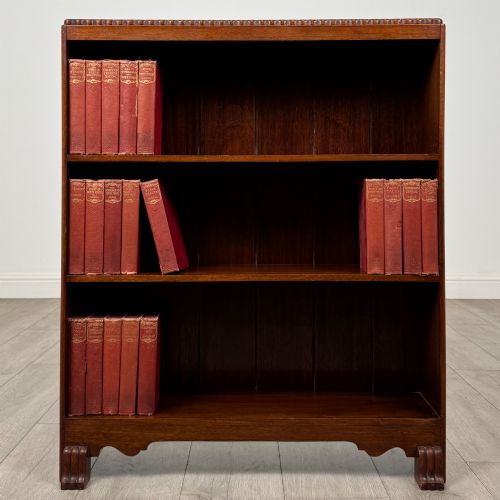
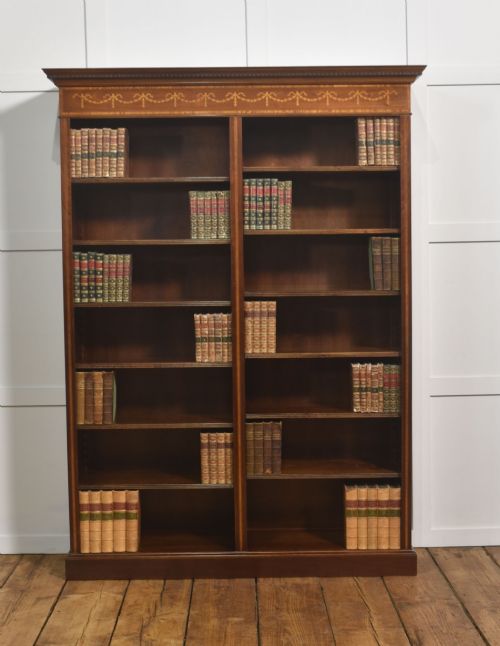
Edwardian Mahogany Open Bookcase
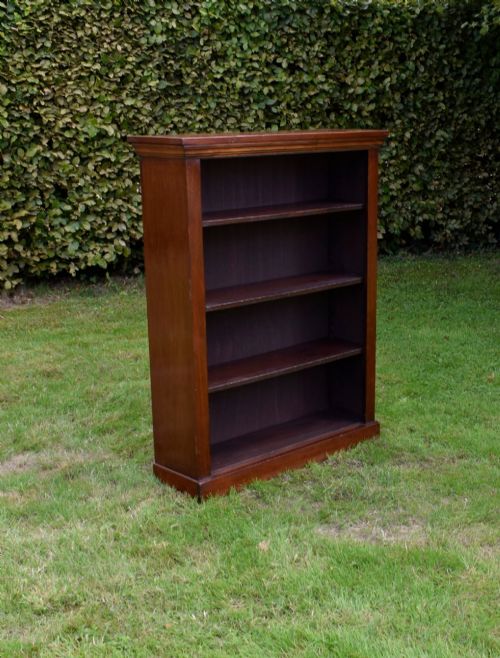
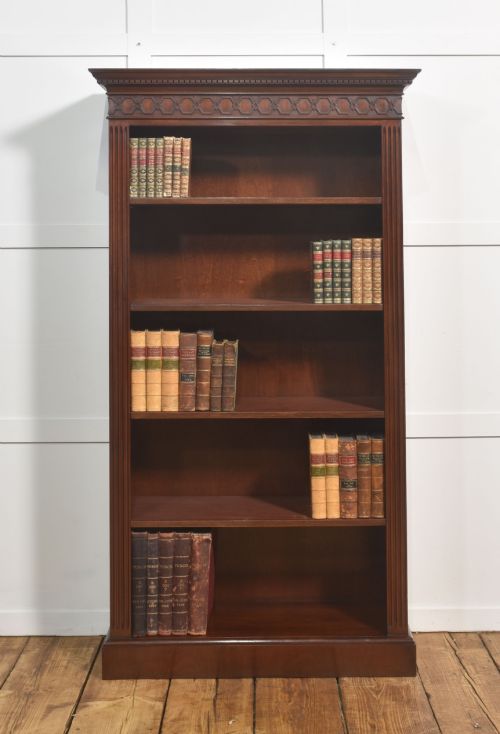
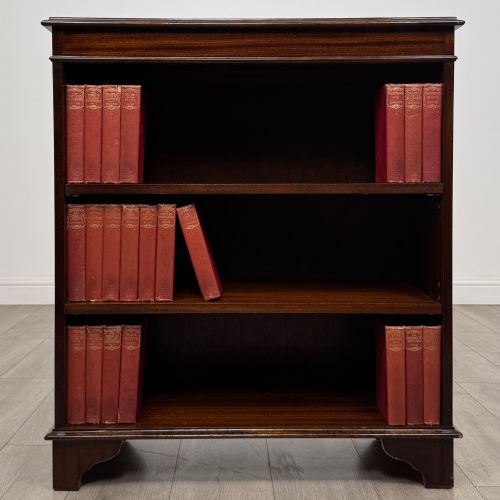
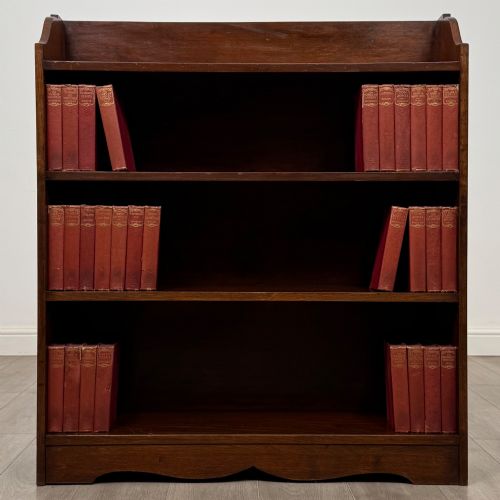
An edwardian mahogany open bookcase brings accessible shelving and refined timber grain to a room.
Edwardian Mahogany Open Bookcase
An edwardian mahogany open bookcase is a domestic storage piece designed for easy access to volumes without glass doors or enclosed cabinets. The version most commonly met on this page dates from the early twentieth century or the late nineteenth century, reflecting the prevailing domestic tastes of the period.
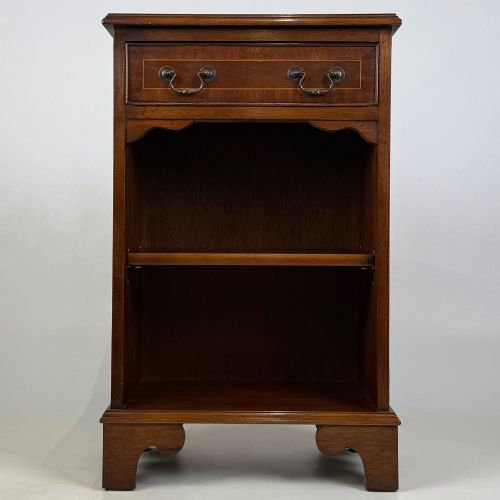
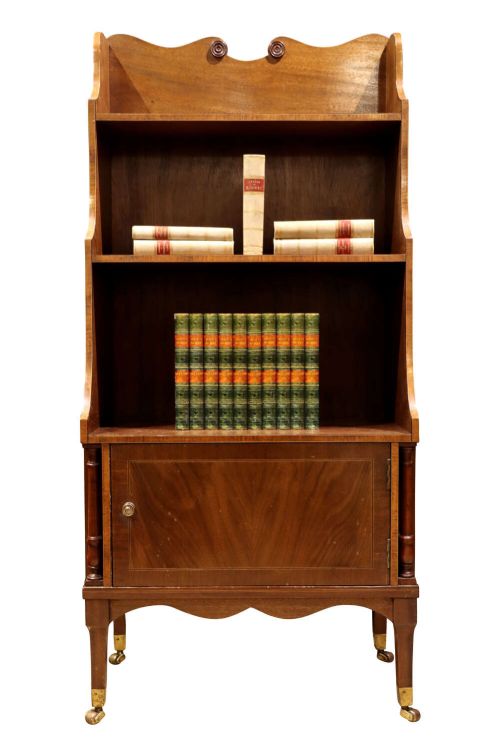
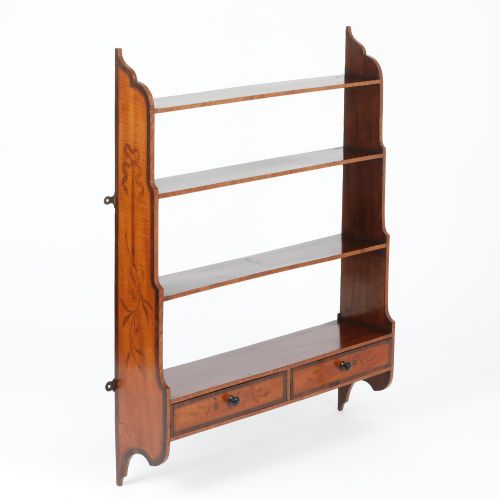
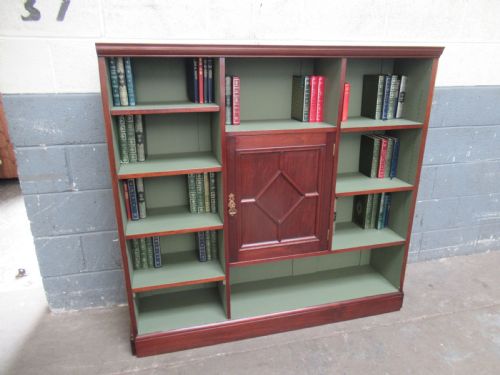
These pieces range from compact wall-hanging shelves and narrow freestanding units to large breakfront forms and graduated waterfall designs. Many examples incorporate adjustable shelves, brass castors, or single drawers beneath the main tier to maximise daily utility.
Makers often drew upon earlier design vocabularies such as Sheraton Revival and Arts and Crafts, applying subtle stringing or contrasting wood veneers to the primary timber framework. They provide a practical architectural presence in a sitting room, study, or hallway.
What Varies in Quality
The distinction between standard utility furniture and superior workshop output rests in the crispness of the timber selection and the precision of the joinery. Finer pieces employ symmetrical flame mahogany veneers and carefully matched satinwood stringing rather than plain painted lines.
Proportion and structural integrity also dictate distinction, where balanced proportions, substantial plinths, and well-integrated drawer construction elevate a piece. The presence of documented workshop attribution or original brass fittings further separates exceptional examples from ordinary domestic items.
Listings feature mahogany, satinwood, oak, and brass alongside flame mahogany veneer and fabric components.
Waring and Gillows·Lamb of Manchester·Goodhall Lamb and Heighway·Collinson and Lock London
The Edwardian Mahogany Open Bookcase Glossary
- Breakfront
- A piece of furniture where the central section projects forward from the flanking wings. This architectural arrangement creates depth and shadow in larger bookcases.
- Waterfall bookcase
- A set of open shelves that steps back progressively from bottom to top in a cascading profile. This form appeared frequently in lighter drawing-room furniture.
- Satinwood
- A pale, lustrous timber utilised for contrasting stringing, banding, and marquetry details. It provides a bright visual counterpoint to darker mahogany surfaces.
- Stringing
- A narrow strip of contrasting wood inlaid flush into the surface to form decorative borders. Cabinet makers used this technique to outline shelves and drawer fronts.
- Adjustable shelves
- Movable internal ledges supported by vertical racks or metal pins. This system allows the owner to alter shelf heights for varying book sizes.
Edwardian Mahogany Open Bookcase: Frequently Asked Questions
Where were these bookcases placed?
These pieces suited principal rooms such as libraries, drawing rooms, and studies where easy access to frequently read volumes mattered.
Smaller wall-hanging versions and narrow freestanding units also appeared in bedrooms and hallways to utilise compact wall spaces.
Are the shelves adjustable?
Many examples feature adjustable shelving systems that allow the owner to alter the internal spacing for different book heights.
Fixed shelves also appear in smaller wall units and specific cabinet formats where structural rigidity takes priority.
What timber was used?
Mahogany served as the primary structural and visual wood, chosen for its rich colour and stable grain.
Secondary timbers like oak, satinwood, and various pine veneers supplemented the construction for drawer linings and internal framing.
How do I spot Sheraton Revival?
Sheraton Revival pieces display classical neoclassical motifs, symmetrical proportions, and delicate inlay work inspired by eighteenth-century designs.
They often incorporate satinwood banding, tapered legs, and refined stringing patterns on the mahogany surfaces.