
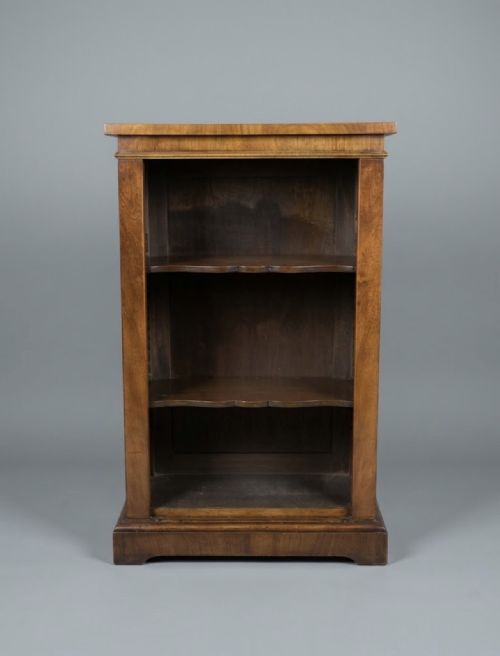
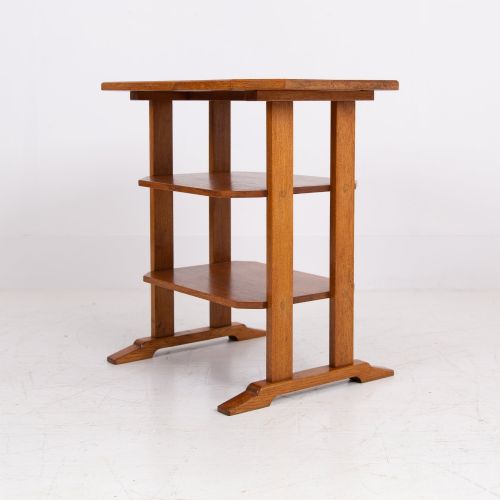
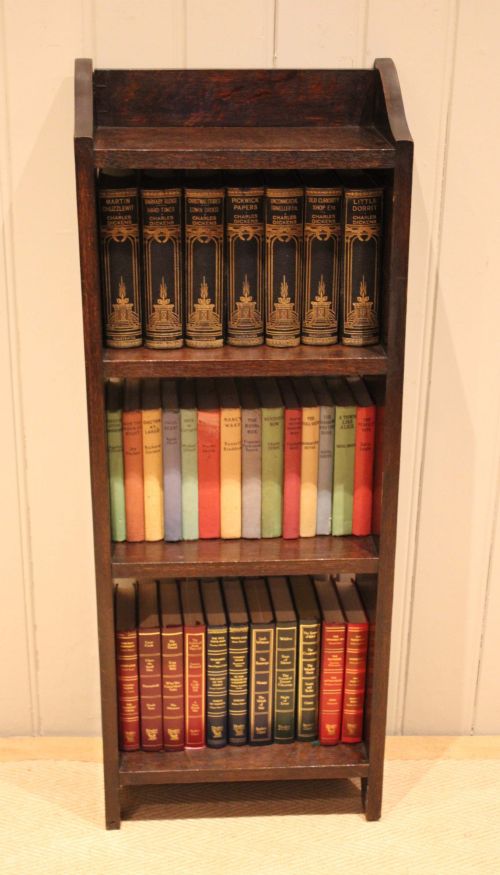
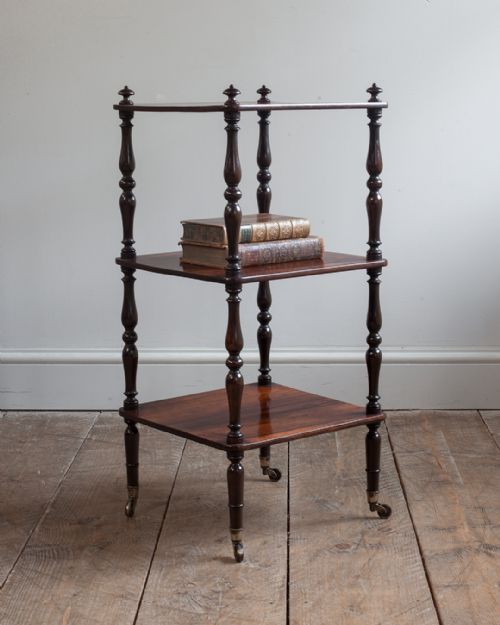

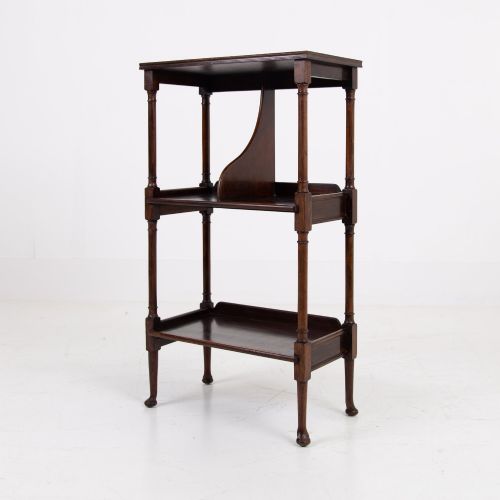
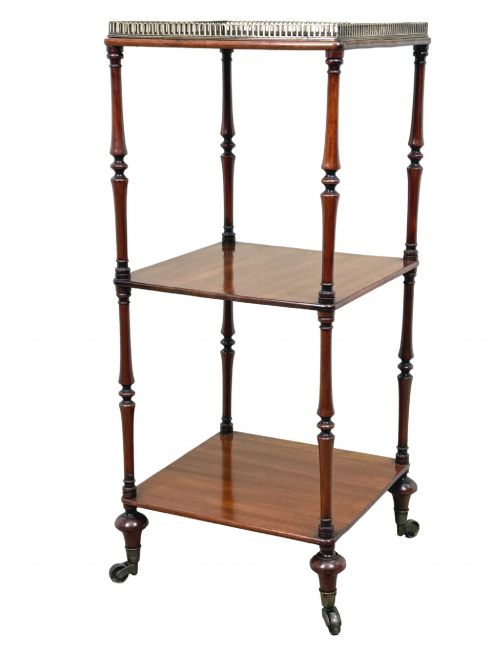
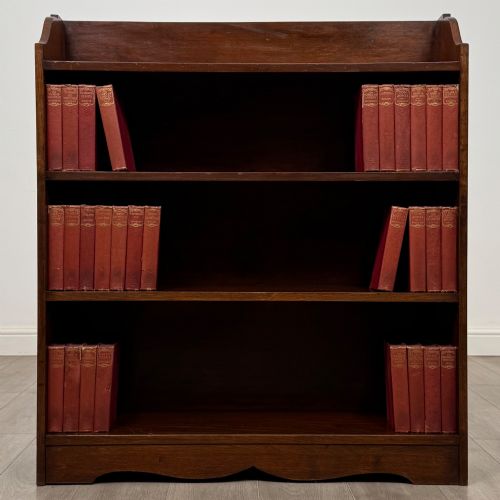
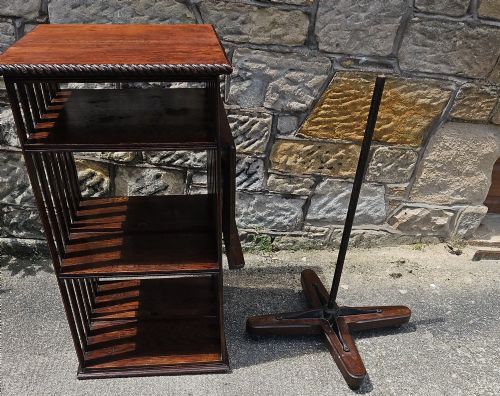


Three Tier Book Stand
A three tier book stand offers tiered open storage in mahogany, oak or rosewood, combining functional practicality with period character.
Three Tier Book Stand
When you search for a three tier book stand, you encounter pieces that overlap with whatnots, etageres, and open bookcases. These items appear in materials such as mahogany, oak, walnut, rosewood, and birdseye maple, reflecting forms made across the eighteenth, nineteenth, and early twentieth centuries.
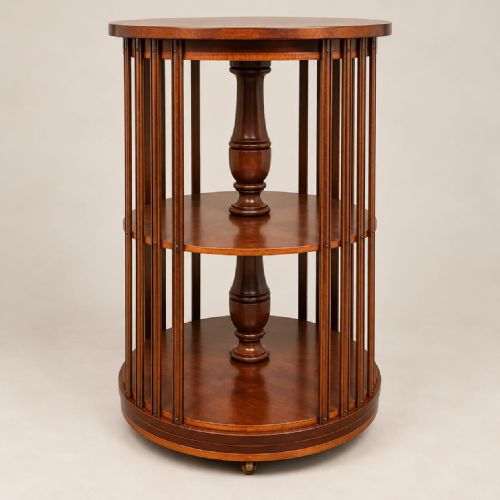
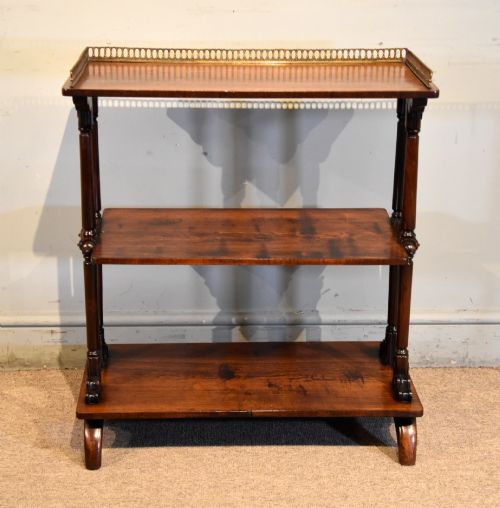
The pieces on this page span styles from Georgian, Regency, and William IV to Victorian, Edwardian, and Arts and Crafts. You will find stationary shelf units alongside revolving book tables and portable designs, serving roles from bedside tables to standing bookcases.
How they were made
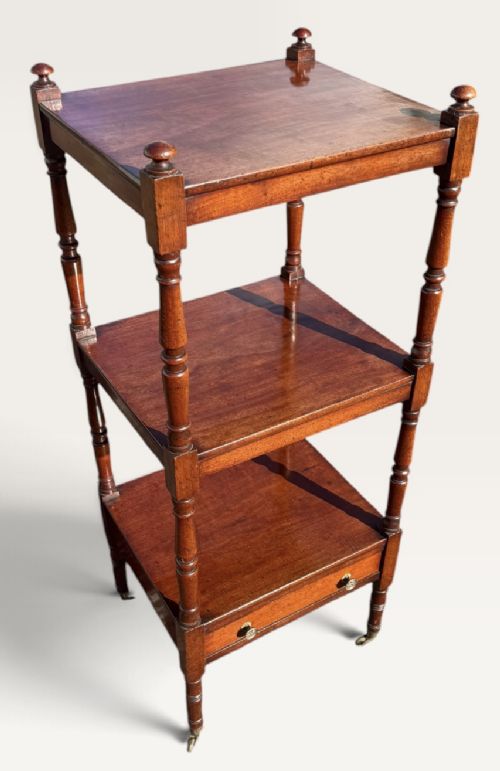
Cabinet makers constructed these stands using timbers like solid oak, mahogany, and walnut, often accentuating the grain with rosewood or birdseye maple veneers. Structural stability relies on turned or square uprights supporting graduated or uniform tiers, sometimes reinforced with brass or cast iron fittings.
Joinery techniques ranged from traditional dovetails and mortise and tenon joints to the simpler assembly methods seen in early twentieth century production. Surface finishes were typically polished to highlight the natural colour and texture of the wood.
Listings feature woods including mahogany, oak, walnut, rosewood, and birdseye maple, spanning the Georgian, Regency, Victorian, and Edwardian periods.
What varies in quality
Quality in these pieces is dictated by the selection of timber, the sophistication of the joinery, and the harmony of the proportions. Finer examples display carefully chosen wood grains, such as figured mahogany or birdseye maple, combined with robust framing that prevents the tiers from sagging under weight.
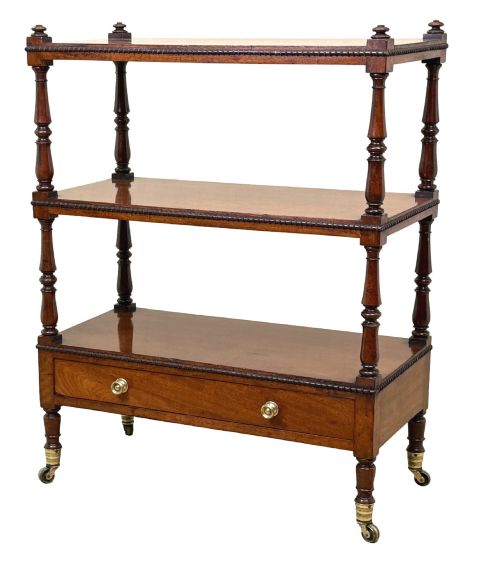
The presence of secondary details like brass castors, subtle turned supports, or sophisticated edge mouldings distinguishes workshop-built pieces from more utilitarian factory items. Original surfaces and honest patination further elevate a piece above later adaptations.
Gillows
The Three Tier Book Stand Glossary
- Whatnot
- An open set of shelves used for displaying or storing books and small objects, developed in the eighteenth century. These pieces typically feature multiple tiers supported by slender upright posts.
- Etagere
- A piece of furniture consisting of a set of open shelves for displaying ornaments or books. The term often overlaps with whatnot in nineteenth-century cataloguing.
- Revolving bookcase
- A freestanding book stand designed to turn on a central spindle or pivot base. This allows easy access to volumes from a seated position.
- Birdseye maple
- A figure in maple wood that resembles tiny swirling eyes, highly prized for cabinet making. It creates a distinctive, mottled surface pattern.
- Regency revival
- A style of furniture produced around the late nineteenth and early twentieth centuries that reinterprets the classical forms of the Regency period.
Three Tier Book Stand: Frequently Asked Questions
How do I identify the period of a stand?
Dating a stand involves examining the timber species, construction methods, and stylistic details present in the design. Earlier pieces often display dense hardwoods like mahogany or rosewood with hand-cut joinery, while Edwardian and later examples frequently utilise oak and more standardised assembly.
Comparing the turned supports, edge mouldings, and overall proportions to established stylistic periods helps narrow down the decade of manufacture.
Where can I use a book stand?
These stands suit numerous living spaces, functioning effectively as bedside tables, small side tables, or freestanding corner shelving units. Their open structure makes them ideal for holding current reading material or displaying decorative objects.
Revolving versions work particularly well beside armchairs or desks where quick access to multiple volumes is useful.
Are revolving book stands stable?
Revolving book stands rely on a secure central pivot mechanism and a weighted base to maintain balance while turning. Well-made examples distribute the weight evenly across the platform so the whole unit rotates smoothly without wobbling.
Checking the mechanism ensures the rotation remains balanced even when the shelves are fully loaded with books.