



Rotating Side Table
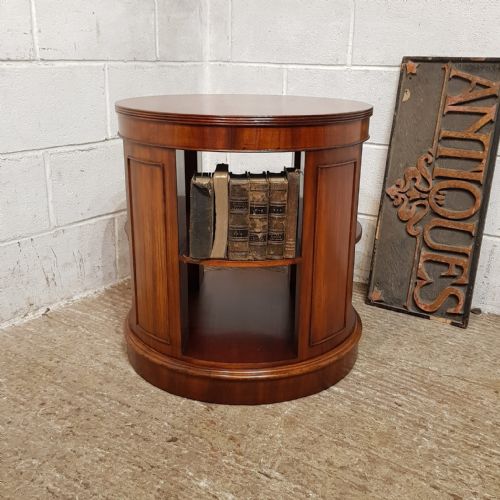
These rotating side table designs, spanning revolving bookcases to dumb waiters, offer ingenious multi-tiered surface space that turns smoothly on hidden pivots.
Rotating Side Table
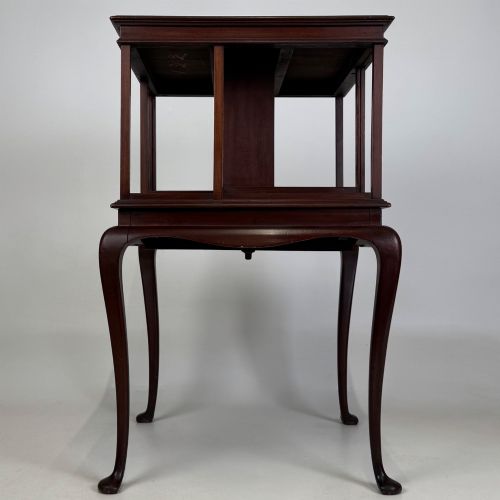
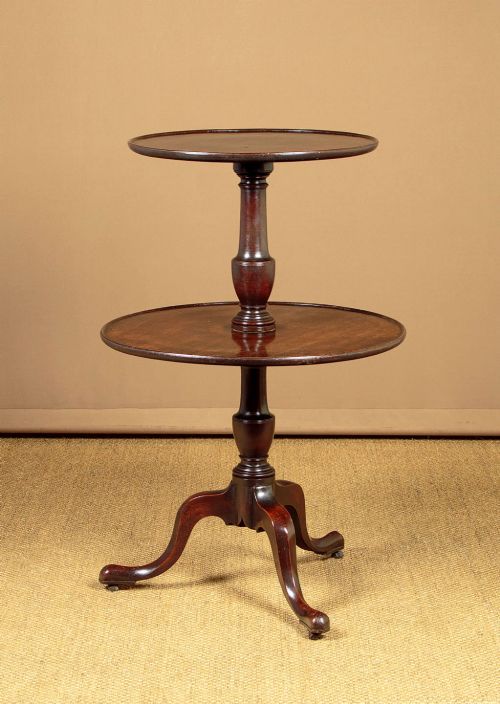
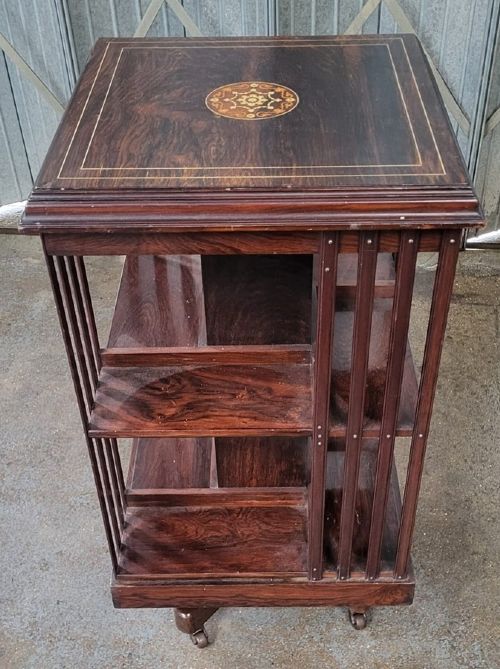
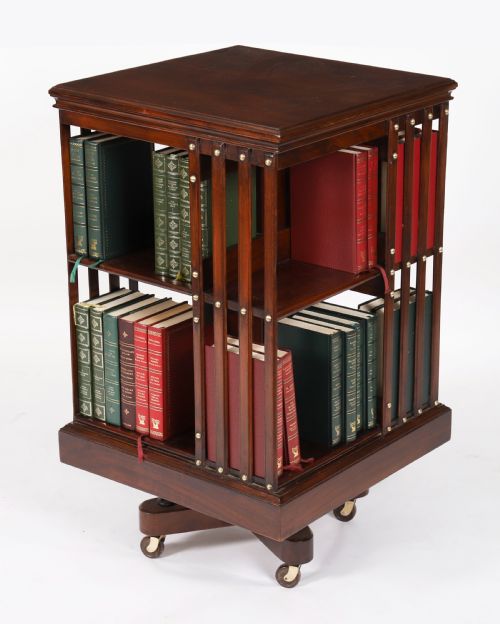
When you search for a rotating side table, you encounter practical revolving bookcases and tiered serving stands designed for easy access from any angle. The selection ranges widely across periods, encompassing Georgian dumb waiters, Victorian wine tables, and Edwardian revolving bookcases.
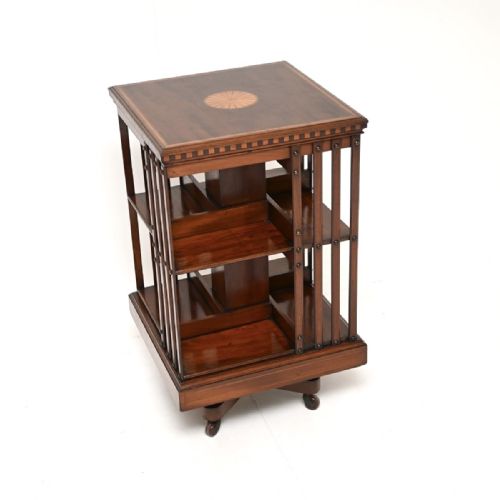
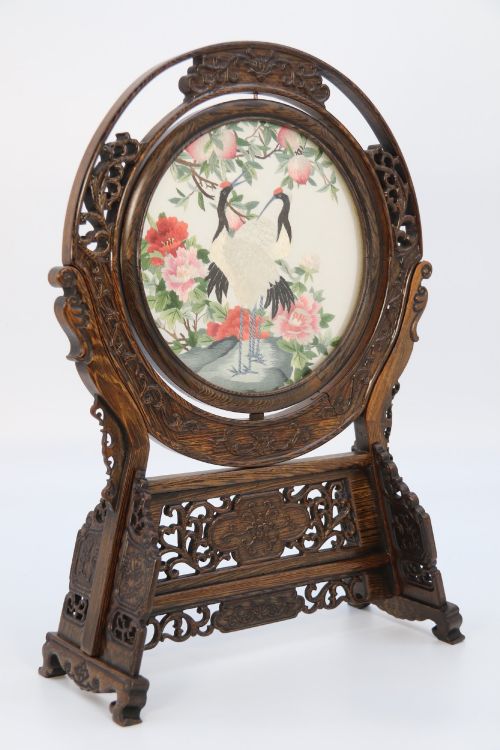
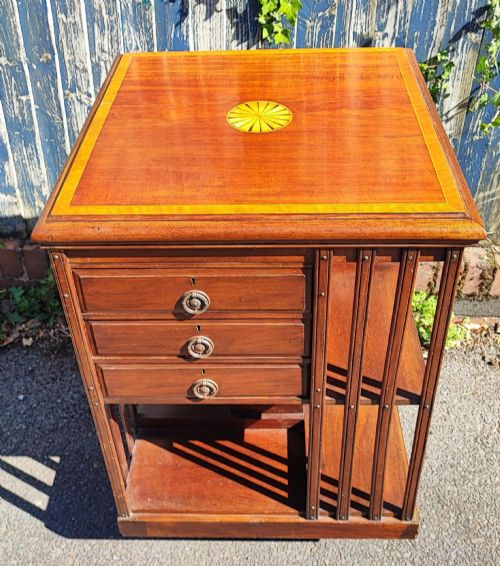
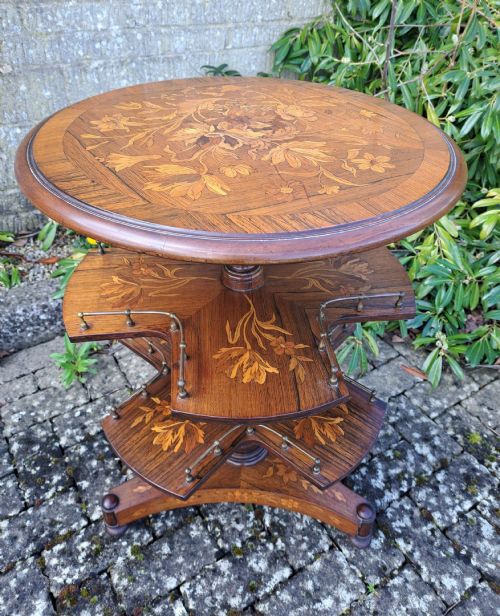
Edwardian mahogany examples dominate the current options, frequently featuring inlaid boxwood details and Sheraton Revival influences. Alongside these standard bookcase forms appear unusual variations like Chinese silk embroidery on rotating hardwood stands and Dutch floral marquetry library tables.
Materials and construction methods
Makers utilised dense timbers like mahogany, walnut, rosewood, and satinwood to build these rotating pieces, often embellishing the surfaces with boxwood inlay and intricate marquetry. Brass components frequently support the internal rotating mechanisms and provide durable mounts for tiers.
Specialised joinery allows the upper sections to spin independently on sturdy central axes while maintaining structural stability. Silk embroidery panels integrated into hardwood frames demonstrate the incorporation of delicate textile arts into freestanding rotating displays.
Materials across these listings include mahogany, walnut, rosewood, satinwood, brass, iron, and silk.
Factors of construction and design
The smoothness and silence of the turning mechanism distinguish superior examples from ordinary ones, reflecting precision in internal engineering. Higher quality pieces display refined timber selections, such as figured Cuban mahogany and carefully matched veneers.
Detailing on the inlay work and the crispness of carved mouldings further separate standard production items from finer craftsmanship. The integration of secondary materials like marble tops or detailed brass fittings indicates a higher tier of manufacture.
Maple & Co
The Rotating Side Table Glossary
- Dumb Waiter
- A multi-tiered serving table with rotating or stationary shelves designed to hold dishes or books without servant assistance. These tiered stands date back to the Georgian era.
- Marquetry
- Decorative veneer applied to furniture in patterns using different woods, metals, or other materials. Dutch floral versions frequently appear on library tables.
- Sheraton Revival
- A late nineteenth and early twentieth-century design style inspired by the furniture of Thomas Sheraton. This style often manifests in Edwardian inlaid mahogany pieces.
- Revolving Bookcase
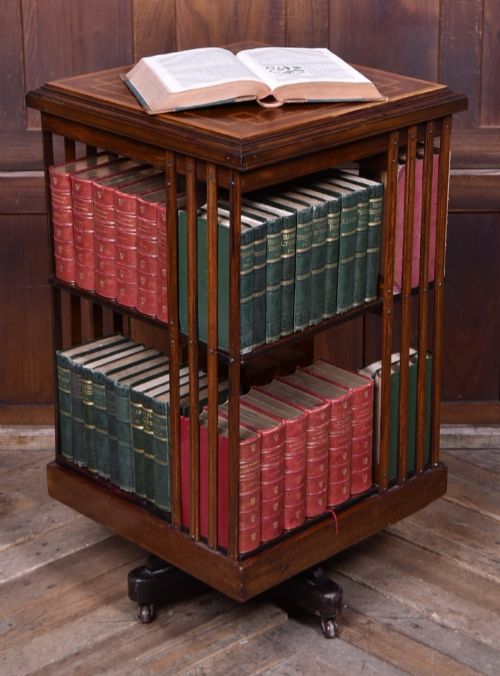
- A low, freestanding bookcase built on a rotating pivot to permit access to books from all sides. They appear frequently in Edwardian formats.
Rotating Side Table: Frequently Asked Questions
What periods do these tables represent?
The pieces span multiple eras, with significant representation from the Edwardian period and earlier Georgian and Victorian times. Styles range from classical Georgian dumb waiters to Edwardian Sheraton Revival bookcases.
Craftsmen across these periods utilised traditional cabinet-making woods like mahogany, walnut, and satinwood, occasionally incorporating exotic marquetry or brass details.
How do revolving bookcases function?
These pieces feature an internal pivot mechanism that allows the upper bookcase or display structure to spin smoothly in either direction. This design enables users to reach books or objects from a seated position without moving the entire piece.
Most versions sit on low cruciform bases fitted with small castors to assist stability during rotation.
Where were dumb waiters used?
Georgian and eighteenth-century dining rooms utilised dumb waiters to hold extra plates, glassware, and dishes near the table. The rotating tiers allowed diners to help themselves during meals.
Over time, similar tiered rotating formats transitioned into libraries and drawing rooms as convenient book and occasional tables.
How do I care for inlaid wood?
Maintain timber surfaces by keeping them away from direct heat sources and strong sunlight to prevent veneer drying or fading. Regular dusting with a soft, dry cloth preserves the polished finish.
Occasional application of appropriate furniture wax helps protect both the primary woods like mahogany or rosewood and delicate boxwood inlays.