
Brown Mahogany Book Stand
These brown mahogany book stand examples combine timber and function, offering a steady surface for volumes across various historic periods.
Brown Mahogany Book Stand
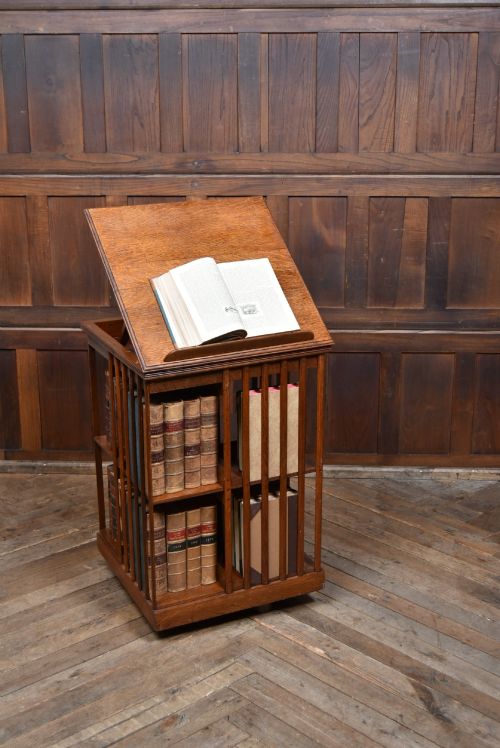
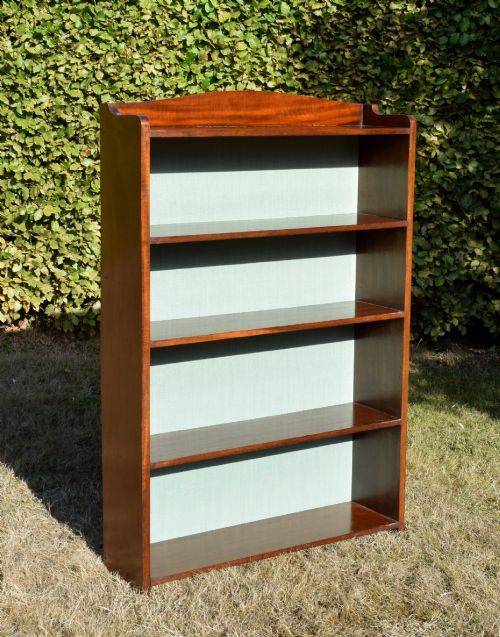
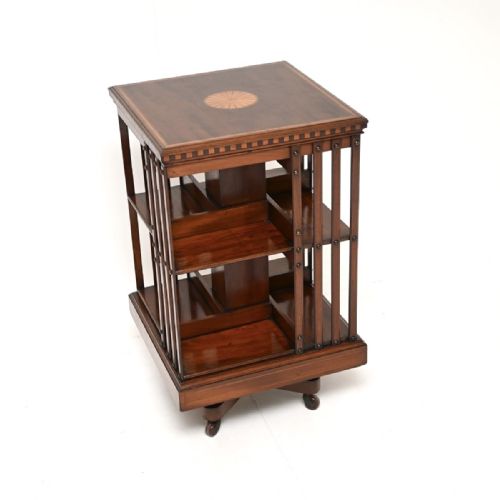
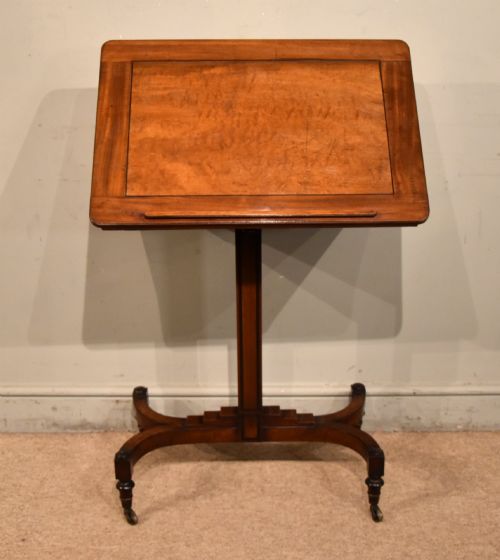
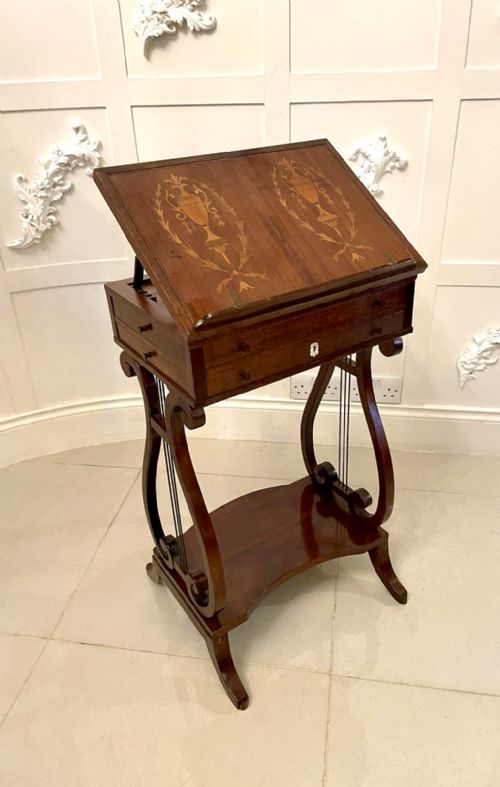
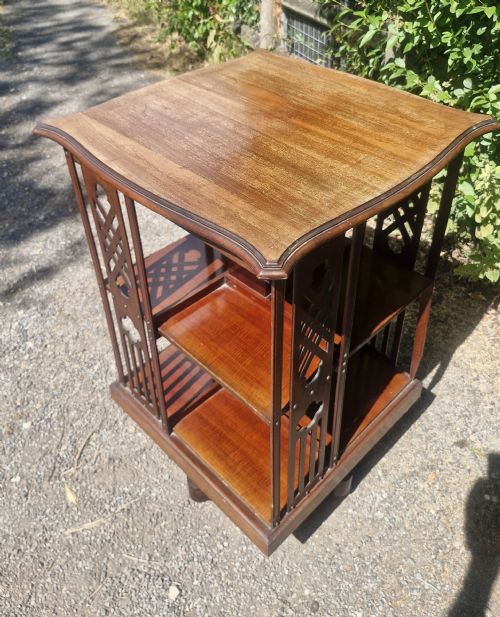
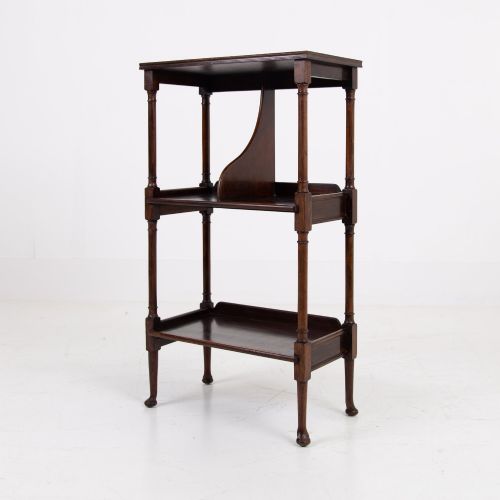
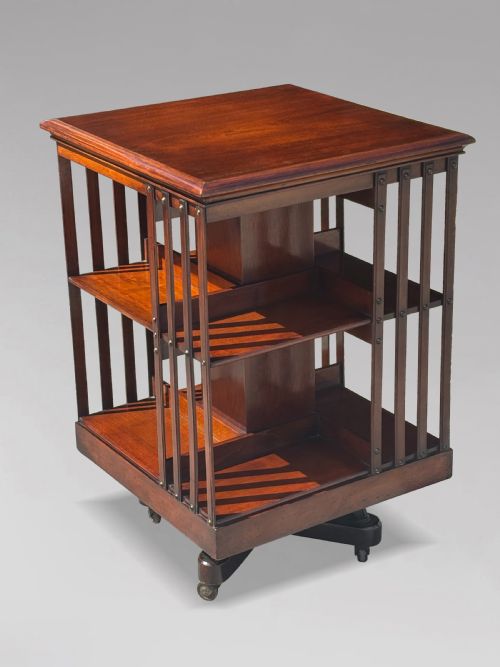
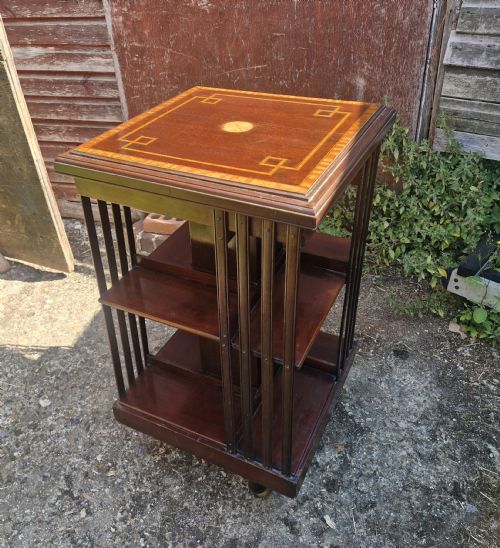
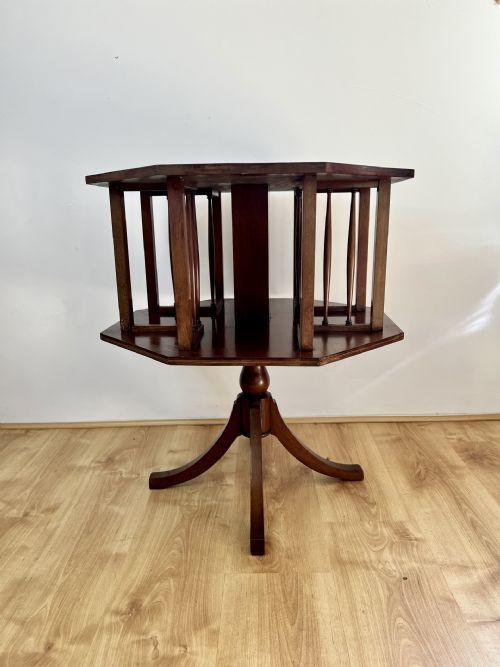
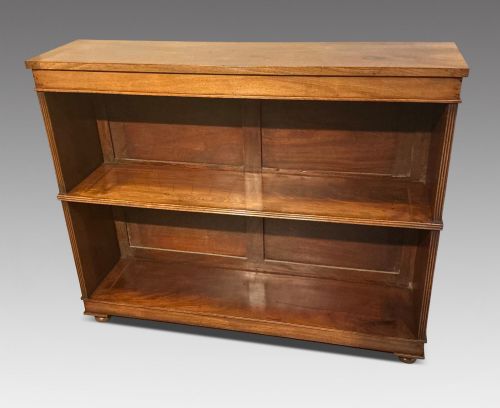
A brown mahogany book stand encompasses practical pieces designed to hold volumes, music, or papers within domestic spaces. Buyers searching for a brown mahogany book stand encounter forms ranging from revolving bookcases and reading tables to stationary bookshelves and tabletop stands.
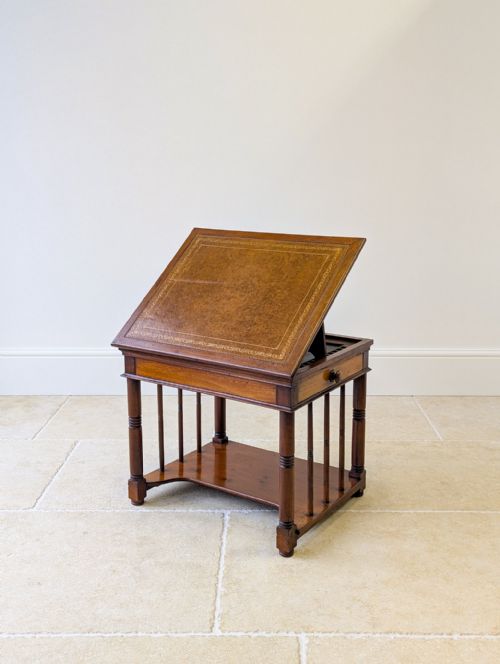
Makers utilised different configurations to suit libraries, studies, and drawing rooms, including adjustable reading stands and compact revolving models. Each variation serves the fundamental purpose of organising and displaying books within reach of a chair or desk.
Materials and construction methods
Makers relied on mahogany as the principal timber, frequently enhanced with satinwood inlay, brass fittings, and glass panels. The dense grain of the wood provided the necessary stability for heavy volumes and rotating mechanisms.
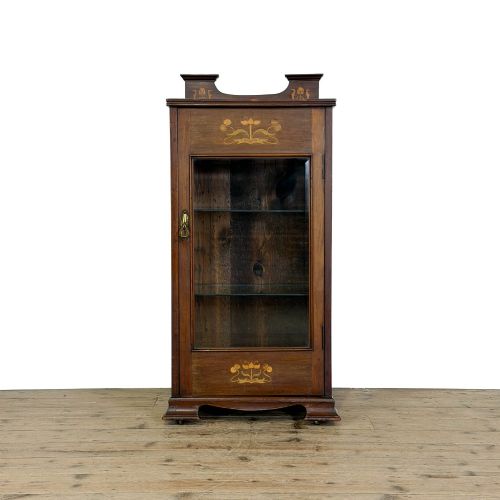
Metal components such as brass castors and adjustable ratchets appeared on reading tables and revolving bookcases to improve mobility and function. Artisans incorporated wood inlay and flame mahogany veneers to decorate visible surfaces on Edwardian and Victorian items.
Early reading stands occasionally feature patent mechanisms that let studious owners adjust book heights with the pull of a single brass lever.
Assessing quality in construction
Superior examples demonstrate refined cabinetmaking through tight joinery, carefully selected flame mahogany veneers, and intact mechanical parts like smooth-turning revolving platforms. The crispness of the wood inlay and the weight of the brass mounts distinguish finer pieces from standard utilitarian items.
Proportion and timber selection dictate the standing of a piece within its period, with well-figured grain and balanced dimensions marking the better examples. Patina accumulated through use also plays a part, showing how the timber has aged over the centuries.
Shapland & Petter·Carter·Betjemanns
The Brown Mahogany Book Stand Glossary
- Revolving bookcase
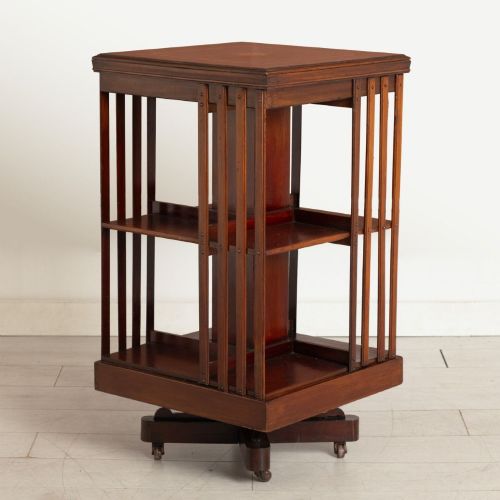
- A freestanding bookcase designed to rotate on a central spindle for easy access to books from any angle. These models are frequently square and sit upon low bases with castors.
- Reading table
- A specialised table featuring an adjustable surface or ledge to hold books, music, or folios at a comfortable angle. They often include drop leaves or sliding mechanisms.
- Waterfall bookcase
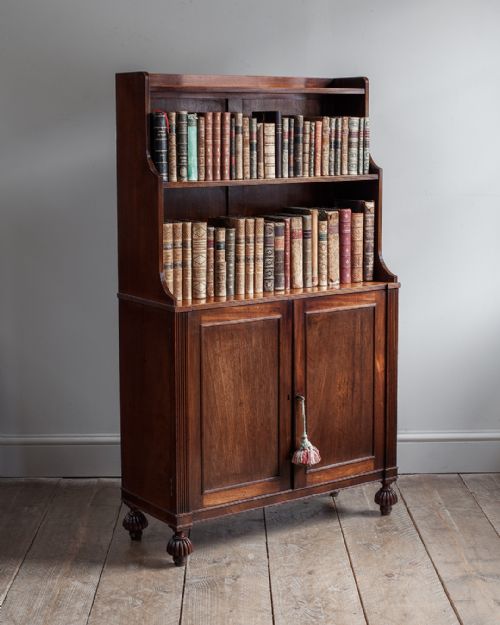
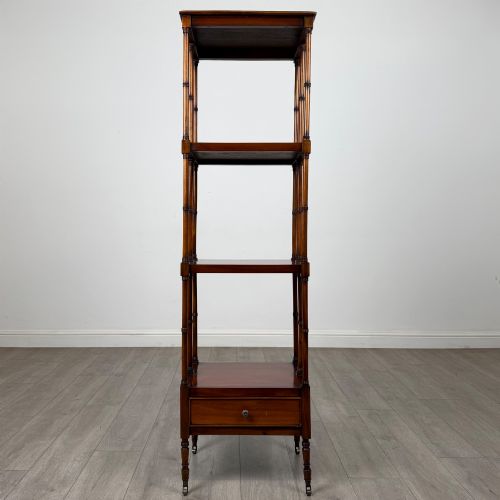
- A set of open shelves where each tier steps back progressively from the one below, creating a silhouette resembling cascading water. This form dates primarily from the Regency and Victorian periods.
- Inlay
- A decorative technique where contrasting woods, such as satinwood, are inserted into recesses cut into the mahogany surface. This method creates geometric or floral patterns.
- Brass castor
- A small swivelling wheel attached to the feet of heavy furniture to aid movement across carpets and floorboards. They appear frequently on Victorian and Edwardian revolving bookcases.
Brown Mahogany Book Stand: Frequently Asked Questions
How do I use a revolving bookcase?
Place it beside a favourite chair or in the centre of a room where multiple people need access to volumes. The rotating mechanism allows you to browse an entire collection without moving your seat.
Ensure the weight of the books is distributed evenly across the tiers to keep the spindle turning smoothly and prevent undue wear on the base.
What is a reading table used for?
These tables supported heavy folios, Bibles, or music sheets at an adjustable angle for comfortable study. The ratcheted mechanism allowed the reader to tilt the surface as needed.
Today, they function well as side tables or specialised desk spaces in studies and sitting rooms.
How do I care for mahogany furniture?
Keep mahogany pieces away from direct sunlight and strong heat sources to prevent the timber and veneers from drying out. Dust regularly with a dry cloth and apply a quality wax sparingly when the surface loses its lustre.
Avoid using silicone-based polishes, as they can penetrate the historic finish and damage the patina.