


Edwardian Taxidermy Display
Edwardian taxidermy display pieces bring natural history inside through preserved specimens housed beneath glass domes or within wooden cases.
Edwardian Taxidermy Display
When someone searches for an edwardian taxidermy display, they encounter preserved specimens arranged within protective enclosures that showcase natural history. These objects reflect the period fascination with ornithology and aquatic life, presented for interior study and decoration.
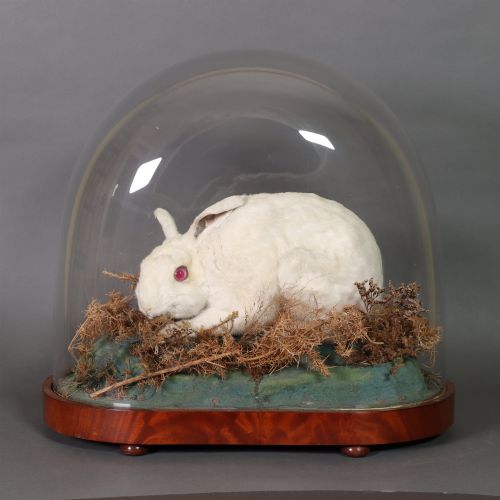
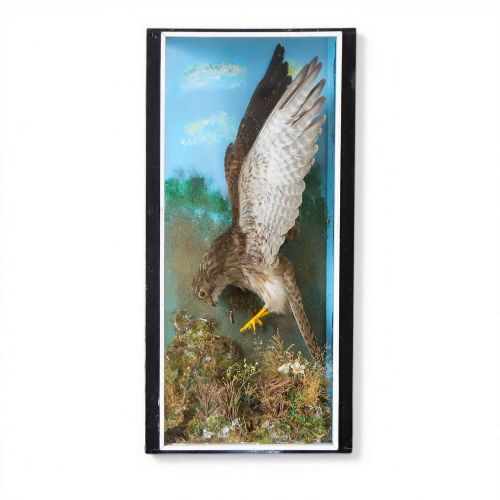
The selections available here range from tall glass domes and small showcase enclosures to framed wall art and enclosed wooden dioramas. Edwardian examples sit alongside Victorian and early twentieth-century pieces, spanning domestic birds, fish, and mammals.
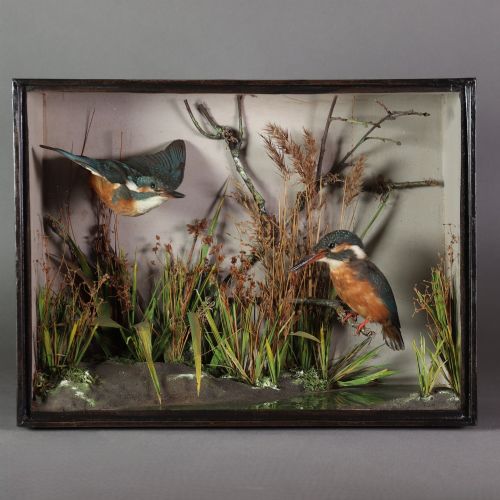
The most common formats meet the viewer in glass domes or timber cases, housing specimens such as kingfishers, jays, pheasants, and ducks. Wall displays and cabinets also appear, offering alternative ways to integrate preserved fauna into domestic spaces.
How they were made
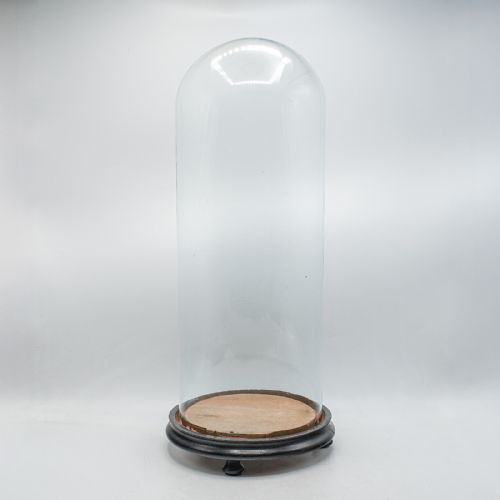
Makers constructed these displays using blown glass domes mounted upon bases of wood, beech, oak, or ebonised timber. These transparent covers protected fragile preserved specimens from dust while permitting all-round viewing of the taxidermy inside.
Enclosed wooden cases provided another primary housing method, often featuring painted backdrops or naturalistic snow scenes to contextualise the birds and animals. Taxidermists mounted specimens over wire and plaster armatures before securing them within these glazed cabinets.
The archive and current listings span multiple eras, including Victorian, Edwardian, and the early twentieth century.
What varies in quality
The standard of an edwardian taxidermy display depends upon the realism of the taxidermist's mounting and the naturalism of the internal arrangement. Skilled practitioners captured lifelike postures and expressions, whereas lesser work resulted in rigid or disproportionate forms.
The quality of the housing enclosure also distinguishes pieces, from plain timber frames to substantial glass domes with polished wooden bases. Well-preserved painted backgrounds and intact glass integrity elevate the overall execution of the display.
James Gardner of London·T. E. Gunn·Hutchings of Aberystwyth·James Jones of London·W.F. Homer London·J Cooper & Sons
The Edwardian Taxidermy Display Glossary
- Cloche
- A bell-shaped glass cover used to protect and display delicate specimens. These clear covers sit flush upon wooden bases.
- Diorama
- A three-dimensional scene enclosing taxidermy animals against a painted backdrop. These settings often recreate natural habitats.
- Ebonised wood
- Timber treated to imitate the dark appearance of ebony. This finish provides a formal contrast to the specimens inside.
- Specimen
- An individual animal, bird, or fish prepared by a taxidermist for study. These forms constitute the focal point of every display.
Edwardian Taxidermy Display: Frequently Asked Questions
Where should I place a taxidermy display?
Position your display away from direct sunlight and strong heat sources to prevent fading of feathers and fur. Stable indoor temperatures help preserve the integrity of the taxidermy.
Select a sturdy surface, such as a sideboard or cabinet, where the piece remains secure from accidental knocks. Adequate clearance allows safe viewing from multiple angles.
What is the difference between a dome and a case?
A dome consists of a blown glass bell covering a specimen mounted on a flat wooden base. This circular format permits 360-degree viewing of the interior subject.
A case is typically a rectangular wooden box with a glazed front and sometimes side panels. Cases frequently incorporate painted backgrounds, scenery, and multiple specimens.
How do I identify Edwardian taxidermy?
Edwardian pieces date from the early twentieth century, showing construction methods and aesthetic preferences characteristic of that era. Labels beneath bases or maker signatures on cases often confirm specific dates.
Stylistic elements, such as specific timber types and framing techniques, help distinguish Edwardian examples from Victorian precursors. Comparing the overall design against dated examples clarifies the period.