

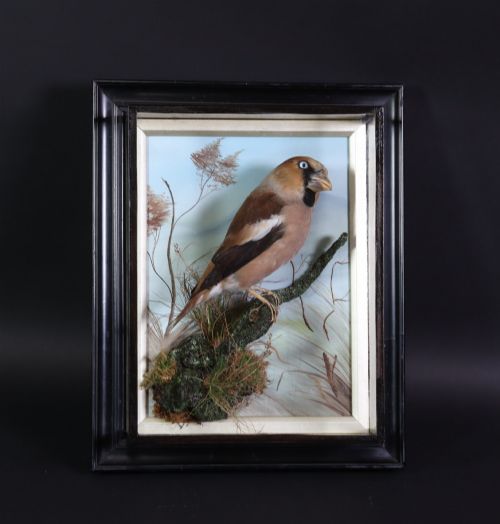
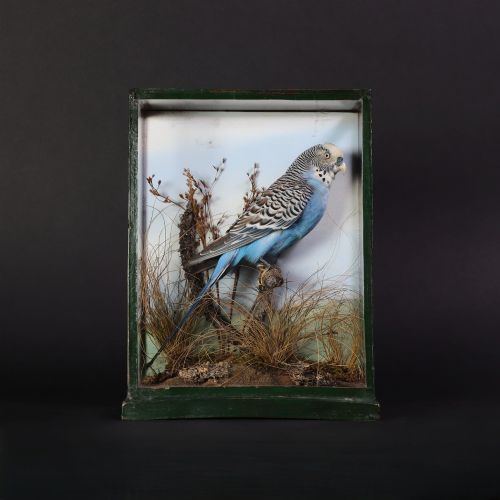
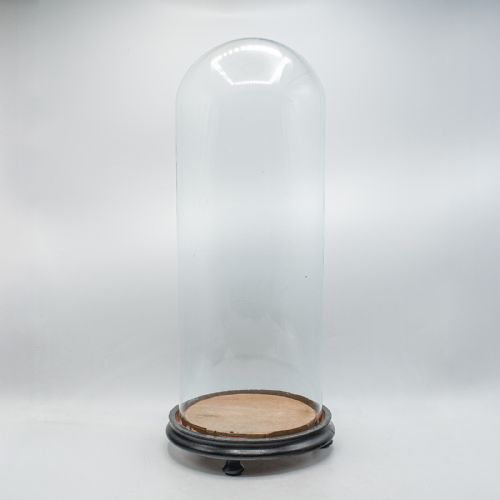
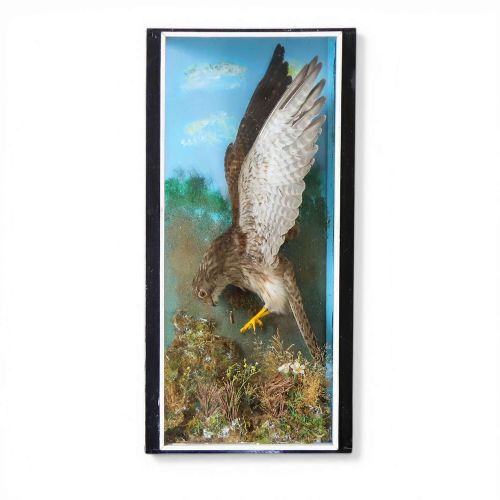
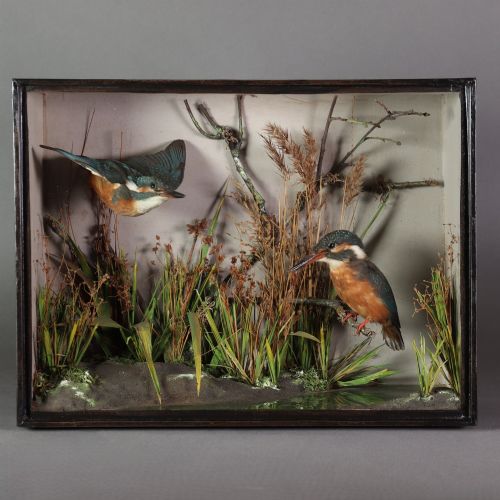


Edwardian Taxidermy Case
An edwardian taxidermy case brings preserved birds, fish and mammals into domestic rooms inside glazed wooden frames and domes.
Edwardian Taxidermy Case
When you search for an edwardian taxidermy case, you encounter enclosed natural history specimens designed to protect delicate mounts from dust and damage. These items range from wall-mounted cabinets and painted wooden dioramas to freestanding glass domes placed on timber bases.
The specimens inside include single birds like kestrel, jackdaw and pheasant alongside pairs of kingfishers, jays, waxwings and waterfowl. Fish such as pike, roach and carp appear alongside mammals, while display cases also house framed peacock feathers and moth collections.
How they were made
Makers constructed these enclosures using timber frames, ebonised wood, oak and mahogany to support blown glass panes and domes. Interiors often incorporate painted backgrounds, paper details and naturalistic settings like snow scenes to mimic the habitat of the preserved specimen.
Professional taxidermists mounted birds, fish and mammals using wire and stuffing techniques before arranging them behind glass. Cabinets and wall cases utilised tight seals to keep out moisture and preserve the feathers, scales and fur.
Edwardian Taxidermy Case Retail Price Guide 2026
Typical asking prices for edwardian taxidermy case among the pieces listed under this phrase on Sellingantiques today, from the lower quarter to the upper quarter. They describe what is for sale here now, not the wider market.
The inventory records kingfishers, jays, waxwings, pheasants, pike, carp and otters preserved by nineteenth and twentieth-century practitioners.
What varies in quality
The skill of the taxidermist dictates the lifelike posture and anatomical accuracy of the bird, fish or mammal inside the case. Early practitioners achieved convincing expressions and natural plumage arrangements that lesser mounters failed to replicate.
The quality of the housing matches the specimen, with superior examples featuring heavy bent glass, solid mahogany or oak frames, and detailed painted backdrops rather than plain painted wood.
T. E. Gunn·S. King·Hutchings of Aberystwyth·James Jones of London·W.F. Homer London·J Cooper & Sons
The Edwardian Taxidermy Case Glossary
- Diorama
- A three-dimensional scene featuring taxidermy specimens set against a painted background inside a glazed case.
- Ebonised wood
- Timber treated with a dark finish to resemble ebony, frequently used for the bases and frames of display cases.
- Dome
- A blown glass cover shaped like a bell or tall cylinder, fitted to a timber base to protect a specimen.
- Taxidermy showcase
- An enclosed glass and wood cabinet built specifically to display preserved birds, fish or mammals.
Edwardian Taxidermy Case: Frequently Asked Questions
Where should I place a taxidermy case?
Position cases away from direct sunlight to prevent the plumage of birds and the colours of painted backgrounds from fading over time. Keep them distant from radiators and damp areas to protect the wood and taxidermy materials.
Display cabinets and wall units suit studies, living rooms and hallways where stable indoor temperatures maintain the condition of the antique timber and glass.
How do I identify an Edwardian piece?
Look for construction methods, timber types and styles characteristic of the early twentieth century, alongside specific maker signatures where present. Many pieces combine oak or mahogany frames with naturalistic painted dioramas typical of this era.
Compare the specimen types and case designs with documented examples from the period. Archive records often show similar waterfowl, fish and songbird arrangements from the same decades.
Can I open the glass dome?
Most antique domes and display cases are secured or sealed to protect the interior environment from dust and humidity. Forcing open a sealed enclosure can crack old glass or damage the delicate timber base.
Leave historical seals intact to preserve the integrity of the diorama. Professional restorers handle internal cleaning if a specimen requires attention.