






Edwardian Cased Bird
These pieces of Edwardian cased bird taxidermy bring natural history indoors inside protective glass enclosures.
Edwardian Cased Bird
An edwardian cased bird is a preserved specimen mounted within a glass-fronted enclosure, often depicting individual birds or small groups in naturalistic settings. The examples appearing on this page span from the late Victorian period through the Edwardian era into the early twentieth century.
Forms range from single specimens like a white pheasant or shoveler duck to elaborate dioramas featuring pairs of kingfishers, waxwings, or jays. Some displays incorporate painted backgrounds and artificial snow scenes to recreate a woodland habitat.
How they were made
Taxidermists prepared specimens using preserved skins mounted over internal forms, arranging the feathers by hand to capture lifelike postures. These specimens were then placed inside wooden display cases fitted with glass panels to protect the delicate plumage from dust and moisture.
Enclosures frequently utilise timber frames, sometimes constructed from oak, paired with painted internal panels that depict appropriate scenery. Smaller items in the evidence combine sterling silver with enamel for desk accessories, though the primary cased taxidermy relies on wood, glass, and prepared bird specimens.
Edwardian Cased Bird Retail Price Guide 2026
Typical asking prices for edwardian cased bird among the pieces listed under this phrase on Sellingantiques today, from the lower quarter to the upper quarter. They describe what is for sale here now, not the wider market.
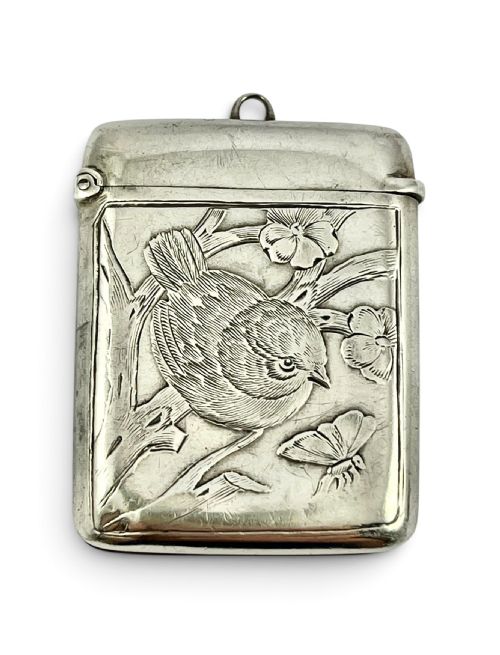
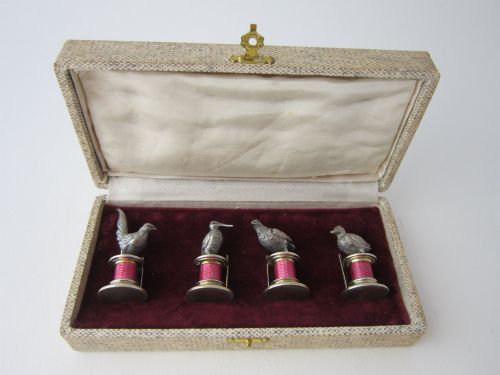
Listings feature taxidermy cases alongside silver menu holders and vesta boxes from the Edwardian period.
What varies in quality
The standard of an edwardian cased bird depends heavily on the skill of the taxidermist in rendering realistic anatomy and natural posture. Master practitioners created balanced compositions where the specimens interact with their environment rather than appearing stiff or awkwardly posed.
The construction of the enclosure also influences the overall quality, with well-joined timber frames and clean, original glass contributing to a better-preserved display. Signed work by known practitioners commands particular attention for its documented craftsmanship.
T. E. Gunn·W. F. Homer London
The Edwardian Cased Bird Glossary
- Taxidermy specimen
- The prepared skin and form of a bird mounted to resemble life. This forms the central visual component of every cased display.
- Diorama
- A three-dimensional scene featuring specimens set against a painted background. These often recreate seasonal habitats like snow scenes or riverbanks.
- Vesta case
- A small pocket box used for holding matches, frequently fashioned from sterling silver during the Edwardian period. Some examples incorporate bird motifs or enamel decoration.
- Menu holder
- A small desk accessory designed to display dining tables cards. The evidence shows silver examples shaped as grouse.
Edwardian Cased Bird: Frequently Asked Questions
What birds are usually found in these cases?
The selection includes British and exotic species such as kingfishers, jays, waxwings, and pheasants.
Many displays focus on waterfowl or woodland birds presented individually or in pairs.
How should I clean the glass?
Use a soft cloth and standard glass cleaner applied sparingly to the cloth rather than directly to the surface.
Take care near the wooden joints and old paper seals to prevent moisture damage.
Where should I place a glass case?
Position the enclosure away from direct sunlight and damp environments to protect the feathers and painted backgrounds.
Stable room temperatures help prevent the timber frame from warping over time.
How do I identify the period?
Look at the style of the wooden case, the materials used in construction, and any accompanying labels or maker signatures.
Victorian and Edwardian examples often feature specific framing techniques and hand-painted scenic backgrounds.