







Glass Cased Bird Mount
Glass cased bird mount specimens bring Victorian natural history indoors, offering preserved birds arranged in bespoke wooden and glass enclosures for careful study.
Glass Cased Bird Mount
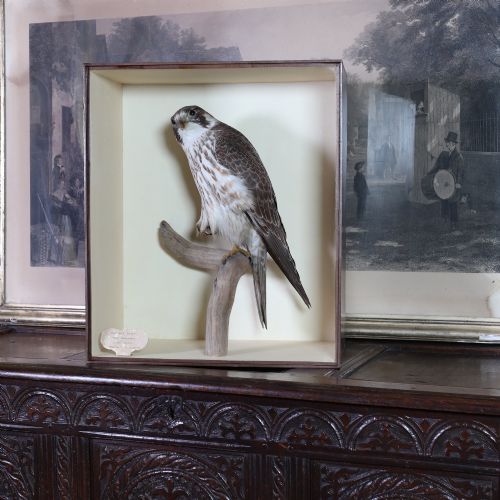
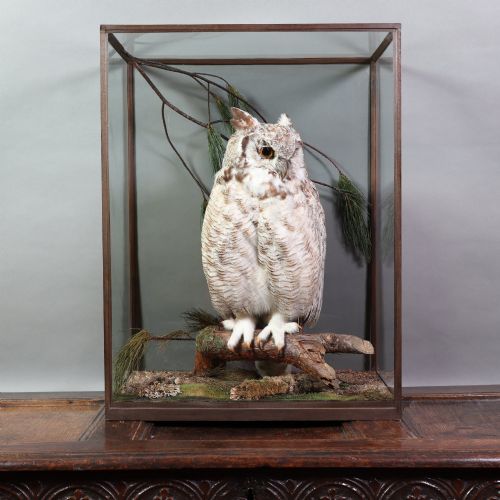
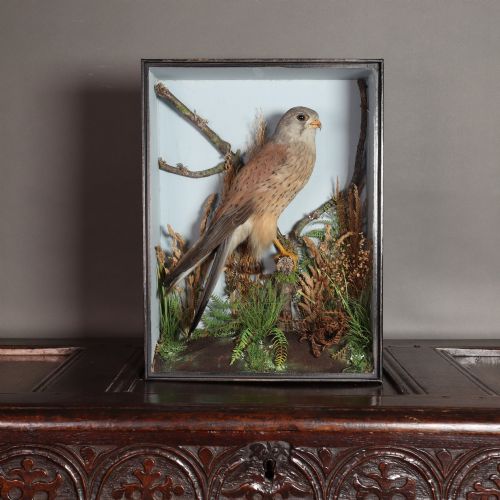
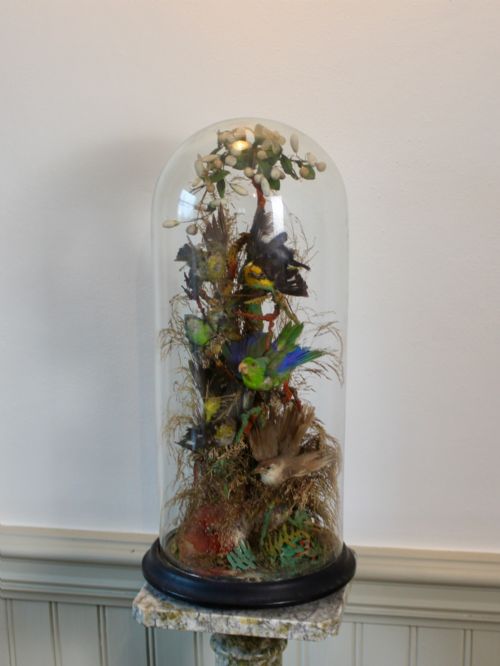
A glass cased bird mount represents the Victorian natural history tradition of preserving avian specimens inside protective glass enclosures. These items range from single specimens like owls and kestrels to complex dioramas containing multiple colourful birds from global regions.
Most examples found on this page date from the Victorian period through the early twentieth century, spanning decades such as the 1870s, 1890s, and 1930s. Buyers frequently encounter wooden display cases and glass domes housing mounted birds alongside preserved moss and dried vegetation.
The configurations vary from upright wooden wall cases to freestanding glass domes placed on wooden bases. Specimens include British birds like kingfishers and pheasants as well as exotic subjects such as parrots and New Guinea species.
Materials and construction techniques
Taxidermy specimens utilise preserved feathers, skins, and organic taxidermy material mounted over supportive internal armatures. Artisans arranged these birds within wooden cases and glass domes to protect the delicate plumage from dust and atmospheric damage.
Internal environments often incorporate painted backgrounds, paper elements, moss, and dried vegetation to simulate natural habitats such as snow scenes or woodland floors. Skilled mounting techniques ensured the birds retained lifelike postures within their confined glass boundaries.
Glass Cased Bird Mount Retail Price Guide 2026
Typical asking prices for glass cased bird mount among the pieces listed under this phrase on Sellingantiques today, from the lower quarter to the upper quarter. They describe what is for sale here now, not the wider market.
Listings on this site include Victorian, Edwardian, and early twentieth-century periods utilising glass, wood, feathers, and painted elements.
Factors determining the quality of specimens
Quality depends upon the taxidermist's skill in rendering a natural posture and anatomical proportion for each bird specimen. Prominent makers such as Rowland Ward Ltd, T. E. Gunn, and James Gardner achieved superior lifelike representations that elevate a piece above standard workshop production.
The complexity of the composition and the preservation state of both the feathers and the enclosing glass case dictate overall excellence. Well-constructed dioramas featuring multiple species or detailed painted backgrounds reflect higher craftsmanship than simple single-bird mounts.
Rowland Ward Ltd·T. E. Gunn·James Gardner
The Glass Cased Bird Mount Glossary
- Taxidermy specimen
- The preserved skin and feathers of an animal mounted over a form to imitate life. These form the primary focal point of any glass cased bird mount.
- Taxidermy dome
- A rounded glass cover set upon a wooden base designed to display and protect mounted birds. They offer a three-hundred-and-sixty-degree view of the enclosed composition.
- Diorama
- A three-dimensional scene depicting wildlife within a constructed artificial habitat. These frequently incorporate painted backdrops and dried vegetation.
- Taxidermy display case
- A wooden box with a glass front enclosing preserved birds and their naturalistic setting. This format protects the contents while allowing wall-hanging or shelf placement.
Glass Cased Bird Mount: Frequently Asked Questions
How do I clean a glass cased bird mount?
Wipe the exterior glass gently using a standard glass cleaner applied to a soft cloth rather than spraying directly onto the wood or joints. Avoid opening sealed cases, as interior dust should be managed by professionals to prevent disturbing the fragile feathers.
Keep the enclosure away from direct sunlight and excessive humidity to protect the delicate taxidermy specimen and paper elements inside.
Where should I place these in my home?
Position glass cased bird mounts on stable sideboards, tables, or dedicated shelving units away from heat sources and fluctuating temperatures. Stable placement ensures that heavy wooden cases or glass domes remain secure.
Ensure the display area receives indirect lighting to showcase the colourful plumage of species like kingfishers or parrots without fading the materials.
How can I tell the period of a case?
Examine the construction methods of the wooden frame and the clarity or thickness of the glass, as Victorian and Edwardian manufacturing techniques differ from later decades. Handwritten labels on the reverse or inside the case often record dates from the late nineteenth or early twentieth century.
Stylistic cues such as painted winter snow scenes or detailed moss arrangements also point towards specific eras like the 1880s or 1930s.
Are these items fragile?
The internal taxidermy specimens and dried vegetation are inherently delicate and vulnerable to rough handling or vibrations. The surrounding glass panes or domes also require careful management during any relocation.
Moving a piece demands proper support underneath the wooden base rather than lifting by the glazing or decorative trim.