

Edwardian Table Desk
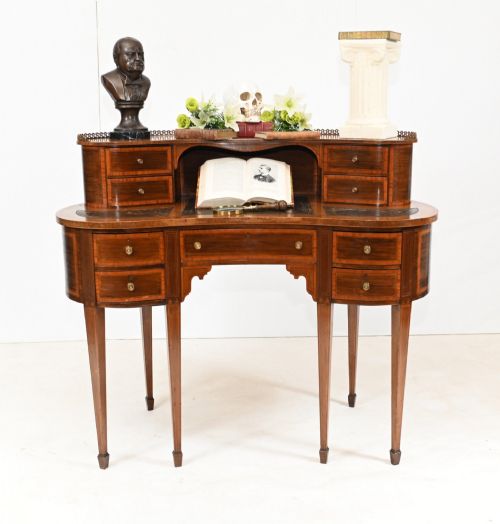
An Edwardian table desk brings compact writing space and refined period timber into a room.
Edwardian Table Desk
An edwardian table desk provides a dedicated writing surface designed for domestic studies and home offices during the early twentieth century. These pieces balance practical surface area with lighter proportions than their heavier nineteenth-century predecessors.
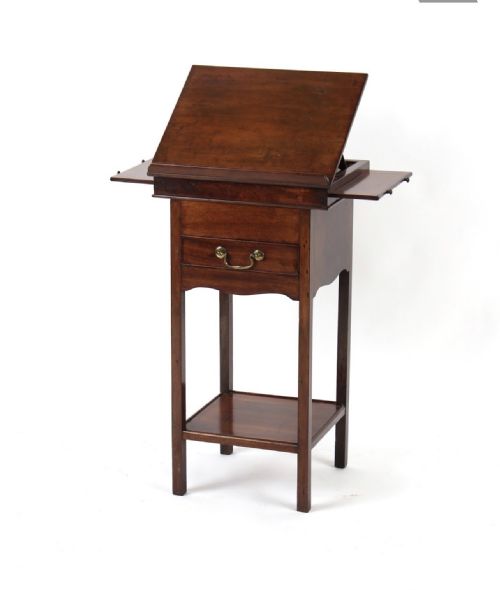
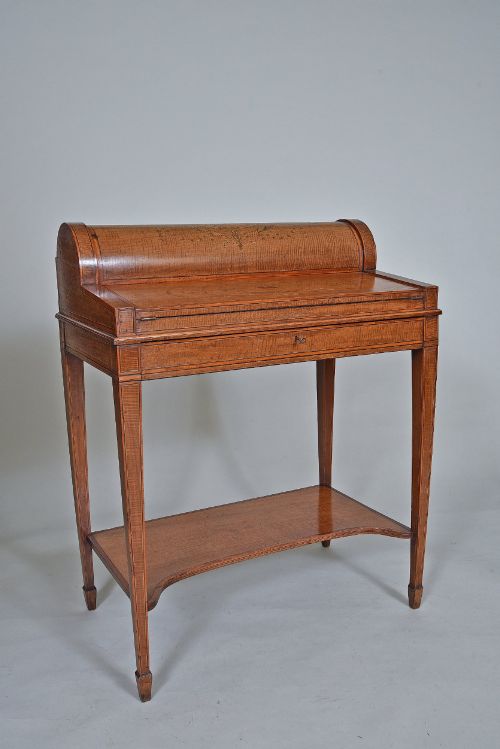
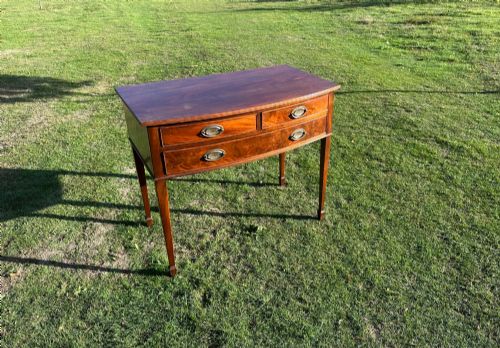
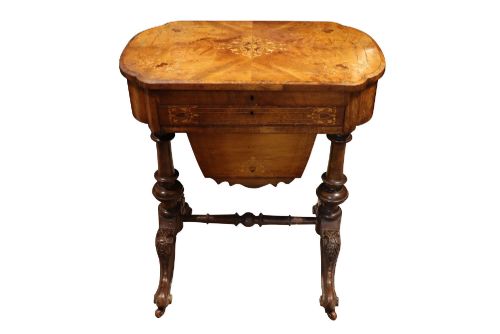
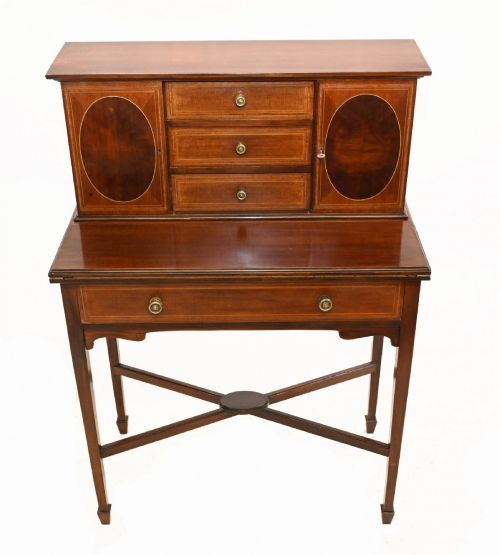
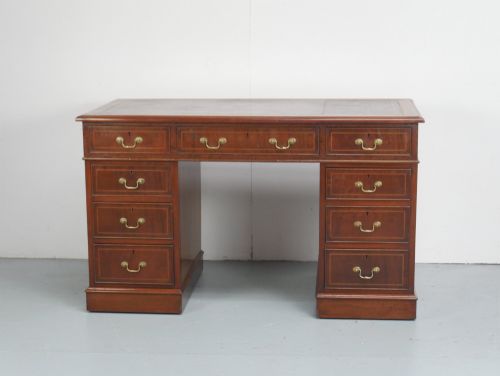
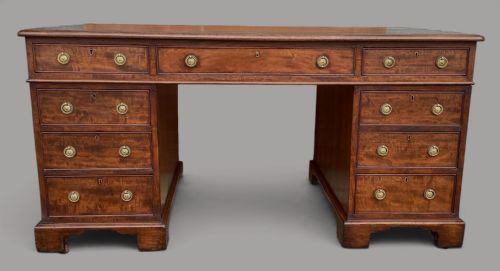
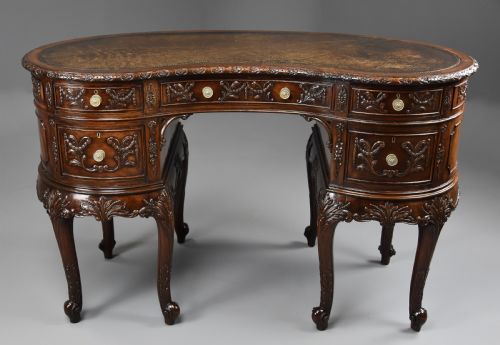
The edwardian table desk most frequently encountered on this page appears in mahogany, often featuring inlaid details, satinwood accents, or simple turned legs. Examples span writing tables, freestanding desks, and davenports with fitted drawers.
Makers adapted earlier styles such as Sheraton Revival and Art Nouveau, integrating brass hardware and leather writing surfaces into domestic furniture. These items reflect a period when home correspondence required purposeful, elegant furniture.
Materials and construction
Cabinet makers constructed the primary carcase of an edwardian table desk from solid mahogany, walnut, or oak, frequently applying fine veneers to drawer fronts and tabletops. Satinwood bandings and delicate stringing provided decorative contrast.
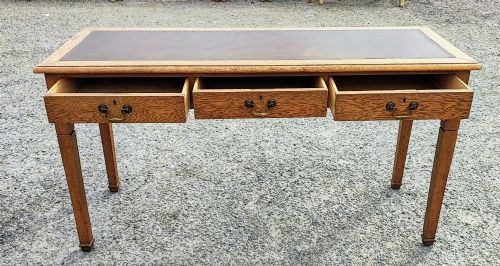
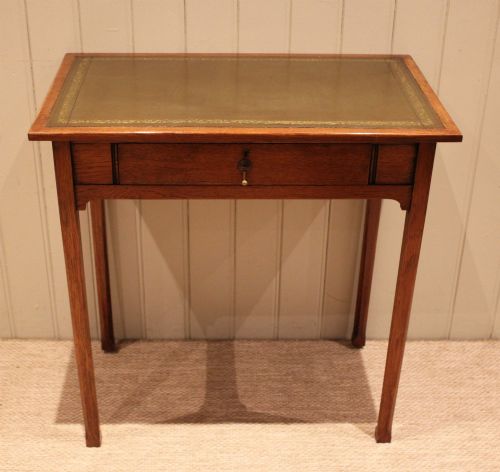
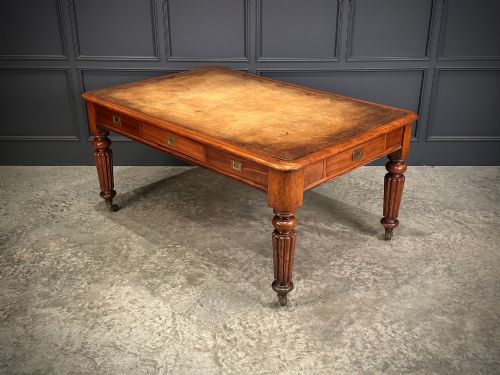
Writing surfaces incorporated inset panels of leather, often tooled with gold leaf borders, glued directly to timber substrates. Brass handles, escutcheons, and castors finished the piece, while internal drawer dividers utilised secondary softwoods.
Edwardian Table Desk Retail Price Guide 2026
Typical asking prices for edwardian table desk among the pieces listed under this phrase on Sellingantiques today, from the lower quarter to the upper quarter. They describe what is for sale here now, not the wider market.
Hidden drawers tucked beneath writing surfaces offered Victorian and Edwardian writers a private space for secret correspondence.
Markers of quality
Quality rests in the precision of the timber selection and the restraint of the inlay work, where balanced grain patterns elevate a piece above standard workshop production. Fine examples display crisp dovetail joints in the drawers and intact original brass hardware.
The integrity of the inset leather writing surface and the smoothness of the drawer action indicate the level of care retained by the desk over time. Maker signatures or stamps add documented provenance to superior pieces.
Edwards and Roberts·Howard and Sons
The Edwardian Table Desk Glossary
- Davenport desk
- A compact small writing desk featuring a sloping top and drawers opening to the side. This form became popular during the nineteenth century and continued into the edwardian period.
- Inlay
- A decorative technique where pieces of contrasting wood, such as satinwood, are inserted into the primary timber surface to form geometric or floral patterns.
- Pedestal desk
- A heavy freestanding desk supported by two banks of drawers or cupboards flanking a central kneehole space.
- Sheraton Revival
- A late nineteenth and early twentieth century design style drawing inspiration from the lighter neoclassical furniture of George Sheraton, noted for tapered legs and delicate inlay.
- Stringing
- Thin lines of contrasting wood or light-coloured inlay set into grooves on tabletops and drawer fronts to define borders.
Edwardian Table Desk: Frequently Asked Questions
What is an edwardian table desk?
An edwardian table desk is a domestic writing table produced during the reign of King Edward VII or the immediate surrounding years. These pieces prioritize lighter proportions and decorative timber inlays over the massive oak and walnut constructions of the Victorian era.
They served as functional home office furniture for correspondence and record keeping. Most examples feature freestanding designs suitable for placement in the centre of a room.
How do I identify edwardian period furniture?
Edwardian furniture typically displays lighter timbers such as mahogany and satinwood, often decorated with subtle stringing and classical revival motifs. Proportions tend to be slender, reflecting a shift away from dark, heavy Victorian room arrangements.
Hardware often includes cast brass handles and escutcheons styled after earlier eighteenth-century designs. Construction methods combine traditional hand-cut dovetails with early machine-sawn components.
Where should I place a table desk?
A table desk works effectively against a wall or freestanding in the middle of a study, living room, or bedroom. Because many edwardian desks feature finished backs, they suit open room layouts where all sides remain visible.
Ensure adequate clearance for chairs and drawers to pull out fully without obstruction. Positioning the desk near natural window light assists with reading and writing tasks.
How do I care for leather desk tops?
Leather writing surfaces require gentle cleaning with a slightly damp cloth to remove dust and debris without saturating the material. Avoid harsh chemical cleaners that can strip the original dyed finish and gold leaf tooling.
Applying a specialised leather balm periodically helps prevent the surface from drying out and cracking. Using blotters or pads during daily writing reduces wear on the historical leather.